5 Tips to Connect With Faculty, Labs, and Across Campuses From Professor Kristin Myers
First piece of advice? “I really need my students to fail in front of me.”
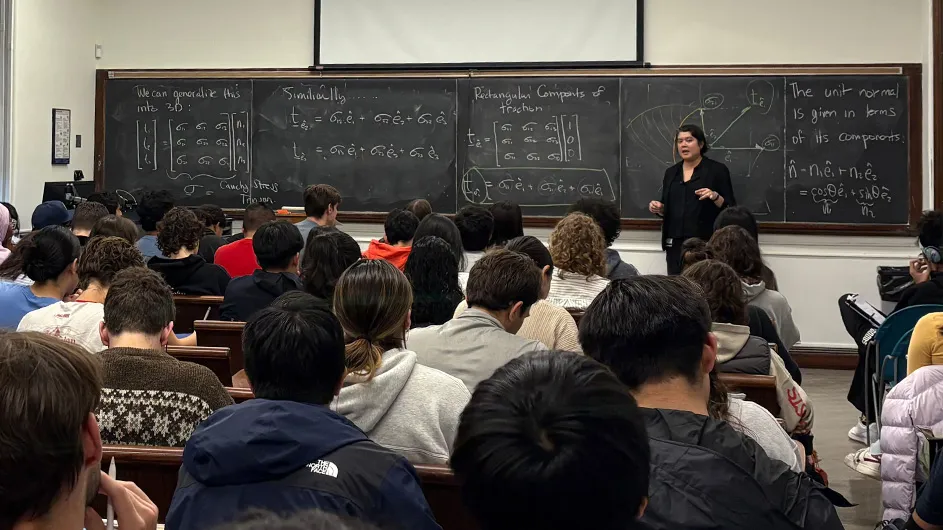
Kristin Myers has a rule for students in her mechanical engineering classes, and she is emphatic about it: she wants them to get it wrong.
“I really need my students to fail in front of me,” Myers said. “I don’t want a polished AI slide deck. I don’t want the immediate answer. I want to see how you got the answer. I can plug it into a chatbot myself—that tells me nothing about you as a learner, or how you’re going to move beyond and actually create something new.”
Those are not tough words for their own sake. The professor of mechanical engineering runs a groundbreaking lab out of the Columbia University Irving Medical Center campus in Washington Heights that studies the biomechanics of pregnancy. She and the undergraduate, doctoral, and postdoctoral trainees in her lab are producing some of the first detailed, minimally invasive measurements of how the uterus and cervix grow and change shape.
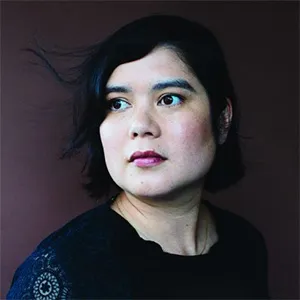
It is work that has advanced into “digital twins” of human pregnancy that device makers and clinicians can use directly. It is precise, high-stakes work in an area of medicine that has been historically under-examined. Getting it right requires knowing what getting it wrong actually looks like in the real world.
“If you don’t have an understanding of your failure modes, you should not be an engineer,” Myers said.
She came to this work on a circuitous path. She grew up in Detroit, interned at General Motors, and studied mechanical engineering at the University of Michigan with an automotive career in her sights. That was before discovering the field of biomechanics and heading to MIT, then a postdoc at John Hopkins studying glaucoma, and finally to Columbia Engineering in 2010.
She’s no-nonsense Midwestern, direct, and, as she says herself, someone who did not expect to end up an Ivy League professor.
“I sometimes pinch myself,” Myers said. “These students are so smart; everyone brings something different to the table.”
We asked her to be one of our guides for this year’s “Choose Your Own Adventure”-focused Columbia Welcome series, with a specific focus on how to get involved with research, labs, and cross-campus collaborations. A Morningside Heights resident herself, we also discovered her favorite spots to take a break from the lab and the classroom.
5 Tips For Connecting with Faculty, Labs, and Across Campuses
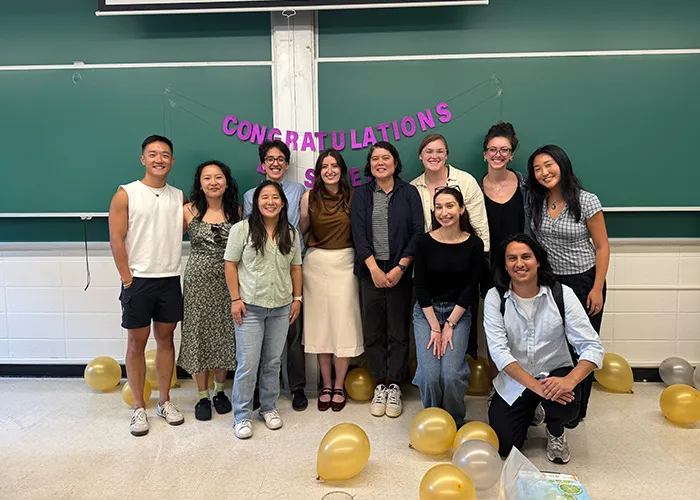
1. Go to office hours. Yes, really.
This sounds like the most obvious advice, but it is the most underused, Myers said. Faculty hold office hours to talk through anything. Reaching out never feels presumptuous from the faculty side. “It is our job to connect with students,” she continued. “That’s what they pay us to do. That’s why we’re here.”
You can’t really do it wrong. Office hours are also a good place to ask questions about working in a lab or getting research experience. Same goes for recitations with your section’s teaching assistant.
2. If you don’t know where to start, head to the director of undergraduate studies.
Every department has one, Myers said, and it can feel like a lower-stakes way to connect at first. Ask what’s on the department’s social calendar, who’s doing research you’re curious about, whether there’s a graduate student in a lab who’d be willing to grab coffee. You can also ask, “Which one of your colleagues does X, Y, and Z research? And can you introduce me? Is there a graduate student in a lab who could grab a coffee with me?” This can help if you’re worried about cold-emailing professors directly about research opportunities.
3. Get on every free-food listserv you can find ... and actually show up!
“Everyone loves free food,” Myers said. “Get on those listservs and show up.” Barbecues and open houses are where a lot of real connection actually begins. They’re lower-pressure than going up after class, and they’re a natural way to meet grad students and faculty outside a classroom setting.
4. The moment something goes wrong, talk to your profesor. Don’t wait.
Myers sorts academic failure into two categories. The first is a time-management problem: you overcommitted, pulled an all-nighter, and what you produced didn’t quite make sense. “That’s an easy fix,” Myers said. “I say: slow down, drop a club, block time for pure study, put the phone away.”
The second is trickier: a student puts the hard work in, follows the process, and still gets it wrong. “Those are a little more heartbreaking,” Myers said. “It’s soul-crushing because it feels like your intellect is at stake.” An openness to deconstructing and reconstructing what went wrong is critical for this type of failure.
Either way, Myers’ advice is the same: go to your professor immediately, before panic sets in. “Talking to your professor sooner rather than later fixes a lot of things,” she said.
“The ability to reset, know what you need in that reset, and wipe the slate for the next morning—that’s a for-life skill.”
You’re not alone in this. Myers recalls examples from her student years and even now. To write a 26-page grant proposal, she worked through a vacation, did not sleep ... and then she watched a colleague come into it fresh and rewrite the opening paragraph.
“I lost my mind,” Myers said. “I was like, ‘What? It’s perfect.’ But she said, ‘it just doesn’t hit.’ And she was right.
“The ability to reset, know what you need in that reset, and wipe the slate for the next morning—that’s a for-life skill,” Myers said.
5. Don’t forget to connect across campuses.
Myers’ academic life is split between Morningside Heights, where she lives and has her main office, and Washington Heights, where her lab is based. She’s on a first-name basis with the 1 train.
For students whose interests might pull them toward the medical campus (pre-med, biomedical engineering, anything with clinical research), she said CUIMC is a place to go and spend more time. Labs, mentors, and a completely different campus culture exist up there that might be largely unnoticed by students who never leave Morningside.
Learn more about Myers’ research and lab in this Columbia Close-Up video. You can also follow along at the Myers Soft Tissue Lab website.
Quick Tips on Where to Chill and Grab a Bite
Near Morningside...
- Wu & Nussbaum for peanut and dandan noodles. “There's nowhere else in the world that offers dandan noodles and a lox schmear with Nova on the same tray,” Myers said. “I'll never leave New York City because of it.”
- The Hungarian Pastry Shop to step back in time and feel like a beat poet.
- Riverside Park “If you want to see professors in the wild, walk up and down Riverside Park. You just have to be early in the morning.”
Near the Medical Center...
- The Plug, a progressive coffee shop with “a really cool intersection of people,” where Myers goes with her students for a break during lab.
- Salento Colombian Coffee & Kitchen, a bakery and lunch spot that has become another go-to. “The empanadas and lentil soup are my lab’s thing,” Myers said.
- Native Noodles, a popular spot with the CUIMC crowd.
- All the food trucks!
This fall, you will find Myers teaching Mechanics of Materials for mechanical engineering students. That department has seen its incoming class nearly double in the past two to three years, she said.
“We're the gearheads on campus,” Myers said. “Being actually in a machine shop, making your own prototypes for something you thought up; that's something special to mechanical engineers. Things AI can't do. Not yet.”
Her final thoughts on approaching the school year? Resist the urge to professionalize too soon and jam-pack your schedule with a requirements-heavy double-major.
“Show up and be divergent,” Myers said. “Just try everything. I was a mechanical engineer and like ‘of course I’ll get into that beat generation literature class because that’s cool.’ Cross-seed different ideas into different disciplines.”