School of the Arts Professor Dorothea Lasky Discusses ‘Memory’
Her most recent book of poems explores personhood and consciousness.
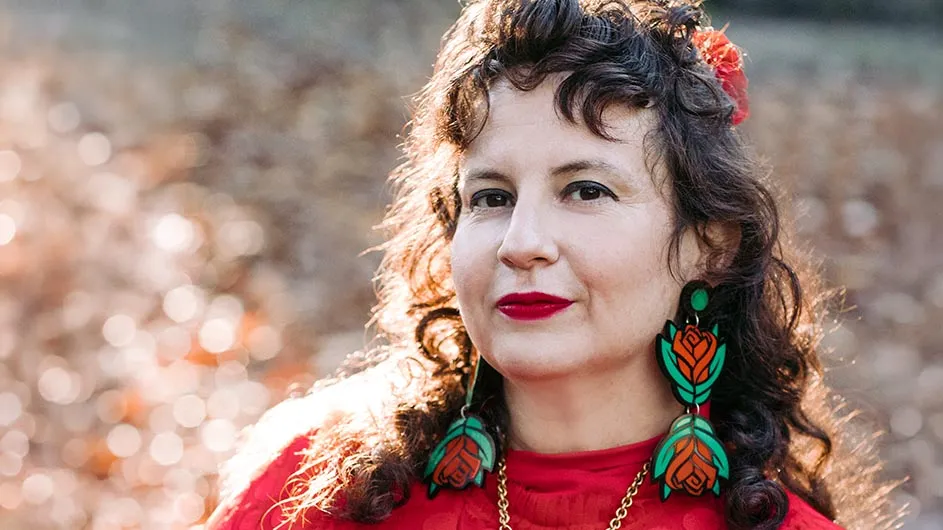
Dorothea Lasky, head of the poetry concentration and associate professor in the Writing Program at School of the Arts, is very prolific. She has published numerous books of poetry and prose, and is also the author of several chapbooks. Her poems have appeared in The Paris Review, The New Yorker, The Atlantic, American Poetry Review, and Boston Review, among other publications; she is also the co-editor of Open the Door: How to Excite Young People About Poetry.
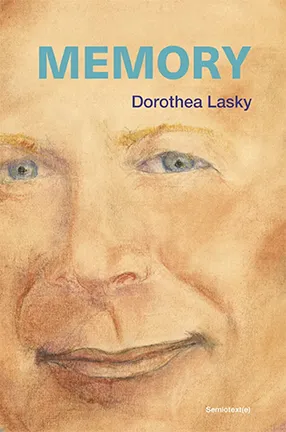
Her latest book of poetry, Memory, is a collection of lyric essays, investigating questions about what defines memory, personhood, and consciousness. The collection frames memory in three distinct categories—ancestral, personal, and poetic—to weave individual remembrance with that of the collective.
Memory is a tribute to an artwork of the same name by Bernadette Mayer, who was a poet and artist who documented her life using a full roll of 35mm film every day for a month, and wrote and recorded over six hours of poetry. The project explored the blurry edges of consciousness, attempting to reflect the intangible nature of memory.
How did this book come about?
I am a huge fan of Bernadette Mayer and was inspired by her Memory project from 1971, in which she recorded hours of poetry and took more than 1,100 photographs, in order to document what was occurring in her life. There was an exhibit of this work in 1972, and in 1975, she published a book called Memory, chronicling the project. Since this initial showing and publication, Memory has been exhibited elsewhere, and Siglio Press published a version of the book in 2020.
It seemed to me that Mayer’s Memory was about capturing the ineffable, and that the project interrogated whether what we remember is “real.” I’ve long been interested in this topic, having studied memory and learning in school, so I was fascinated with what Mayer seemed to be saying. I also had a personal reason for being interested in Mayer’s investigations into memory. My own brilliant and saintly father, Judge Herbert Lasky, passed away from Alzheimer’s in 2010. Watching his mental changes, I began to question how our memories do and do not make up our lives and personalities.
And thus, my push to create my own Memory was born. My book, Memory, is an homage to all of Mayer’s ideas, my own personal experiences, and the notion of memory in general.
What are the differences between a poem, a prose poem, and a lyric essay? Do you have a preference?
I would categorize Memory’s form as a series of poet’s essays. I am very interested in how genres are labeled and considered, both in the work of the writer and in the current marketplace to which contemporary books find themselves submerged. For many years at Columbia, I have assigned my students a poet’s essay in class, which I consider to be a receptacle for their ideas in prose that are associative, follow aesthetic logic, and do not want to be tamed by any traditional notions of the essay (but can be if they want to be). It is an idea that I explored in my More Than a Manifesto symposium held at Columbia in 2018, and in a subsequent book I edited, Essays.
A poem, a prose poem, and a lyric essay are wildly different animals, and I love them all. I’d say that what they share in common is the spirit to create new language, and to push the collective imagination beyond its current limits.
When will your first novel, Katie, be published? What is it like to write prose as opposed to poetry?
Thank you for knowing this! It will likely be published in 2027 by Harper Perennial. I loved writing Katie, as it is not only my first novel, but a horror one, and I have long been obsessed with the genre. Writing fiction was so different from writing poems. Poetry has always been with me in my life, as an antagonistic but loyal friend, and fiction is a new acquaintance. That is to say, I have never known life without the poems flowing through me, both cursing me and me cursing them.
I have a different relationship to prose, particularly horror, because I hold it in such high regard. When Katie’s character first came to me in 2021, I was surprised how readily I could see and understand her. There was a period when I was writing the first draft, where it was a bit like watching a TV series. I’d wake up each day, excited to watch a new episode of what horrible things she was going to do. Now living with her for several years and intensely editing the book (and scraping much of what I wrote in that first draft), I have come to a love of writing fiction that has honestly shocked me. I hope to write more novels and short stories, in the horror genre especially, after I am completely finished editing Katie, which will be very soon.
How do you balance the demands of writing and teaching? Do the two overlap, or do you keep them separate?
From my first days as an MFA student, I have taught simultaneously alongside working on my writing. I was so blessed to be given the opportunity to teach composition while I completed my MFA, as it helped me to see the work of teaching and writing as forever intertwined. It was so helpful to me in those early days of trying to take myself seriously as a writer to frame writing in educative ways in my classes. I began to see my students, like Lucie Brock-Broido used to say, as “fellow travelers.”
Nowadays in my teaching and writing life, the relationship is the same. I love actively working on a book and teaching thesis or workshop courses in the same semester. I love feeling the same kinds of anxieties and joys as my students have about finishing a poem or book, as it helps me to give the most empathetic feedback.
What are you teaching these days?
This summer, I taught an undergraduate poetry workshop and a course called Writing Through Art: Poetry in Paris, for the Creative Writing Program at Reid Hall, which I created with Nellie Hermann.
This fall, I’ll be teaching my seminar for first-year MFA poets, Unleashing the Poetic Demon, and a new cross-genre class I just created in the MFA program, A Writing Classroom of the Imagination.
What are you working on now?
I am finishing up my edits on my novel, Katie. I have a new book of poems coming out this fall, Mother, and I will be doing some readings and other things to support the book. I am writing a book on Sappho for Columbia University Press’s Core Knowledge Series. I am also writing a nonfiction book, Style is Joy, which pairs the occult with ideas of style, fashion, aesthetics, and everyday creativity.
In addition, I am finishing up edits to my poetry book, The Green Lake, which will come out next year, working on a new poetry book, and a new book of horror short stories.
Which three poets/writers, dead or alive, would you invite to a dinner party, and why?
Sylvia Plath, Audre Lorde, and Catullus. All three of them have had a profound influence on my writing. If I could have dinner with them today, I would love to ask each of them how they feel their particular obsessions affected their work. I am also fascinated with whatever foods each one would choose to eat.