The Complicated Story of Uyghur Fighters in Syria
In this excerpt from Our Hearts Burned for Home, Emily Feng introduces readers to a community without a country in a country at war.
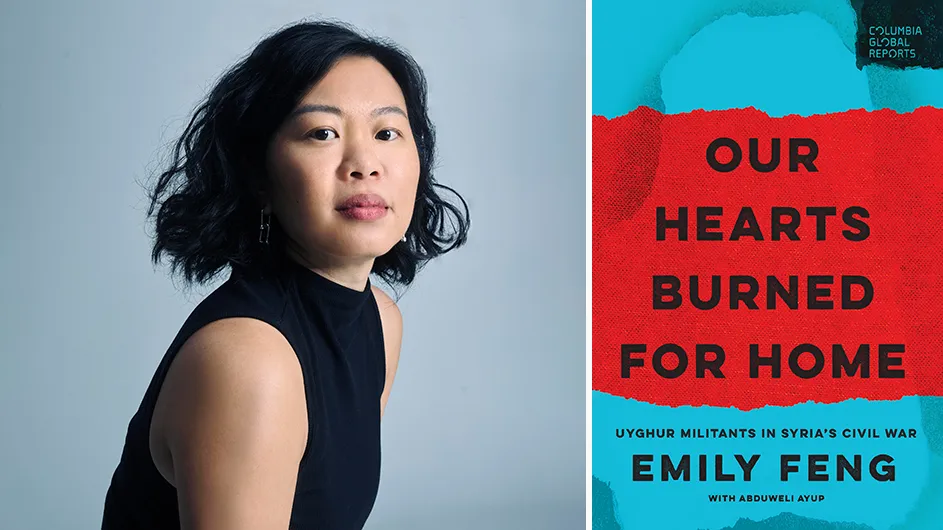
As part of a developing series, Columbia News is introducing book excerpts from Columbia Global Reports, a nonprofit publishing imprint from Columbia University that commissions authors to produce works of original thinking and on-site reporting from all over the world, on a wide range of topics. This excerpt is from Our Hearts Burned for Home: Uyghur Militants in Syria’s Civil War, Emily Feng, White House correspondent and former international reporter for NPR.
I ended up in Syria somewhat by accident. Two days before the fall of the Assad regime in Damascus, I landed next door, in Lebanon, for the first time in my life, to cover the aftermath of a hasty ceasefire with Israel there. I was still slightly jet-lagged when news across the border broke that the old Syrian regime had fled. Syria became the bigger story, and I made plans to go.
I am a longtime China reporter, not a Middle East specialist. I’ve spent the last decade—really, my entire adult life—covering the Chinese-speaking world from China and Taiwan. A throughline of my reportage has been the crisis in Xinjiang, a region governed by Beijing that borders eight countries, including Afghanistan, Russia, and India. There, ethnic tensions between China’s Han majority and Uyghur ethnic minority, as well as state crackdowns on Uyghur religious and cultural expression, have been routine since Xinjiang’s full annexation into the People’s Republic of China in 1949.
Imagine my surprise when I found out the Uyghurs were in Syria, too.
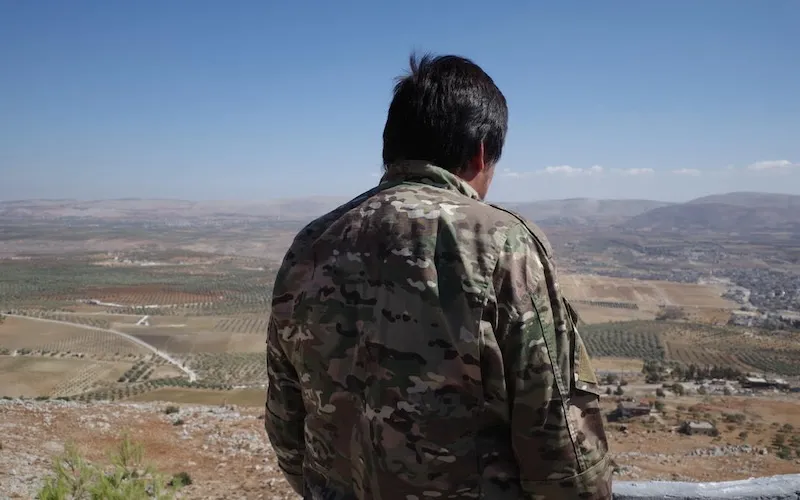
I was struck during my first few weeks in Syria by the preponderance of Central Asian fighters. Some fighters in northern Syria were clearly Uyghurs and spoke Uyghur. I had heard about Uyghur militants during my years living in China. Authorities there frequently blame a shadowy Uyghur organization abroad that it calls the East Turkestan Islamic Movement (ETIM) as one of the primary instigators behind a string of protests as well as deadly attacks on Chinese civilians going back to at least 1990. Worries that the Uyghurs in Xinjiang were tapping into a global trend of Islamist-inspired armed resistance, fueled by the example of Uyghur fighters in Syria and Afghanistan, were one of the reasons explicitly cited by China’s leader, Xi Jinping, in launching the detention crackdown in 2017.
The Uyghur fighters in Syria had become something very different from ETIM, and they were numerous and very much at ease in Syria. I was intensely curious about why they were in Syria, about their political and religious views, and what they had done during the civil war. I’ve had the good fortune of collaborating with the Uyghur linguist Abduweli Ayup, my partner in this book endeavor, for several years. I mentioned to him my interest in these Uyghur militants, knowing he had interviewed several of them in Turkey during the Syrian civil war. Abduweli found a way to contact their representatives in Syria directly.
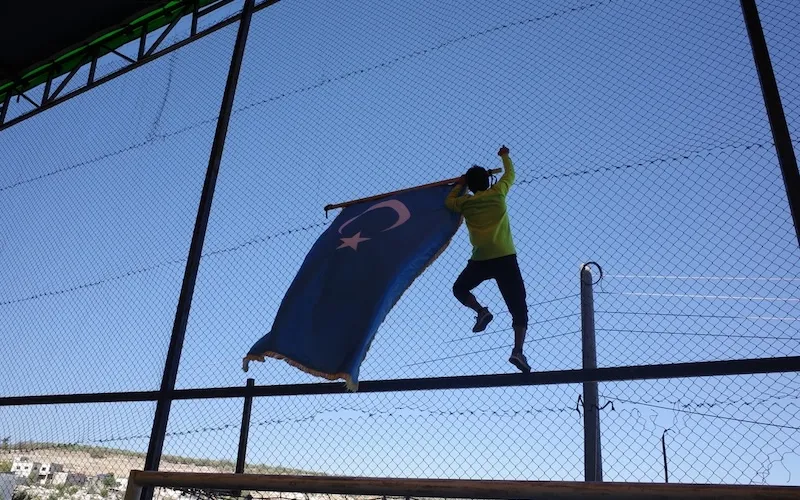
Months later, we received good news: all the Uyghur groups would be open to doing interviews. So, in the summer of 2025, we headed to Idlib, in northern Syria. I found the Uyghurs astonishingly open, given they had been isolated for more than a decade in northern Syria, where they had endured a punishing war in part by living in near-total secrecy. At first, I had been concerned that my obvious Chinese looks would alarm some of our interviewees, who had all suffered greatly as a result of Chinese state policies. As a precaution, I took off my jade bangle and took pains not to speak Mandarin Chinese in front of the Uyghurs. My worries were unfounded, however; the militants and their families were welcoming and inquisitive about our stories. A few even chided me for using an interpreter when they discovered I spoke Mandarin Chinese, a language some of them still spoke well.
All told, we spent nearly a month interviewing the Uyghurs: visiting their homes and places of work, and touring their schools in Idlib governorate. Prior to interviewing them in Syria, Abduweli and I also interviewed former militants who had since moved out of Syria, in order to get a fuller understanding of the evolution of the group and of the broader Uyghur diaspora in Syria. In total, we conducted in-depth interviews with about five dozen Uyghur fighters and their family members, some of whom we interviewed multiple times, for hours at a time.
Their story is a complicated one, of course.
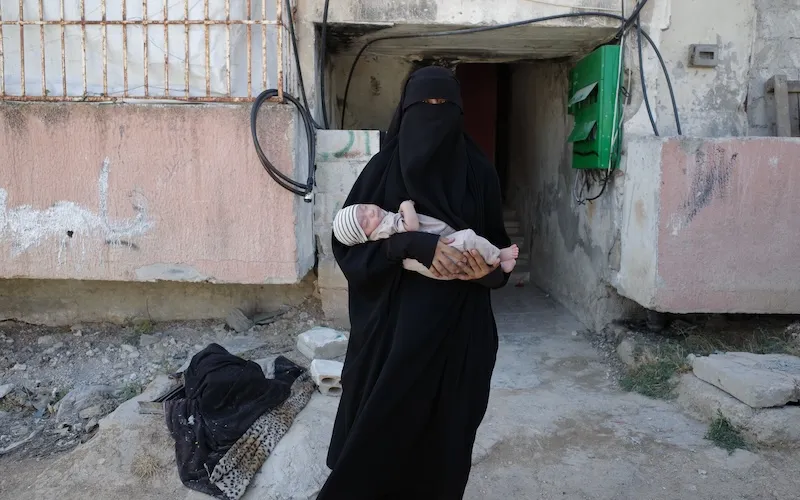
It is a story of a people made so desperate under Chinese rule that they were willing to leave behind their homes, their businesses, and their families to enter an active war zone in a foreign country. Their presence in Syria, as we found out, was almost accidental, the product of geographical chance and a strong motivation for revenge against China.
It is also a story of how people can change a place and how that place, in turn, changes them. I found, to my astonishment, that the Uyghurs had had a far greater role in the Syrian civil war than I had expected. They trained hard during their years in Syria, becoming adept in the deadly business of warfare with alarming quickness and earning the respect of Syria’s new ruler, Ahmed Al-Sharaa. Even as millions of Syrians fled the country, for the Uyghurs, Syria became a refuge, a place where they could raise their children and build a diaspora community.
But their story is not over yet. The dream remains to fight their way back to Xinjiang, or East Turkestan as the Uyghurs call it. Whether that will ever happen is uncertain.
Their story is also controversial. The broad sweep of their story as the perpetual underdogs, cast far away from home, may resonate with faraway readers. Others might find their militancy distasteful. Some Uyghurs consider association with Islamist militant organizations counterproductive, worried that confirming the presence of Uyghur militants in Syria may appear to justify the Chinese state’s crackdown in Xinjiang. Other readers may accuse me of sympathizing with extremists with blood on their hands. Within Syria, the continued presence of foreign fighters also upsets many Syrian Arabs, and the Uyghurs’ close association with the country’s new Sunni Islamist rulers concerns Syria’s minority communities.
Why should anyone care about a people who number less than 1 percent of China’s total population and whose ranks number a mere 20,000 people in Syria? What drew me in immediately to the story of Syria was how individuals there had changed history. The rebel coalition that overthrew the Assad regime in December 2024 was likely only about 30,000 people at the time—a tiny figure for a country of around 25 million people. And yet they managed to end a seemingly intractable war partially financed by far larger countries like Iran, Turkey, and Russia. What several thousand highly motivated, highly experienced Uyghur fighters can do may end up surprising us all. They have already surprised me.