From Madison to Walter Reed, by Way of Columbia Dental School
Nikolas Christoffel, a fourth-year dental student and Air Force officer, has spent four years building bonds between future doctors and dentists around the world.
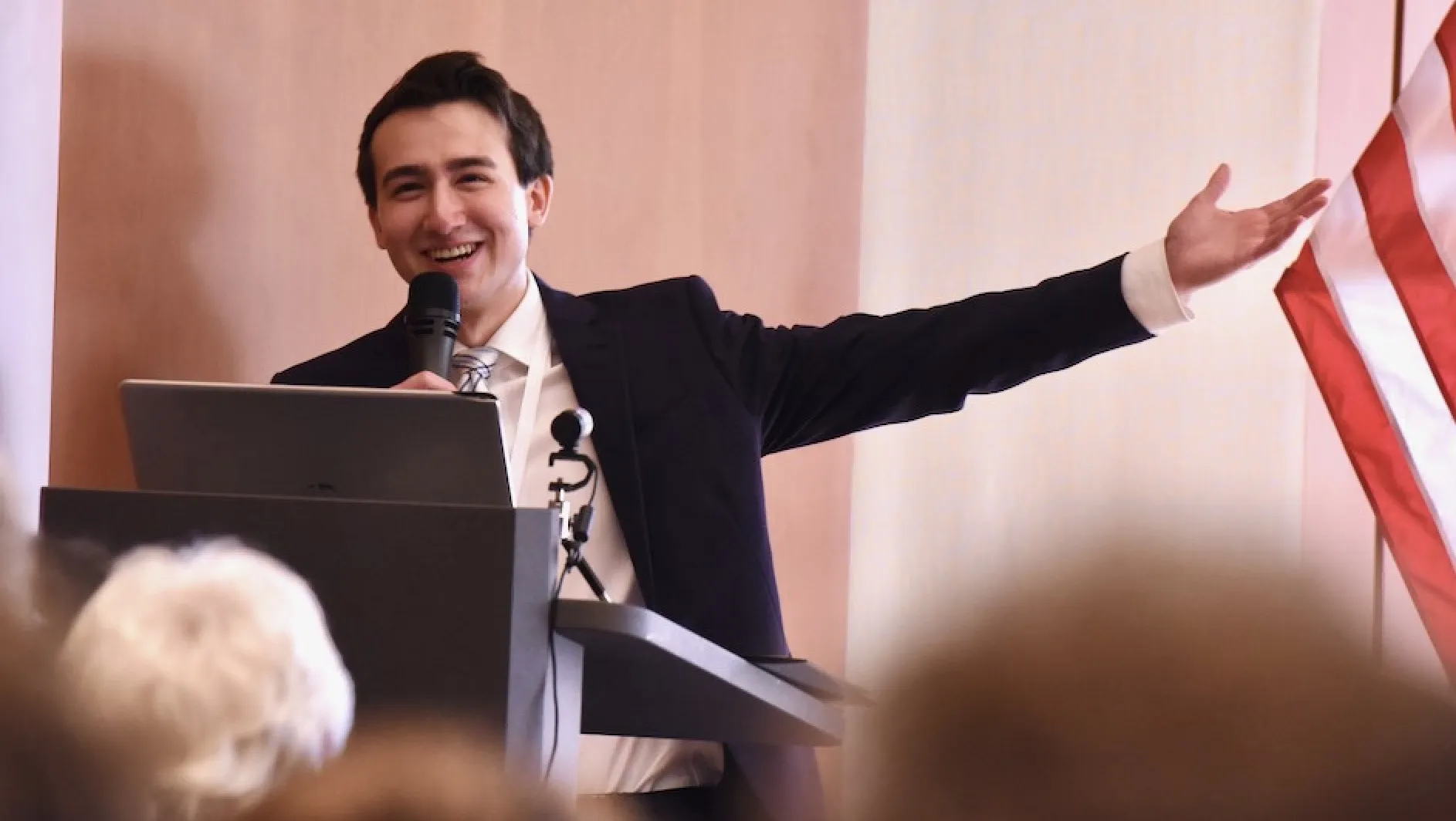
Nikolas Christoffel lived in Madison, Wisconsin, his whole life before moving to New York for dental school. At Columbia, he found a way to connect with students well beyond campus. This past summer, he led the planning for a conference that brought 130 medical and dental students from around the world to New York.
Christoffel is currently a fourth-year student at Columbia’s College of Dental Medicine, a second lieutenant in the U.S. Air Force, and president of Columbia’s chapter of the International Collaboration and Exchange Program, known as ICEP Global. And after graduating in 2027, he’ll head to Walter Reed National Military Medical Center in Bethesda, Maryland, for a residency in oral and maxillofacial surgery.
What was your path to dentistry?
I did my undergraduate degree at the University of Wisconsin–Madison, where I majored in microbiology and minored in global health. I became interested in dentistry during my sophomore year of college. I had initially wanted to become a scientific researcher and go to grad school, to do the PhD route. But it was during my first experiences in research that I realized I didn’t like how isolating it is. You’re in the lab a lot by yourself, and it can be pretty monotonous, and you don’t get to talk to people all that much.
I still love science, and I stuck with microbiology as a major. But I wanted a career that was more interactive and a bit more social. That’s when I started looking into health care careers, and, ultimately, I found dentistry. I was attracted to it because it’s a unique career: it combines health care with a balance of art and science, and using your hands, and the ability to have more autonomy over your career path. No other career combines those factors in the same way.
Later, in dental school, I became more interested in oral and maxillofacial surgery, largely for similar reasons. In surgery you obviously use your hands a lot; it requires meticulous hand skills. And I felt that I wanted to take on the most impactful, most complex cases that exist in the field.
Why did you choose Columbia?
A big part of it was the location. I’d spent my whole life in Wisconsin and had always wanted to get out and explore a larger, more diverse city. Part of my family is here, which was another pull.
And I feel like there’s no better place than New York to enjoy your 20s. Even though I’m in professional school and there’s a lot of studying to do, I can still have some fun exploring the city and experiencing life. That work-life balance has made me feel like I’m not having to give up my 20s to build the career I want.
Columbia is, of course, an amazing school, too, with great training. I’ve really enjoyed my education here. Hands down, one of the best clinical professors I’ve had here is Judson Wells, my attending in restorative dentistry. He’s so passionate about teaching and really goes the extra mile for each student and patient. I appreciate all that I’ve learned so far from his academic and clinical expertise.
How does ICEP Global connect students across borders?
ICEP was founded at Columbia’s medical school by Anette Wu, an associate professor at Columbia’s Vagelos College of Physicians and Surgeons, and it connects more than 40 universities around the world.
The idea is that medical and dental students from around the world meet with each other online, with some in-person components as well, to collaborate and exchange ideas and ultimately become friends. The thinking is that in, say, 10, 20 years from now, when we're all likely working in leadership positions at different institutions around the world, if some global challenge arises, like a pandemic or a public health emergency, we’ll be able to maintain those connections and have an easier time collaborating across borders, compared to being strangers in the first place.
This past summer I was the lead organizer for the Academic Immersion Travel Conference, an annual conference for ICEP Global. It brought together about 130 medical and dental students from top universities around the world for about five days in New York. We brought in expert speakers and clinician-scientists from Columbia, Harvard, and Yale, and we had faculty panels, student panels, and social activities. In prior years the conference was held in Paris, Taipei, and Berlin. Next year it’s Tokyo.
It was a lot of work. It happened at the same time I was preparing for residency applications and licensing exams, on top of normal clinic and classes. But it was a good culmination of my time with the organization, and ultimately a real growth opportunity.
You’re also a second lieutenant in the Air Force. How does that work alongside dental school?
I’m in the Health Professions Scholarship Program, which is essentially a full ride for dental school. The Air Force pays for my education, and in return I serve as a dentist after graduation. I’m currently a second lieutenant in the Air Force Reserve, and when I graduate, I’ll be promoted to captain. I won’t be flying any planes, though. The Air Force needs pilots and engineers, but it also needs dentists. My goal is to serve as an oral surgeon.
What’s something people might be surprised to learn about you?
I’m a first-generation dental student and a first-generation professional student. I grew up in a lower-income family compared to a lot of my classmates. That’s partly why I joined the military scholarship program in the first place, and I’m very grateful for it. It’s a very competitive scholarship.
From a socioeconomic standpoint, I started out a little further behind than many of my classmates. But I take pride in the fact that I’ve caught up, through hard work and determination, and a bit of luck, to now be at one of the top dental schools in the country and pursuing one of the top specialties. I’m grateful and proud of the opportunities I’ve had, both here and in college, to really be pursuing my dream.
What’s your favorite thing to do in New York that has nothing to do with school?
I’ve spent a lot of time just exploring the city. I feel like there’s always more to see, and that’s what I love about New York.
One of my passions is travel, and part of the reason is that I love becoming immersed in different cultures. New York is diverse enough and big enough that depending on the neighborhood you’re in, you can feel like you’re walking into a different country just by crossing the street. I really love that about it.
I’ve also become sort of a foodie during my time here, just because there’s so much great food. I always take the opportunity to try new restaurants and new types of cuisine. Besides that, I go to the gym, I like to run, and I play badminton every week. These are the things I do outside the clinic to clear my mind.
Any food recommendations?
I’m a really big fan of Thai food. One of my favorite restaurants is Bangkok Supper Club. I think it’s the best Thai restaurant in New York. Chinese and Korean cuisines are up there for me, too.
What are your plans for after graduation?
After my residency at Walter Reed, I’ll serve more time as an attending surgeon. I’m excited for Washington. But I’m going to be a little sad to leave New York. After my military service, I could see myself moving back.