Edwidge Danticat Publishes Her First Novel in More Than 10 Years
In Dèy, she considers the after effects of a mass shooting.
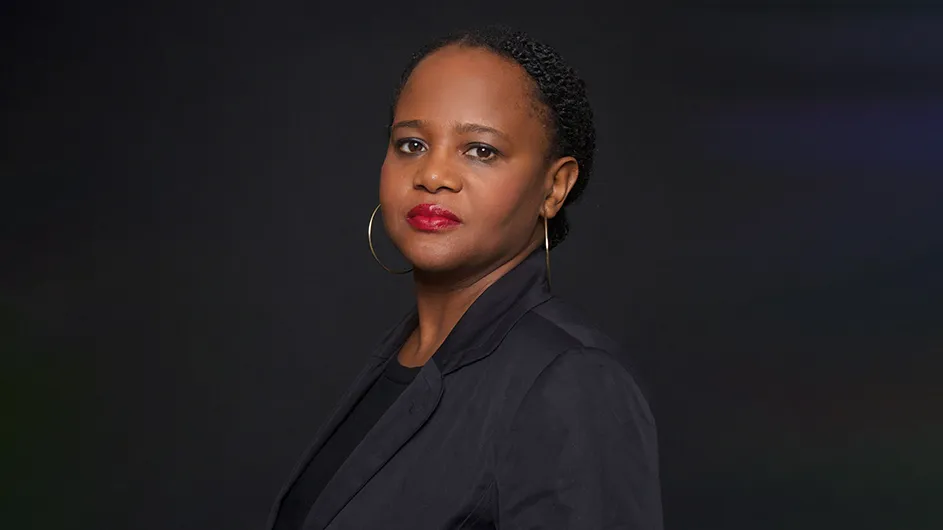
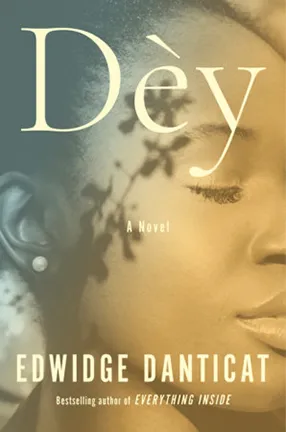
In her new novel, Dèy, Edwidge Danticat, Wun Tsun Tam Mellon Professor of the Humanities, asks, “Is home the place where we are born? Or is it the place where we die?”
These questions haunt the protagonist of Danticat’s first novel in more than a decade, Magnolia Elie, a successful Haitian American real estate agent in Miami. When she hears gunfire while at a shopping mall, she takes shelter in a nearby restaurant, cowering with fellow shoppers and diners. Once she’s safely home, Magnolia keeps this traumatic event from everyone. But given her life back, she begins to see everything clearly—her bond with her daughter, Zoë; her nearly broken relationship with Zoë’s father; the challenges of her mentally troubled mother, whose unraveling patterns Magnolia worries she’s spiraling toward herself; and her father’s affair with a woman who has borne him a child. While struggling through the labyrinth of her past, Magnolia must also come to terms with the losses sustained that life-altering day in Miami, and nearly every day by her parents and sibling in Haiti.
How did this novel come about?
In December 2017, I was in what I thought was a mall shooting, in Miami. I heard what sounded like gunshots. People started running and hiding. I ran and hid, too. Later, when I got home, I found out in the news that it was a hoax, possibly carried out by some young people. It happened in other malls as well. I felt lucky it wasn't a real mass shooting, but that fear stayed with me.
A few months later, the shootings at Marjory Stoneman Douglas High School happened in Parkland, Florida, and, at the same time, armed groups were gaining ground in Haiti, where I was born. I found myself thinking about gun violence a lot and the aftermath, which isn't discussed as much as the shootings. I gave a talk on this at the Brooklyn Public Library in a series called Message From the Library, then I wrote about it in an essay, which was published in my collection We’re Alone. In that essay, I announced that I’d attempt to write about all this in fiction, and that’s how Magnolia Elie, the main character of Dèy, was born.
Is it easy for you to shift from fiction to nonfiction?
It depends. There’s an urgency to nonfiction for me. Writing an article, an op-ed, or an essay often means I need to quickly get something off my chest. Fiction takes much longer to process. When it’s working, it feels as if the characters are guiding the storytelling and even confiding in you. When it’s not, you keep digging until the story reveals itself from a void that’s a lot more amorphous than nonfiction, where the material already exists. There’s some overlap between fiction and nonfiction in this book, of course. For example, there are parts of previous works, both fiction and nonfiction, that I use in Dèy. Ultimately, anything and everything can become material for a novel.
How do you know what’s coming next—novel, short story, essay, memoir, article, etc.?
I don’t. It all depends on what’s catching my attention, what’s happening in the world, things that keep haunting me, things I can’t forget. I write to delve deeper into a subject, and in fiction, to experience something as though it were also happening to me, to find out what comes next, and explore one of many possible resolutions.
What are you working on now?
I have some notes and a few pages for a new novel. I always start a new project before a book is published. The editor of my first novel, Laura Hruska, once told me to always have something in the works before a new book comes out. That way, whether the book is well received or not, I’ll have something to remind me of what I enjoy and cherish most in this process, which is the writing itself.
What are you teaching this fall, and in the spring?
Jamaica Kincaid is the Artist-in-Residence in the Department of African American and African Diaspora Studies this year. This past spring, I interviewed her for our Zora Neale Hurston lecture. This fall, I’m teaching a seminar on her work. It feels like a full-circle moment because she was the first writer I ever saw in the flesh. She came to Barnard as the Helen Rodgers Reid Lecturer when I was an undergrad there, and I’ve been reading her ever since.
In the spring, I’ll be teaching a course on the epistolary tradition in Black literature. I'll also be co-teaching a class on the writer Paule Marshall with one of my brilliant colleagues, Professor Farah Jasmine Griffin.