The Columbia Researcher Connecting Scientists to Data From a Major New Telescope
Columbia research scientist Jennifer Sokoloski is helping scientists get more from the new Vera C. Rubin Observatory.
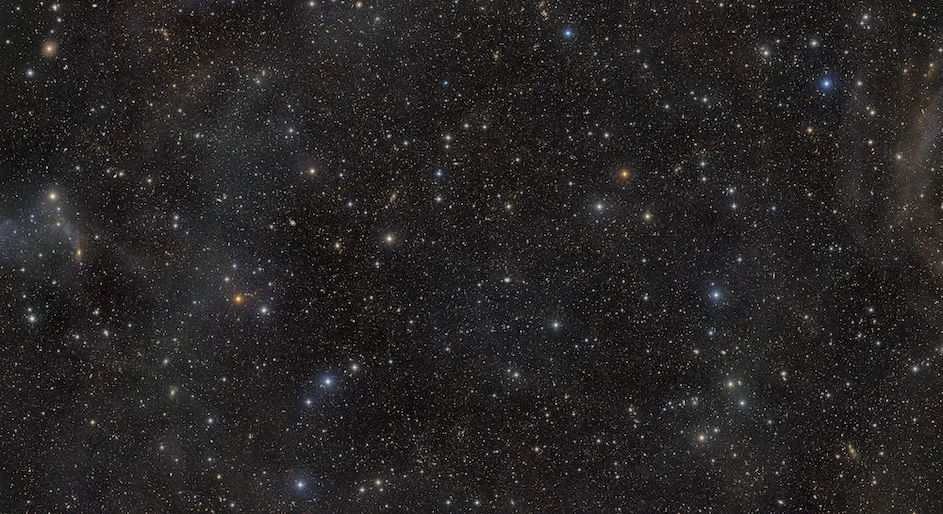
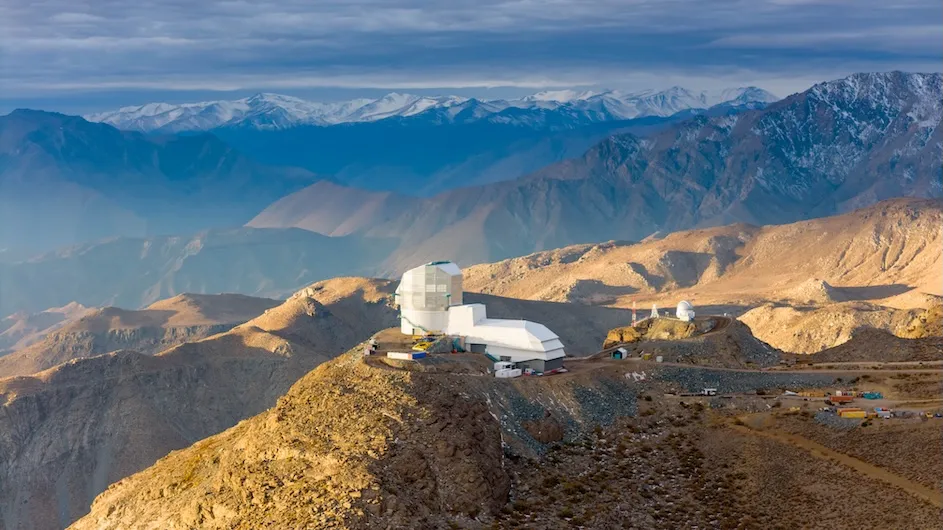
This summer, the Simonyi Survey Telescope at Vera C. Rubin Observatory, on the outskirts of the Atacama Desert in Chile, began to survey the entire southern sky. The telescope will collect data for 10 years, creating the most detailed, comprehensive survey of the night sky ever taken. The survey is called the Legacy Survey of Space and Time (LSST).
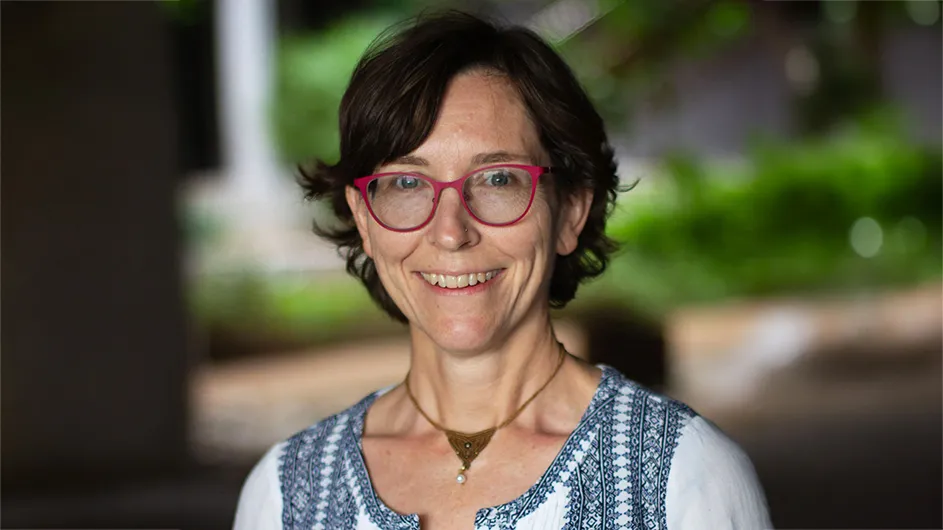
Jennifer Sokoloski, a research scientist at Columbia, is the chief scientist at the LSST Discovery Alliance, a consortium of more than 40 institutions (mostly universities) that are working together to envision, design, and help fund programs that will enable scientists to make discoveries with Rubin Observatory data. Columbia News spoke to Sokoloski about the Alliance’s work, and what she hopes to learn from the telescope’s survey of the night sky.
What is your role at Columbia, and what’s your role with the LSST Discovery Alliance?
I’m a senior research scientist in astronomy at Columbia. My job is to do research and supervise students, particularly graduate students, and participate in the department’s intellectual life.
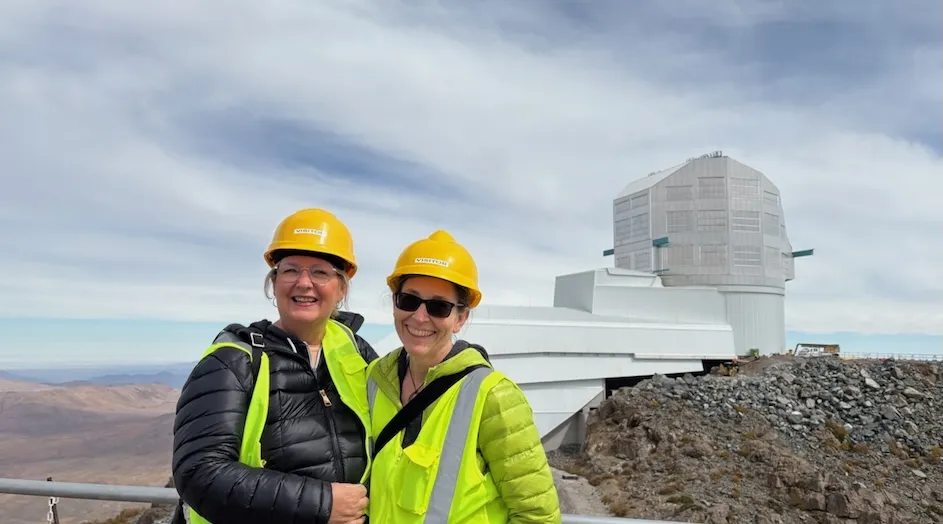
I’m also currently the chief scientist at the LSST Discovery Alliance. Rubin Observatory will collect huge amounts of data. Our aim at the LSST-DA is to figure out what the research community needs to make good use of that data, and then design and launch programs to meet those needs.
I find this work exciting because Rubin is a groundbreaking facility that’s going to change how we do astronomy, simply because of the amount and richness of the data it’s already starting to produce. It also brings together my research interests with my prior experience working with science nonprofits.
What does your academic research focus on?
I’m interested in exploding stars, especially eruptions involving white dwarfs, which are a very common end state for stars like our Sun. Most stars end up as white dwarfs. When a white dwarf is in a binary system—gravitationally bound to another star—you can get all kinds of interesting phenomena: accretion disks, outbursts, nova explosions, jets.
An extreme example is a type of stellar explosion that we use to study the expansion of the universe. These systems are also valuable because the basic physics—things like accretion and outflows—shows up all over the universe, from forming stars to supermassive black holes. So by studying white dwarfs in interacting binary systems and their explosions, we get insight into very common processes that happen on many different scales.
How are Columbia researchers planning to use Rubin data?
I think many Columbia faculty, researchers, and students will end up using Rubin data to some extent; the dataset is that broadly valuable.
Columbia’s representative to the LSST Discovery Alliance is Kathryn Johnston, who also helps oversee a postdoctoral fellowship LSST-DA runs. She’s very involved in shaping policies that will increase the impact of Rubin data. Her research with Rubin data will focus on using stellar streams to understand the structure and evolution of the Milky Way. I believe Mary Putman also plans to use Rubin data to investigate galaxy formation and evolution.
Also within the department, Kishalay De recently received one of LSST-DA’s rapid-turnaround grants for Rubin science, focusing on stellar transients, objects that erupt or change with time. Columbia’s past representative to LSST-DA, Marcel Agüeros, will likely use Rubin data to understand the relationship between stellar age, rotation, and magnetic activity. Viraj Karambelkar is part of a network of postdocs planning to work with Rubin data that is organized through the Discovery Alliance. He also plans to use Rubin data to study cosmic explosions, including events that produce both light and gravitational waves.
Beyond those specific examples, I expect a lot of Columbia faculty, researchers, and students will either analyze Rubin observations directly or do theoretical modeling that gets compared to Rubin’s observations.
What has excited you most so far about LSST data, and what are you most looking forward to as the survey continues?
In my own work, what excites me most right now is actually methodological. Rubin is allowing me to expand a new collaboration on AI and science with a colleague, Savannah Thais, who used to be at Columbia’s Data Science Institute and is now faculty at CUNY.
We just had a National Science Foundation (NSF) proposal accepted that will use Rubin data to explore foundation models and the responsible use of AI in science, with my eruptive-binary-star research as a test case. Our project is a way of asking: Can these powerful AI models actually live up to their promise in real scientific settings? How do we use them responsibly, so they help rather than mislead us?
For me, that’s very exciting because it’s novel, it’s connected to Rubin’s enormous data stream, and it has broad applicability well beyond my specific science case.
In the bigger picture, Rubin is designed to tackle some of the biggest mysteries in cosmology, like the nature of dark matter and dark energy, and to transform how we study transient and variable objects. I think the most exciting part is that we don’t yet know what the big surprises will be, only that with this much data, there will be plenty.
I’m particularly excited to see what they can tell us about the nature of dark matter and dark energy, which actually make up most of our universe.
Where is your favorite place to stargaze?
Probably the beach in Greece, which I am fortunate to be able to visit pretty often because my spouse is Greek.