Matthew Hart Is the New Chair of English and Comparative Literature
Contrary to headlines claiming “The End of the English Major,” Hart is proud to say that enrollments at Columbia “are higher than they’ve been in years!”
Columbia’s Department of English and Comparative Literature has played a significant role in the history of literary study in the U.S. and abroad since its inception in 1899. At that time, Columbia President Seth Low formed two separate departments—the Department of English Language and Literature, devoted to rhetoric, philology, and composition, and the Department of Comparative Literature, intended to represent newly emergent historical, cultural, and psychological approaches to literary expression.
In 1910 these departments merged. The intellectual breadth enshrined by this merger has marked the study of literature at Columbia ever since. With a large faculty of renowned scholars and dedicated teachers, the department offers a wide range of courses, recognizing traditional values in the discipline, as well as reflecting its changing shape.
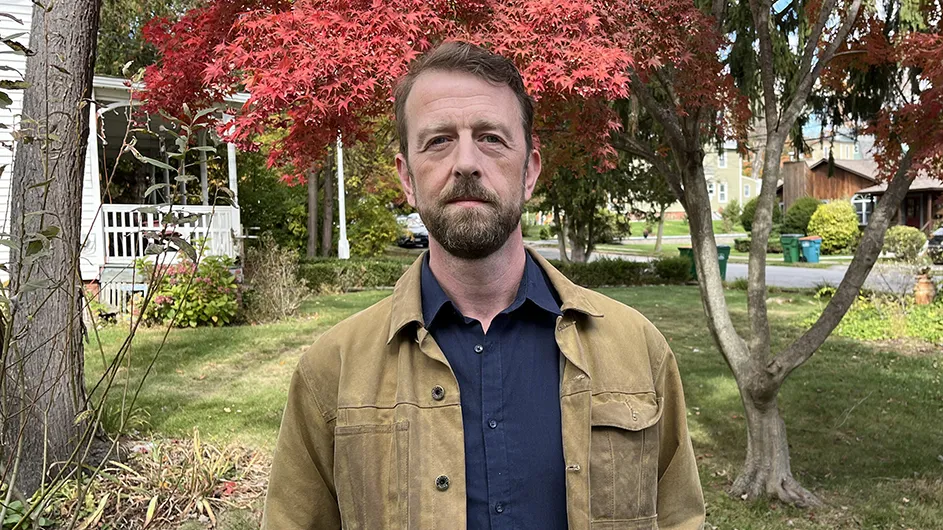
Matthew Hart, the new chair of English and comparative literature, spoke with Columbia News about his stewardship of the department, why literature is so fundamental to a college education, and how he ended up as an English professor.
As the new chair of English and Comparative Literature, what are your plans for the department?
First, I plan to follow the professor’s version of the Hippocratic Oath and do no harm! We’ve been fortunate to have some excellent leaders in recent years, so job number one is to preserve and build on the good work done by my predecessors.
One example of that is the successful reform of our major, which was recently completed by our former chair, Denise Cruz, and former director of undergraduate studies, Molly Murray. At a time when the press is full of articles with headlines like “The End of the English Major,” our enrollments are higher than they’ve been in years! We’ve doubled the size of our thesis program; we’re running hugely popular lectures on topics as different as Shakespeare and Writing and AI; and we’re packing rooms for events like our recent celebration of the 100th anniversary of Virginia Woolf’s Mrs. Dalloway.
Beyond not messing up other peoples’ successes, we’re beginning a systematic review of our doctoral curriculum. We’re one of the top PhD programs in the country, with an admissions rate of only 2.5 percent and a record of training outstanding scholars and critics, but I’m determined to build on that success. I want our PhD program to be a model for what a 21st-century graduate degree in the humanities should look like.
While chair, will you continue to teach? If so, what are you teaching this semester, and in the spring?
Yes! I’ll teach at least one class every semester. This academic year, I’m teaching Literature Humanities to a wonderful group of first-year students. We’re right now in the middle of The Odyssey, and about to transition to Anne Carson’s translations of Sappho, which is always a high point in the year for me.
What sort of programming is planned for the department this year?
There’s so much going on! I just went to a talk by my colleague Edward Mendelson about his new book on Virginia Woolf; a couple of weeks from now, I’ll be moderating a discussion of Eleanor Johnson’s new book, Scream with Me, which is a fascinating and highly readable study of horror movies and American feminism in the 1970s.
For the spring, I’m planning some events focused on contemporary poetry, including an open mic event for students; a reading by Sandra Simonds, a brilliant American poet; and an event that will focus on living poets whose work engages with classical and ancient poetry.
Why is the study of literature so important?
That’s a very big question, but here are three good reasons: First, the history of literary creativity is as old as the history of language. You shouldn’t trust any account of human culture and society in which encoding and decoding symbols isn’t at the center of what we do and who we are. Second, stories and plays and poems change people’s lives: They do so because we see ourselves in them, and because they show us possibilities we never imagined. Finally, the experience of beauty matters. We are diminished, as people, by the ugliness that surrounds us much of the time; the study of art reminds us that ugliness isn’t inevitable.
What was your path to a career as an educator and writer?
My dad was the first person in our family to go to college, so I felt pushed hard as a child to succeed professionally. But I was your classic bookish, artistic child, and it took me a while to work out how to reconcile my family’s ambitions with my own.
I found my path through a study-abroad program that took me from Edinburgh University in Scotland, where I was an undergraduate, to the English Department at the University of Pennsylvania, where I persuaded them to let me take the first-year doctoral program curriculum. I loved it. At that point, Penn was full of people who wrote criticism and poetry, novels and theory. Al Filreis had just founded the Kelly Writers House, and there were readings and talks by amazing living writers, with seminars on their work that would bring together everyone from elderly professors of Renaissance French drama to anarchist poets from West Philly.
I’d never experienced anything as intellectually exciting or demanding as the American graduate seminar room, and I’d never been at a university where the study of contemporary literature was treated so seriously. From that year onwards, I knew that I wanted to spend my life studying and teaching and writing about the literature and culture of the 20th and 21st centuries.
What are you working on now?
I’m writing a kind of group biography that’s also a cultural history of popular entertainment in Britain and America in the 20th century. Because my biographical subjects are also my relatives, and there are great stories to tell about their sexual liaisons with movie stars, it's also a chance to write for a wider audience than academics and students.
My grandpa came from a family of actors and filmmakers called the Kelllinos. They weren’t big stars, but they were serious showbiz professionals whose careers stretch from vaudeville theater, to silent films, to the talkies, to network TV. They were also, like me, folk who moved to America in pursuit of a life they couldn’t find at home. My working title is Deadwater, which I’ve lifted from an independent movie my grandpa’s cousin Roy made in 1938 with his then-wife, Pamela Ostrer, and the great movie actor James Mason. Their long-running menage-a-trois is at the center of the story I’m telling.
Advice for anyone interested in pursuing a trajectory similar to yours?
Read a lot. And if you want to be a department chair, listen more than you read.
What’s special about teaching at Columbia and in New York?
For someone like me, devoted to the cultural history of the present, there’s literally nowhere better to be than New York City: Maybe London, given the work I do on British artists and writers, but it would be a tight race.
And Columbia: There’s no contest. It’s hard to think of a single literature department anywhere that’s been so committed, over so many decades, to thinking about literature’s place in the world. I’m immensely proud and grateful to have been trusted with leading a department that’s been home to scholars as brilliant and diverse as Lionel Trilling, Ann Douglas, Carolyn Heilbrun, and Edward Said, to name just a few. Right now, we’re home to three University Professors—Gayatri Spivak, Farah Griffin, and Saidiya Hartman—who are all giants in their fields, with readerships all over the world. And that’s just a tiny bit of what makes working here so exciting. It’s an immense history, it’s still going, and we’re still building on it.