Moving Forward With the Sociology Department’s New Chair
Adam Reich sees change on the horizon for the discipline in ways both big and small.
Columbia is one of the original homes of sociology in the United States. In 1894, the University became the first in the country to create a professorship in sociology; in 1904, Columbia became the second university to create a department devoted to the subject of sociology. Since then, the Department of Sociology has counted some of the discipline’s most important figures among its faculty and students, and remains among the most respected and influential sociology departments in the world.
The department continues to build on this history through its commitment to pursuing original, agenda-setting research, and to teaching the next generation of top sociologists. Its bachelors, masters, and doctoral students receive training in sociological theory and a range of research methods. They are encouraged to take courses in multiple substantive areas of the discipline. Columbia’s sociology graduates go on to occupy research and teaching positions at some of the best global universities and research institutes.
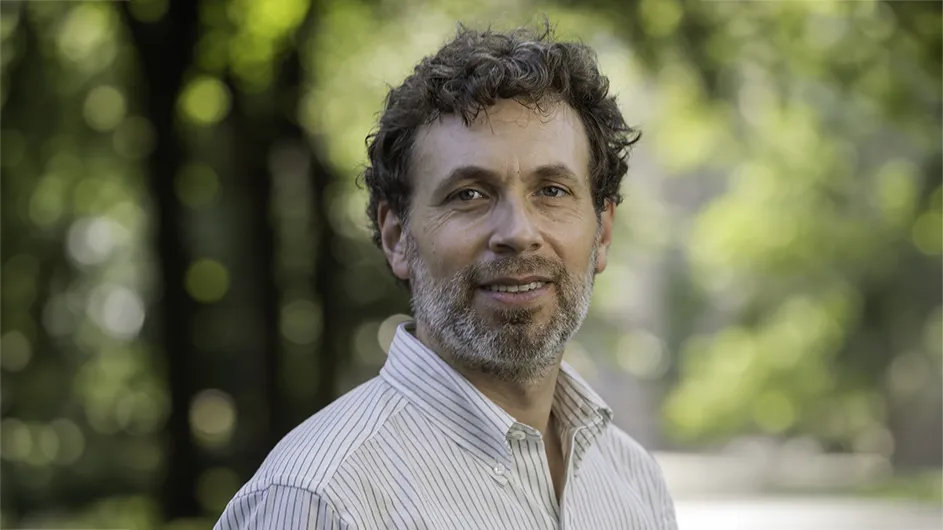
Adam Reich, the new chair of Sociology, shares his plans for the department with Columbia News.
What are your aspirations for the department?
I can answer this question in big ways and small ways. Most broadly, sociology as a discipline is in a moment of crisis and opportunity—a crisis distinct from, but related to, broader attacks on higher education: What role does sociology currently play in our society, and what role should it play? This makes it a particularly exciting moment to be chair of our department, which is among the strongest in the country. Our faculty, graduate students, and undergraduates are uniquely positioned to shape a sociology for the 21st century.
In a much more modest way, I’d like to continue to explore how to make our long, somewhat quiet hallways in Knox Hall a bit more lively. We are hosting several department-wide forums this year on topics ranging from the future of sociology to the effects of AI on society. We have also recently acquired a ping-pong table for our seventh floor, and we are planning to hold informal tournaments on Friday afternoons.
Will you continue to teach? If so, what are you teaching this semester, and in the spring?
I will continue to teach and mentor students while I am chair. This year, I am teaching one section of our two-semester MA thesis seminar. We have a fantastic cohort of MA students this year, embarking on projects that range from how feminism is portrayed in the fashion industry, to how socioeconomic status structures people’s use of AI, to how musicians in the city think about labor unions. Our MA program is an eight-month sprint through the discipline, and it is fun to play the role of coach.
Aside from my teaching, I supervise a group of undergraduate research assistants, who work with me in the Columbia Labor Lab on projects related to understanding and strengthening the American labor movement.
Why is the study of sociology so important?
Sociology came into its own as a discipline during the Industrial Revolution, a period of profound social, economic, and political change. I don’t think it’s an exaggeration to say that we are living through another period of profound social, economic, and political change. But it is also a period when our expertise as sociologists has perhaps never been more relevant.
What effects is AI having on the workplace, and on human sociality? How are societies adapting to the consequences of climate change? Why are democratic norms eroding, and how might they be restored? Sociologists today are well situated to address these sorts of questions through rigorous empirical research; research that can, in turn, provide frameworks of action for those best situated to intervene on them.
What was your path to a career as an educator and writer?
I majored in public policy as an undergraduate at Brown. There, I took a course called Children and Public Policy, taught by a legendary professor named Ross Cheit. Through this course, I began working on a newspaper published out of Rhode Island’s juvenile prison. I became so immersed in this work that I left school to start working with young people upon their release. By the time I returned, I felt that public policy was too narrow a lens to understand the structural determinants of juvenile delinquency. I wound up writing my undergraduate thesis on the need to bring more sociology to public policy, which became the basis of my first book, Hidden Truth: Young Men Navigating Lives In and Out of Juvenile Prison.
What are you working on now?
I just finished a book, Inside Jobs: Prison Work in the American Labor Market, a mixed-methods analysis of the changing relationship between prison and the labor market over the course of U.S. history.
Since 2019, I have served as co-director of the Columbia Labor Lab, an interdisciplinary center on campus. The center works with labor unions and other worker organizations on research projects of mutual interest, in order both to better understand and strengthen these organizations. My two most time-consuming ongoing projects are related to the center, and they both involve lots of people other than myself.
First, building on some of the findings from Inside Jobs, I’m working with others on a randomized controlled trial about the impacts of union pre-apprenticeship programs for people returning from prison in New York City. Second, I am working with a separate team on a randomized controlled trial of labor organizing in the nursing home sector. As far as we know, this is the first time researchers have tried to estimate the effects of labor organizing in this way. The project combines administrative data, surveys, and more than 1,300 interviews with workers (so far). We started this project in 2021, and are still very much in the middle of it.
Advice for anyone interested in pursuing a trajectory similar to yours?
For me, it has always been important to think about the role of social scientific knowledge within the society we study. Who are we creating social scientific knowledge for, and to what end? If you are a scholar (or potential scholar) with the same questions or commitments, I would recommend finding a set of organizations or institutions you believe in, getting to know them well, and then situating your research in relationship to them. In some ways this makes research more difficult, as you have to speak to multiple audiences at once—an audience within your disciplinary field, and an audience in the world you’re studying. But this is the way I’ve found to make the academic enterprise make sense to me.
What’s special about teaching at Columbia and in New York?
What stands out to me about our department is the wide intellectual range and imagination of our faculty members and students. Many of us do work across multiple subfields of the discipline, often using multiple methodological approaches. It’s the most creative intellectual environment I’ve ever been a part of, and it’s pretty infectious. And indeed, part of this may be because we are located in such a vibrant, creative, complicated, cacophonous city. One does not have to go far to find phenomena of sociological significance—just ride the #1 subway train!