A Book With an Interdisciplinary Approach to the Climate Crisis
Climate Justice Now transcends traditional scholarly divides across the natural sciences, social sciences, and humanities.
Climate change is not only an environmental crisis, it is also a catalyst for worsening socioeconomic inequalities, leading to widespread calls for climate justice. Even though this term, “climate justice,” has become increasingly common, there remains no universally accepted definition. This challenge is compounded by the limitations of traditional scholarly frameworks, which struggle to encompass the impact of the climate crisis across global, national, and local levels. The scope of the crisis requires ethical, social, and political considerations, alongside scientific and environmental insights to shape equitable responses by states and societies.
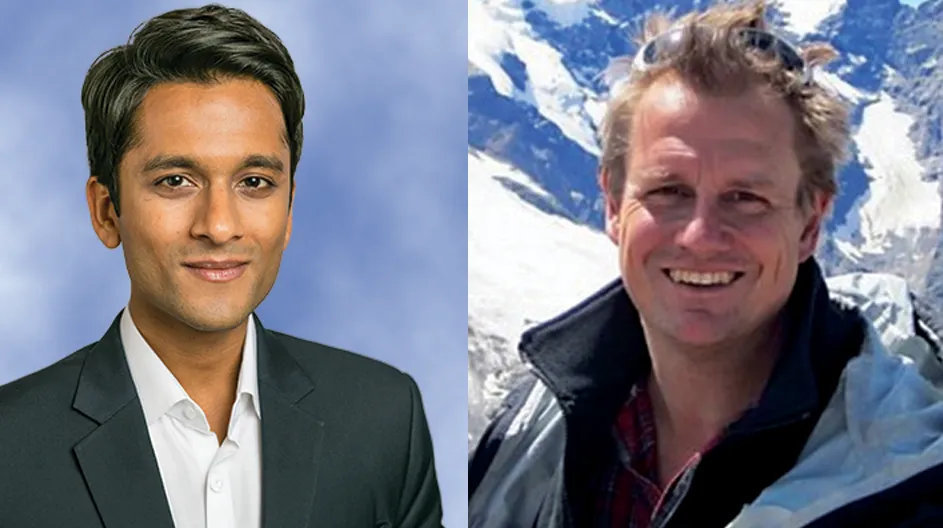
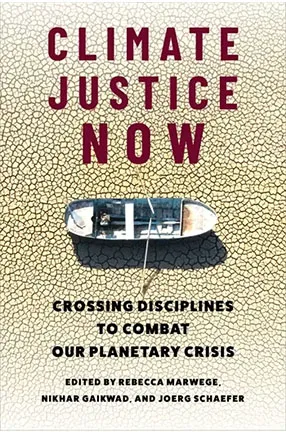
Climate Justice Now is a multidisciplinary volume that offers a comprehensive exploration of debates on climate justice across the natural sciences, social sciences, and humanities. Co-edited by Nikhar Gaikwad, an assistant professor of political science, Joerg Schaefer, a Lamont research professor and environmental scientist, and Rebecca Marwege, an assistant professor in environmental politics at the American University in Paris, the book synthesizes these divergent approaches. It also develops a new conceptual framework that transcends disciplinary divides, providing a deeper understanding of climate justice. Contributors make an urgent case that climate justice must be centered within and across disciplines, creating a roadmap for interdisciplinary research and pedagogy on the climate crisis. Featuring a wide range of voices and actionable recommendations, Climate Justice Now illuminates how scholarship on climate change can become a call to action.
Columbia News caught up recently with Gaikwad to ask him some questions about the book and climate justice.
How did this book come about?
Back in 2020, Joerg and I teamed up with Rebecca, who was a Columbia graduate student in political theory at the time, to start an interdisciplinary network at Columbia Climate School. We called it the Decarbonization, Climate Resilience, and Climate Justice Network. The idea was simple: Bring together people from the natural sciences, social sciences, and humanities to talk about how their fields approach climate justice, both in research and in teaching.
At the time, the term “climate justice” was everywhere—you’d hear it in academic circles and among practitioners—but it wasn’t clear that it meant the same thing to everyone. We weren’t even sure a single, shared definition was possible, or whether it should be. And as we kept the conversations going over the next few years, it became obvious just how wide the gaps were between different disciplines.
Some of those gaps were philosophical. For instance, what kind of justice are we even talking about—distributive, procedural, restorative? And who counts when we think about justice? Are we focusing on people alive today, future generations, or non-human species?
Other gaps showed up in policy debates. If compensation is one way to address climate harms, then who should pay—individuals or countries? And how do you measure responsibility? Do you base it on historical emissions, current emissions, or things like “luxury” emissions?
Then there are the scientific uncertainties. Take geo-engineering—cloud brightening, for example, a proposed technique to combat climate change by spraying sea-salt particles into low-lying marine clouds, increasing their reflectivity to send more sunlight back into space. The process aims to cool specific regions of the planet, acting as a temporary measure to reduce global warming. In theory, cloud brightening might cool certain areas in the short term, but the science is still unclear about the broader consequences. The technique could potentially create serious problems in other parts of the world, often in places that are already more climate vulnerable.
So pretty quickly we realized that when it comes to climate justice, you can’t separate the physical science from social systems, policy decisions, or ethical perspectives. They’re all deeply connected. This book grew out of that realization: It’s an effort to bring those different perspectives into conversation, with the hope that a more layered, integrated understanding can help both scholars and practitioners come up with responses to the climate crisis that are effective, fair, and lasting.
Can you give some examples from the book of how scholarship on climate change, across disciplines, can become a call to action?
One of the most rewarding parts of co-editing the book was getting to work with case studies that show what multidisciplinary research on climate justice can do.
Take the Black Belt region in the American South. For a long time, social scientists have tried to explain why this region has faced such deep economic and political inequalities. But in one chapter, Kailani Acosta and Gisela Winckler take a much broader view. They show that to understand the story, you have to go back millions of years, to when biological and geological processes related to the activity and death of phytoplankton created the region’s fertile soil. Indigenous communities farmed that land for centuries, until colonization turned it into a center of enslaved agriculture. From there, industrialization and human-driven climate change helped reinforce systems of inequality that still affect Black and indigenous communities today. In fact, those same communities in the Black Belt are now among the most vulnerable to climate change, facing serious health, economic, and social impacts. It’s a powerful example of how natural sciences, social sciences, and questions of justice are all deeply connected and how insights from the natural sciences can help us better understand the roots of social inequality.
Another example comes from a chapter by Jacqueline Klopp and Festival Boateng, which looks at transportation and urban development in the Global South. They explain how many cities ended up with car-heavy, carbon-intensive transport systems during colonial rule, partly because colonial powers designed cities to keep different populations separated. Later on, international institutions like the World Bank reinforced these systems by funding road-based infrastructure while overlooking lower-carbon options like rickshaws or minibuses—modes of transport on which local communities relied. So when we look at transportation emissions today, they’re not just a matter of current choices; they’re shaped by a long history of colonialism, development policy, and planning ideas that prioritized cars over more accessible alternatives. Bringing together perspectives from different disciplines helps us see these deeper roots—and also points to solutions. If we center local knowledge and rethink these systems, we can start building more sustainable, lower-emission transportation networks.
What do you propose as the universally accepted definition of climate justice?
We’re not trying to tell communities most affected by climate change what the right definition of climate justice should be. And we’re also not claiming there’s one universal definition that works everywhere. The reality is, the justice dimensions of climate change are constantly evolving; they shift over time, and look different depending on where you are.
So instead, we think of climate justice as something that’s always developing, shaped by insights from many different disciplines. And interestingly, it’s not by smoothing over disagreements that we make progress; it’s by understanding those differences. When you see how economists, scientists, political theorists, and others approach the issue differently, you start to get a fuller picture of what climate justice involves.
From the contributions in the book, we found it helpful to think about climate justice across five key dimensions. First, there’s a temporal dimension: Climate justice changes over time as scientific knowledge and moral thinking evolve. Then there’s a spatial dimension—climate justice looks different in different places, because the impacts of climate change and local contexts vary so much.
There’s also an agential dimension, which is about who’s involved—from individuals to governments—and what power they have to shape outcomes. The structural dimension looks at the bigger systems in play, like global institutions, that enable or constrain those actors. And finally, there’s an ontological dimension, which gets at something deeper: People’s worldviews and beliefs shape how they understand and pursue climate justice in the first place.
Putting all of that together, the goal isn’t to lock in a single definition, but to build a richer, more flexible understanding of climate justice that reflects its complexity.
How can traditional scholarly frameworks encompassing the natural sciences, social sciences, and humanities transcend disciplinary divides to best respond to the climate crisis?
Established scholarly frameworks can go beyond disciplinary divides by reforming academic structures that currently prioritize mono-disciplinary research. This includes reshaping funding, publication, and promotion systems to equally reward cross-disciplinary collaboration across the natural sciences, social sciences, and humanities. Institutions should also expand interdisciplinary teaching and programs to better equip students to address the complexity of the climate crisis.
Beyond academia, integrating insights from grassroots movements and local communities strengthens both research and its real-world impact. Ultimately, an all-hands-on-deck approach—centered on collaboration and climate justice—is essential to effectively respond to the global and multifaceted challenge of the climate crisis.
What classes do you teach that engage with the situation?
My background is in international political economy, which is a subfield of political science. Most courses in this area either give you a broad overview of how global economic policymaking works, or they zoom in on specific topics—like trade or monetary policy—but usually treat them separately.
The class I’ve developed and will be teaching next year takes a different approach. It looks at the connections between three areas that are deeply linked, but not often studied together: trade, migration, and climate change. At a basic level, all three involve things moving across borders—goods and services, people, and pollutants—but we rarely put them in the same conversation.
Once you do, the connections become clear. Climate change shapes trade patterns, but trade also contributes to climate change. Climate pressures influence why people migrate, but immigration policies determine whether they actually can. These systems are constantly interacting with each other.
One of the things that stood out to me while working on Climate Justice Now is how central questions of justice are to understanding these links. For instance, the origins of the climate crisis go back to the Industrial Revolution, when Western countries began emitting greenhouse gases on a massive scale. But that process was tightly connected to global trade—and to colonial systems that extracted raw materials, turned them into manufactured goods through carbon-intensive production, and then sold them back to colonized regions.
Fast forward to today, and you see a similar dynamic. Many wealthy countries have reduced emissions at home, but often by shifting carbon-intensive manufacturing to developing countries. At the same time, consumers in wealthier countries continue to drive demand for those goods through global trade. So the system, in a sense, reproduces itself.
Looking at all of this through a justice lens changes how you see the problem. It pushes you to think not just about efficiency or growth, but about responsibility, fairness, and who bears the costs. And it also opens up space to think about more equitable solutions, like climate finance or resource transfers from richer to poorer countries.
That’s what the class is trying to do—bring these pieces together and think through them in a more integrated, systematic way.
Anything you would like to add?
One thing we learned quickly while working on this book is that multi-disciplinary conversations sound great in theory, but they’re quite hard in practice. When you bring together people from the natural sciences, social sciences, and humanities, everyone is speaking a slightly different language. So there’s a real need for translation—taking the time to understand each other’s terms, methods, and assumptions. We saw this firsthand in our working group: For example, some humanists found the technical language around measuring greenhouse gas emissions hard to follow, while some natural scientists didn’t immediately see why concepts like recognition or participation are so central to discussions of justice. Such experiences made it clear that simply calling for more interdisciplinary work isn’t enough. It takes solid institutional support and changes in how academia is structured to make these conversations possible and productive.
Putting together Climate Justice Now also reinforced something more fundamental: The climate crisis touches every part of society, so narrow approaches—whether purely technical fixes like geo-engineering or purely theoretical perspectives that ignore science and lived experience—risk missing the bigger picture and even creating ineffective or harmful solutions. What we’re hoping to do with this book is not to offer the final word, but to contribute to a much larger, ongoing conversation that brings different perspectives together to better understand and respond to the global climate crisis.