Bruno Bosteels Translates Alain Badiou on Nietzsche
Columbia’s dean of humanities explains why he finds translating another person’s work deeply satisfying.
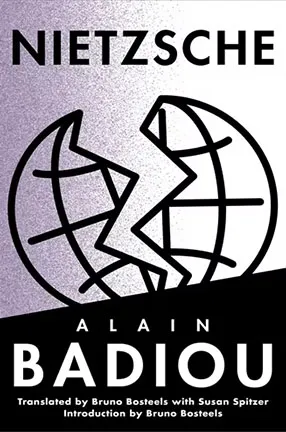
For French philosopher Alain Badiou, Friedrich Nietzsche is the prince of anti-philosophy. French leftist thinkers celebrated Nietzsche in the second half of the 20th century, but when a backlash emerged in the 1990s, Badiou refused to join the attack. Instead, he devoted his 1992–1993 seminar to an original reading of Nietzsche—to whom he had previously shown indifference or scorn—in which he appears almost enamored with the author of The Anti-Christ and Ecce Homo.
This book, Anti-Philosophy I, presents Badiou’s seminar on Nietzsche’s late works, which for the first time addresses what would become one of Badiou’s central concepts—anti-philosophy and its adversarial yet intimate relationship with philosophy. For Badiou, Nietzsche is the key modern anti-philosopher, his antagonist—and occasional ally—in the battle to redefine the work of philosophy. Badiou takes for granted Nietzsche’s declaration that “God is dead,” yet rejects his assertion that philosophy too is past its expiration date. Badiou engages a century-long tradition of grappling with Nietzsche’s paradoxes, considering thinkers such as Martin Heidegger, Gilles Deleuze, and Jacques Derrida. Examining Nietzsche’s writings on Richard Wagner, Badiou reflects on the nature of art and aesthetics in his ongoing project of reasserting the value of philosophy from a new angle.
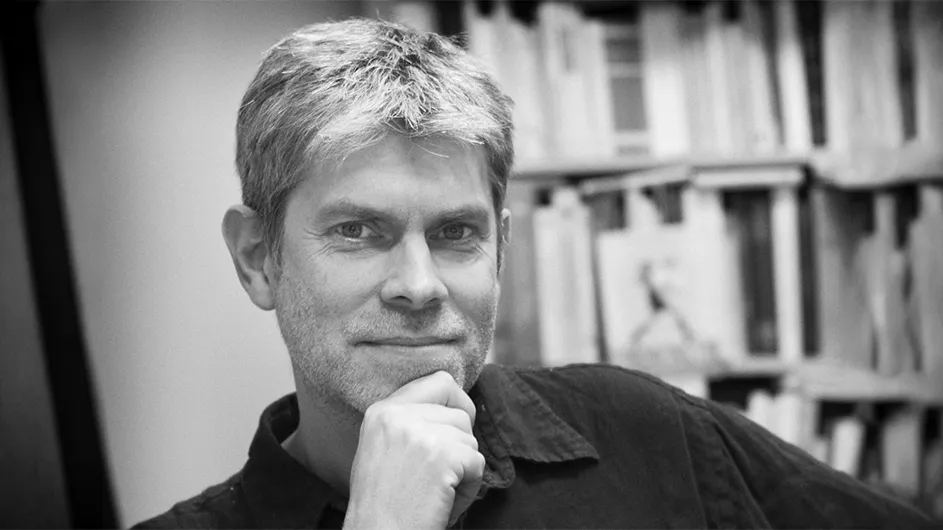
Bruno Bosteels, dean of humanities and a professor in the Department of Latin American and Iberian Cultures, has translated the book with Susan Spitzer, a frequent translator of Badiou's works. He discusses the art of translation, his work and teaching, and Badiou and Nietzsche with Columbia News.
How did your translation of this book come about?
Badiou’s seminar on Nietzsche as an anti-philosopher was a logical next translation project for me. Even though Nietzsche in many ways represents the diametrical opposite of Badiou’s own philosophical and political choices, in this seminar the French thinker offers a most generous, almost endearing portrait of the final years of Nietzsche, right before his mental breakdown on January 3, 1889.
Badiou’s seminars in general convey a unique teaching style—a mix of freewheeling improvisation, sustained digression, and punctual confrontation. But this close reading of Nietzsche’s final years gives us a rare view of Badiou in the process of thinking through a set of positions that he viscerally rejects, yet also perhaps secretly admires and mimics.
There is still another reason for why I took on this translation, which is that for many decades I have been thinking about the Argentine writer Jorge Luis Borges as a kind of anti-philosopher. “We know that he was the philosophers’ enemy; to have appropriated one of their weapons so as to turn it against them must have caused in him a bellicose pleasure,” Borges himself wrote in his essay, “A History of Eternity,” speaking about the ancient Greek bishop, Irenaeus. To understand how this statement might be applied to Borges himself is a project for which I learned a great deal from Badiou, when he formalizes the strategies of the anti-philosophical tradition in his seminars on Nietzsche, Ludwig Wittgenstein (which I also translated), Jacques Lacan, and Saint Paul.
What are your thoughts on this quote by José Saramago: “Writers create national literature with their language, but world literature is written by translators.”
World literature today may have different connotations than when Saramago made this statement. It may be that world literature is not as international or worldly as he makes it sound, since the term now refers mostly to literature translated into English. But I like how Saramago draws attention to the otherwise mostly invisible and underpaid labor of translators in transcending national boundaries and cultures.
How do you see your role as a translator? Are you merely reproducing another writer's work in a new language, or are you adding something of your own to the writing?
Translation for me most often means work late at night when everyone else is asleep. In this sense, it has a special place in my heart. I am and am not a professional translator. It is more that I exist in other languages as a fact of life, since for me only a few hours every month are spent speaking on the phone with my mom or texting with my brothers in Flemish, while the rest of the time I speak, teach, or write in a foreign language.
Once I started translating more officially—whether other people’s work or my own writings—I found a unique pleasure in dwelling in this in-between space, where I can allow myself to float back and forth between two or more languages, none of which is my mother tongue. I feel freer in translation than in regular academic writing because there is even less of a privilege of either the target or source language over which I would be expected to have control as a native speaker. I am exploring and hopefully improving my understanding of the inner workings of two or more foreign languages, between which I am in a condition of what the poet and philosopher Friedrich Hölderlin called originary exile. It is a way of “commoning” and depersonalizing the work of thinking, which I find deeply satisfying.
You have translated numerous works by Badiou; how did this relationship with him and his works develop?
Though I had read some of Badiou’s earlier writings beforehand, it all began in the mid-1990s when I read his notoriously obscure Theory of the Subject. This book blew me away. It is the work of a mad loner (a bit like the final Nietzsche, come to think of it), who cares not the slightest about how he will be understood, if he’s read at all. The work combines idiosyncratic close readings of Hegel, Mallarmé’s poetry, the ancient Greek tragedy of Sophocles and Aeschylus, Hölderlin, Lacan, Marx, and Mao Zedong. Written in a Mallarméan syntax, complete with invented portmanteau words like “splace” or “outplace,” and weird formulae to explain such notions as anxiety, justice, courage, and terror, this book for me stands as an example of the unplaceable work of theory prior to its systematization into a philosophy.
After reading this difficult text over a long weekend in Cambridge, Massachusetts, I wrote to Monsieur Badiou, tried to explain the effect his book had had on me, and proposed that I might translate his work into English. He immediately responded with a handwritten note, saying how touched he was, considering the absolute solitude in which he had been working for years. From that point onward, we have been friends, accomplices, and, occasionally, sarcastic critics of one another. When, several years later, I was able to finish the translation of Theory of the Subject, I was quite moved to hear some readers tell me that it is easier to understand in English than in the original French. The seminar on Nietzsche is my ninth Badiou translation, and I have just signed the contract for the tenth, Philosophical Voyages of the Mind, which will be due to the publisher very soon.
Do you agree with Badiou’s interpretation of Nietzsche in Anti-Philosophy 1?
Yes and no. I appreciate Badiou’s ability to formalize the appeal of Nietzsche and Nietzscheanism in the 20th century. And, because something similar is at work in a writer like Borges about whom I have never stopped writing since my undergraduate years in Belgium, I can see the appeal of the radical anti-philosophical act (or the aesthetic act or fact, el hecho estético, in the case of Borges) of breaking world history in two halves, as Nietzsche aimed to do at the end of his sane life. But, as I explain in the translator’s introduction, I also believe that this rather formal reading of the final Nietzsche underestimates the pernicious power of his genealogical evaluation of forms of life based on an order of rank that is racialized in ways that are never merely metaphorical.
It is deeply troubling that so many of our greatest theorists and philosophers today—even when they claim to be progressive or leftist—openly or implicitly embrace the creative side of Nietzsche, believing themselves also to be free of resentment, when in actual fact this call for creativity and greatness is inseparable from a supremacist agenda that postulates the need for large masses of expendable individuals to prop up a few, usually male, geniuses. Our world today unfortunately may be even more Nietzschean than Badiou thinks, and for reasons other than what he explains.
As dean of humanities, do you have time to teach? If so, what have you taught lately?
As divisional dean I don’t have to, but I always teach at least one class every year. Last fall I taught the senior seminar for Columbia’s Institute for Comparative Literature and Society, where half of my appointment is housed. Because this program includes an even mix of Comparative Literature and Medical Humanities majors, and my knowledge of medicine does not exceed the theory of humors, I once again flipped the syllabus. After leading a few sessions, the students came up with amazing readings for group discussion on keywords such as (the very Nietzschean) contempt, risk, pain, improvisation, national language, dispossession, truth, temporality, (again, troublingly Nietzschean) “velvet” eugenics, patient storytelling, and so on.
What are you working on now?
I just finished the expanded English translation of my book The Mexican Commune, which I sent off to Duke University Press. And now, I am trying to keep the momentum late at night to finish its dark and dystopian counterpart, Philosophies of Defeat: The Jargon of Finitude. This is a fierce polemic I’ve been working on for over a decade, against what I consider the dominant trend in much humanistic work and political theory today, heavily influenced by Martin Heidegger and Jacques Derrida, even when people have not directly read these sources. The book is an attempt to think through how we arrived at the political impasse we find ourselves in today, when we seem to have internalized the defeat of the radical promise of liberation of the 1960s and 1970s in ways that are strangely defeatist and leave us seemingly powerless in return.
What do you think is the meaning of the humanities today?
For me, the meaning of the humanities today lies in the fact that there is no “today” (or “yesterday” or “tomorrow”) without the work of giving it form and meaning, which is what we study in the humanities.
Which three scholars/writers, dead or alive, would you invite to a dinner party, and why?
I prefer to invite friends to parties, not the living dead. But, if you insist, I would have liked to meet Borges when he was still alive, and to have been the translator for a meeting between Karl Marx and Mexican revolutionary Emiliano Zapata. I imagine the latter repeating to the former what he once told one of his secretaries: “These ideas seem fine and human to me, but I must tell you that it’s not our job to carry them into practice. That will be up to future generations, and who knows how many years will be required for them to take root.”