Discover Tony Kushner’s and Patti LuPone’s Archives at Columbia University
The collections of these two major figures in American culture reside at the Rare Book and Manuscript Library.
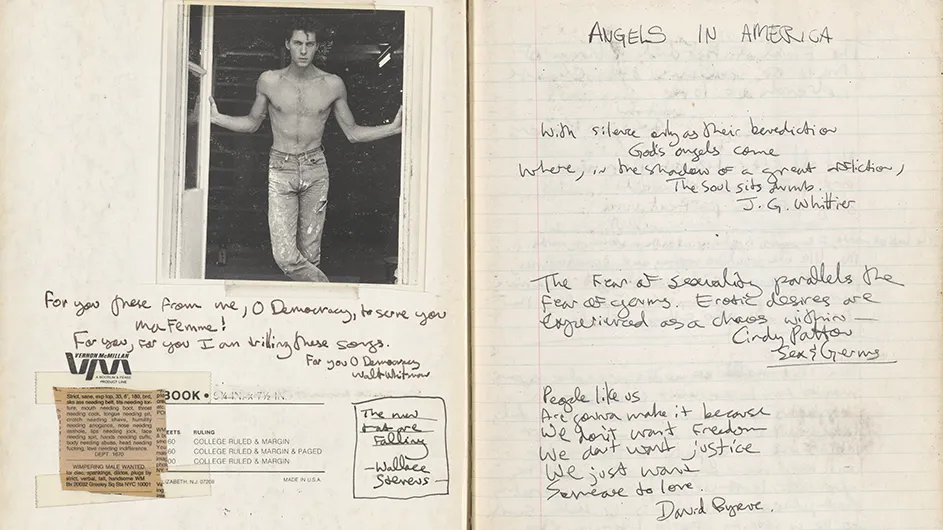
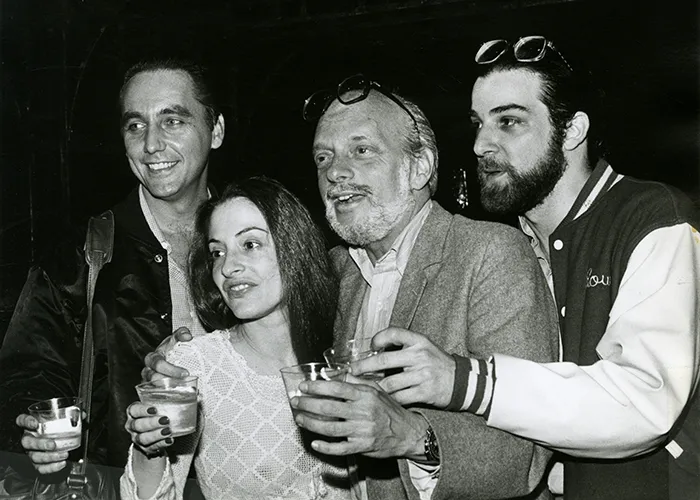
Amid the amazing array of collections in Columbia University’s Rare Book & Manuscript Library (RBML) are the archives of two major American figures in the performing arts—actress and singer Patti LuPone, and author, playwright, and screenwriter Tony Kushner. These two artists are still active and pursuing their creative work: LuPone will open the 92nd Street Y’s fall concert season in New York on October 1, 2026, with A Life in Notes, a performance of some of her iconic Broadway songs and other standards; Kushner continues to be involved with revivals of his landmark 1991 play Angels in America, which won both a Pulitzer Prize and a Tony Award, and to collaborate with Steven Spielberg.
Columbia News discusses both archives with RBML Director Courtney Chartier and Jennifer B. Lee, the former RBML curator of performing arts, now retired.
When were both archives acquired by RBML?
Courtney Chartier: Patti started giving us her papers in 2019 and makes regular additions. The most recent additions bring the archive up to 2025, and cover her work in the 2022 Broadway revival of Company, the 2024 Broadway play The Roommate With Mia Farrow, and Patti’s debut in the Marvel Comics Universe in Agatha All Along, a television series from 2024.
Tony started giving materials in 2013, with the largest acquisition in 2019, which formalized the Kushner Papers at RBML.
Are both archives actively used by theater scholars/historians and others?
Chartier: Yes! In fact, Ryan Donovan, a professor of theater studies at Duke University, recently contacted us for permission to use a document from the LuPone Papers in Eight Nights a Week: How Broadway Turned Backbreaking, his new book about Broadway musicals in the 1970s, which is coming out in 2027. According to him, Patti’s Evita notebooks perfectly illustrate the difficulty of the vocal score for someone performing eight shows a week. Both collections are also used in RBML’s teaching for courses across Columbia and Barnard.
What are some of the most interesting papers and/or objects in each archive?
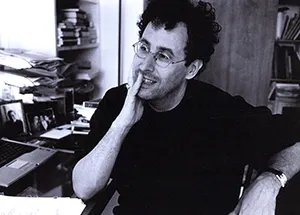
Jennifer B. Lee: Tony’s longtime writing method has been to create manuscript notebooks, where he works out ideas that lead toward his plays. In his archive, for instance, there are eight notebooks for Angels in America, two notebooks for the original version of A Bright Room Called Day, and two notebooks for Homebody/Kabul, among others.
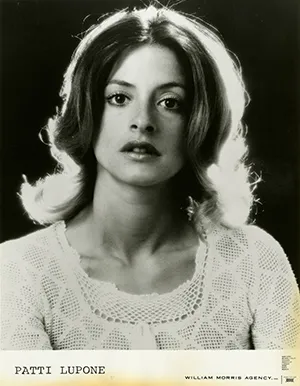
In Patti’s archive, she has been keeping scrapbooks of her work since joining the first cohort of Juilliard Drama Division students in 1968. To date, there are 56 scrapbooks that bring her career up to the last few years. No doubt future scrapbooks are in the works to document her more recent stage and screen work.
Both collections contain a wealth of scripts, playbills, and programs, as well as memorabilia such as opening night cards, tickets, and photographs. A few examples of other kinds of materials include:
Tony’s archive: Questions for his interview with Liza Minelli, published in Out Magazine in 1994; a rat made of electrical tape and given to Tony by the electricians on the set of Steven Spielberg’s film Lincoln, in 2012; The Book of Life, 2014, which was presented to Tony by Henry Louis Gates, Jr., when Tony appeared on Gates’s TV program, Finding Your Roots, in 2014 (the book was a companion piece to the TV series).
Patti’s archive: The script for the notorious 1976 Stephen Schwartz musical, The Baker’s Wife, the original production of which never made it to Broadway, and closed during its U.S. tour; the script for Heist, a 2001 David Mamet film starring Gene Hackman and Patti, among others; the script for the 2007 An Evening with Patti LuPone and Mandy Patinkin, a series of performances they did in the U.S. and abroad, as well as a souvenir program for the 2011 version of that show.
What is the importance of these archives being at Columbia?
Chartier: The importance of these materials at Columbia is that they are active in the scholarly conversation about American theater, arts, culture, and many broader issues. Both collections also document in a unique and personal way the creative process of writers and performers. Many of Tony’s works are intensely personal, yet have plenty to say about sexuality, race, and religion, with continued relevance in our society.
Patti’s papers include scores of personal materials, but also demonstrate the physical and psychological toll of live performance. And for fans, there is so much pleasure to be found in browsing! Not all uses of archives are to write history; they can also bring us joy in connecting us with someone we admire.

Anything to add?
Chartier: A personal favorite: During the previews of Evita, Patti’s co-star, Mandy Patinkin, wrote postcards to her with pep talks. His advice? Ignore the reviews and focus on the work, knowing your community supports you. It’s a little window into how difficult their job was, but also the closeness and creativity that work inspired.
Lee: Over the years, Patti has been hiring archivists to put together her scrapbooks using all acid-free materials, so they have come to us in excellent condition. Tony had also hired assistants to look after his archives before they came to RBML.
We thank Tony and Patti for being mindful of the preservation of their legacies, which are both very much still on-going.