Following in the Footsteps of Alexander Hamilton
As the new chair of the Economics Department, Harrison Hong has big shoes to fill.
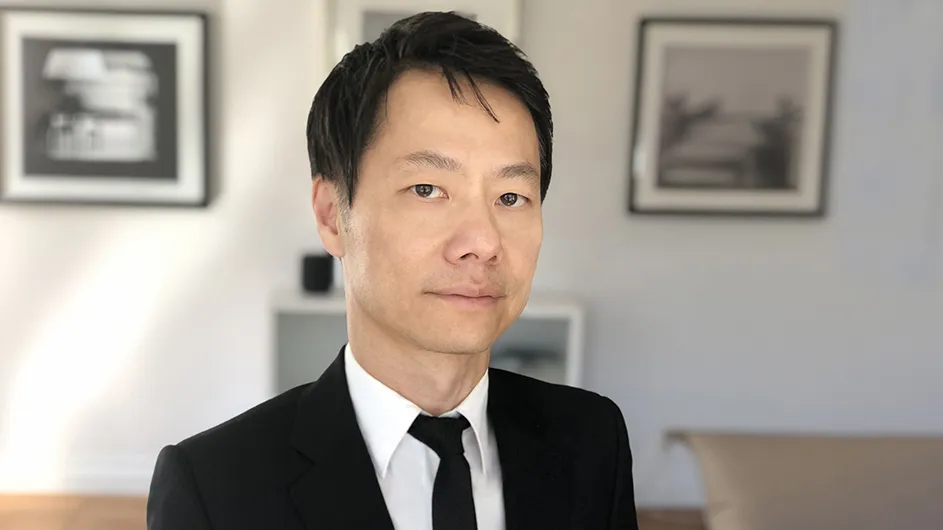
As the new chair of Economics, Harrison Hong, John R. Eckel Jr. Professor of Financial Economics, is taking the helm of a department with a hallowed history. More than a century of intellectual development lies between the beginnings of economics as a systematic subject, and the formal recognition of its autonomy in the curriculum at Columbia. Not until 1880 did economics attain its full stature as an integral part of the newly established School of Political Science. But the history of political economy goes back almost to the founding of Columbia College. Columbia was among the first institutions to make room in its curriculum for instruction in economics. Reverend John McVickar, who was appointed Professor of Moral Philosophy, Rhetoric, and Belles Lettres in 1817, began giving instruction in political economy (as the subject was then called) at least as early as 1821.
In the 18th century, Columbia’s contribution to economics was not a study, but a student: Alexander Hamilton. As the first secretary of the Treasury, his famous reports on the mint, public credit, a national bank, and manufacturing established the principles for the permanent economic foundations of the new republic. These reports adapted the latest learning of the Old World to the exigencies of the new, and they set a high standard for future secretaries of the Treasury.
Further Reading
Today, Columbia’s Department of Economics is ranked among top institutions globally for studying, conducting research, and teaching in the field. The faculty teaches in the areas of behavioral and experimental economics, contracts and organization, development economics, econometrics, finance, health and education, economic history, industrial organization, international macroeconomics, international trade, labor economics, macroeconomics, monetary economics, microeconomics, political economy, public economics, and urban economics.
The department offers a general economics major in addition to five interdisciplinary majors structured to suit the interests and professional goals of a heterogeneous student body. All of the undergraduate programs have different specific requirements, but share the common structure of core theoretical courses that provide the foundation for higher-level elective courses culminating in a senior seminar. Graduate students receive training, supported by members of the faculty who are leading research in their fields. The department has played a prominent role in the development of economic thought, and will continue to do so through its faculty and students, and to contribute to a better understanding of economic activities and the elaboration of policy.
As the new chair of Economics, what are your plans for the department?
I want to help Arts and Sciences implement the Large Majors Initiative, which was launched in 2024 by attracting outstanding scholars who can deliver a cutting-edge education for our majors. I also plan to work with the University’s Development Office to strengthen outreach to our undergraduate alumni through more frequent newsletters and social media engagement, and by inviting them back to campus for special events. Finally, the department needs to strengthen its PhD program, as the academic job market is more competitive than ever.
Will you continue to teach? If so, what are you teaching this semester, and in the spring?
In spring 2027, I will co-teach Climate Finance with José Scheinkman at both the undergraduate and PhD levels.
What sort of programming is planned for this year?
With the help of Economics Professor Miguel Urquiola, who is also, among other things, the senior vice provost for academic initiatives, the department is introducing Wall Street Prep, a mini-course focused on the quantitative skills widely used by graduates taking jobs in the financial sector. The course is geared toward seniors, and possibly juniors depending on availability. As part of the Large Majors Initiative, we are also introducing two new courses—one on big data and AI, the other on financial labor markets. Both are taught by Michael Best and Matthieu Gomez, who are among the young stars of the profession.
Why is the study of economics and finance so important?
Asset prices are the most timely information we have about what people collectively believe. That is why finance is not a narrow, technical subject: Asset prices tell you what the world thinks about climate risk, about AI, about whether a firm is a good place to work, well before any of it shows up in official statistics. Economics gives you the tools for reading that signal, and for asking when it is wrong. And when it is wrong, the consequences are not academic—the 2008 crisis, the mispricing of climate exposure, the current wave of AI investment. Getting these judgments right matters enormously, and getting them wrong is expensive for everyone, not just investors.
What was your path to a career as an educator and scholar?
Serendipitous. After graduating from the University of California, Berkeley, as an economics and statistics major, I could not decide between working for Goldman Sachs or attending Yale Law School. So I took the path of least resistance and accepted a National Science Foundation Fellowship to start a PhD in economics at MIT, figuring I would sort it out there. In the meantime, I got interested in financial economics, somehow landed a job at Stanford Business School at 26, and received tenure at Princeton soon after for my work on behavioral finance. I never looked back.
What are you working on now?
These days I work primarily on climate finance. One strand examines extreme weather and the role of adaptation, particularly in developing countries that are financially constrained. Another strand of my research explores the measurement of renewable asset price volatility, and what it implies for societal efforts to decarbonize. I also have long-running work on how stakeholders’ preferences shape whether firms mitigate the social harm from production. I enjoy climate finance because there are so many compelling questions at the intersection of finance, public policy, and science.
Advice for anyone interested in pursuing a trajectory similar to yours?
Take classes that both raise your ceiling and get you excited to learn more deeply. Berkeley had great statistics and math departments, and a great rhetoric department, and the advanced courses in all three were small compared with economics. I ended up taking a lot of them, and I think that combination laid the foundation for writing for scientific journals.
What’s special about teaching at Columbia and in New York?
I get to live nearby and walk to school every day. It is rare to be in such close proximity to this much intellectual depth and diversity—and still have the amenities of a major city.
Anything you want to add?
Only that former Economics Department Chair Bernard Salanié left the department in excellent shape, and much of what I will do this year builds on what he started.