Do You Care About Where Your News Comes From?
Anya Schiffrin hopes so, and is working to make the news more accessible with the Saving Journalism Conference.
In an era where democracy relies on access to accurate information, the global media landscape faces growing threats and shrinking resources. Behind the decline are tech behemoths that divert advertising dollars to their platforms from news outlets, platforms that have long profited from hosting news stories, headlines, and summaries. This business model rewards sensationalism at a time when the effects of generative AI on an informed electorate are becoming more apparent.
Journalism and Democracy in an AI World, which will be held at The Forum at 6 pm on October 24, is the keynote event of this year's Saving Journalism Conference at Columbia. Panel discussions will focus on subjects like global efforts to support quality journalism, the need to protect free expression and diverse cultures, and the critical role of platform payments in sustaining reliable information. This year, the conference, which is supported by a Bollinger Convening Grant, Columbia SIPA, and Columbia Business School, showcases the latest journalism research and policy making with international experts from around the world.
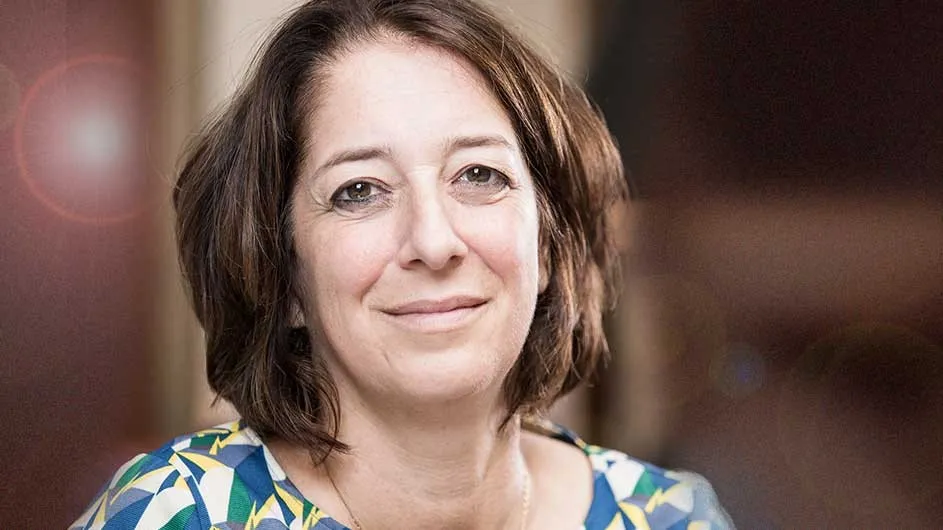
Anya Schiffrin, senior lecturer and director of the Technology, Media, and Communications Specialization at Columbia SIPA, who designed the conference, discusses it with Columbia News.
How did this conference come about?
During the pandemic, I looked for an inspiring project for students in my Columbia SIPA course, Global Media: Innovation and Policy Lab. A group of us mapped new policies around the world to support journalism. The pandemic was a dark time for journalism, as so many outlets suffered financially, and there were predictions that COVID-19 would be an extinction event for quality media in the Global South. Also, Democratators attacked freedom of expression, and journalists were subject to online harassment, so there was a lot to worry about.
Because I wanted my class to focus on solutions, we began to research many governments and philanthropists who developed policies to support news. We were surprised to find that it wasn’t just the usual suspects like Canada and Scandinavia, but also Indonesia, Tunisia, Lebanon, and South Africa. We wrote a report for the Konrad Adenauer Foundation called Saving Journalism. I thought the findings were so interesting that we hosted a conference in 2020 so that scholars, practitioners, policy makers, and philanthropists could learn about what was happening.
The conference was such a hit that we have continued it. Thanks to Taylor Owen, director of the Centre for Media, Technology, and Democracy at the Max Bell School of Public Policy, at McGill University in Montreal, Canada, the centre became our co-sponsor, and we’ve held the conference every year since 2020. It’s become an important gathering place for those interested in new ideas and in working together on policies to support journalism. These ideas include tax credits, philanthropic funding, getting Google and Meta to pay for news, and using city advertising to support local news. We’ve had speakers from Sweden, Canada, South Africa, Ghana, Korea, and England, and we get a chance to compare notes, see what works, and what doesn’t. Plus, our students get the opportunity to meet leading thinkers and policy makers from around the globe.
Why should people care about journalism now?
Quality journalism is essential for democracy and for societies to function, yet it’s been under attack over the last several years. Concerns about journalism’s viability have galvanized communities that care about it, and there are now many creative and effective ideas about how to help.
At this year’s conference, our speakers include Katrín Jakobsdóttir, former prime minister of Iceland; United Nations Under-Secretary-General for Global Communications Melissa Fleming; Churchill Otieno, president of the Africa Editors Forum; Misha Ketchell, editor of Australia’s The Conversation; Maia Fortes, who runs the Brazilian digital news organization, Ajor; Helena Rea, from BBC Media Action in Indonesia; and South African lawyer Nick Farrell.
Part of our strength is that we bring together people working in journalism with multi-disciplinary scholars: Sociologists and communications experts get to hear from economists and political scientists, as well as United Nations officials and government regulators from across the world. Our opening session on October 24 with President Emeritus and Seth Low Professor Lee Bollinger and University Professor Joseph E. Stiglitz will be a good introduction to the topic.
Overall, how do you think AI is changing journalism?
Journalism organizations are embracing generative AI as part of newsroom practice, but are wary of the economic impact of large companies profiting from their content if used without proper permission and compensation. At Columbia Journalism School, faculty members such as Mark Hansen and Jonathan Somahave become recognized for their expertise in reporting with AI and data analysis.
Over at Columbia SIPA, we’ve been concentrating on policy aspects of AI, and writing regularly and convening on the importance of compensation for publishers. Our conference will host Louis Dreyfus, president and publisher of Le Monde, and Nicholas Thompson, CEO of The Atlantic, to discuss these subjects, as well as publisher relationships with OpenAI.
Why are journalism funds so important?
Another idea we will explore at the event is how to set up a successful fund to support journalism. Brigitte Alfter, a German-Danish journalist, and I wrote a brief on creating funds to support news outlets and entrepreneurs, which was published by the Global Forum for Media Development. Among other countries, Denmark and the Netherlands have had such funds for decades, and now journalists and philanthropists in Brazil, the Philippines, and the Middle East are considering setting up similar funds.
In the U.S., groups like the American Journalism Project and the National Trust for Local News have been mobilizing local philanthropies to address news deserts by supporting media outlets that can become more viable. At the conference, we will discuss lessons learned and best practices.
Why is public service journalism vital?
One of the lessons of the last decade is that quality information helps societies thrive. Plenty of new research shows what journalists have long suspected: Quality journalism has a demonstrated effect in promoting democracy, civic engagement, and government accountability.
Columbia colleagues such as John Marshall, a political science professor, and Dylan Groves, a political science instructor, have been involved with new research methods, which have further shown the importance of journalism, particularly in the Global South, as well as elsewhere around the world.
The two conference events that are open to the public are Truth, Trust, and the Trials of Democracy, which will take place at 6 pm on October 22 at Maison Francaise, and the previously mentioned Journalism and Democracy in an AI World, at 6 pm on October 24 at The Forum. Advance registration for both events is required.