A Registered Nurse Returns to School to Launch Her Next Chapter
Sergine Delma, a doctoral candidate in nursing, believes nurses belong everywhere, from boardrooms to AI labs to Capitol Hill.
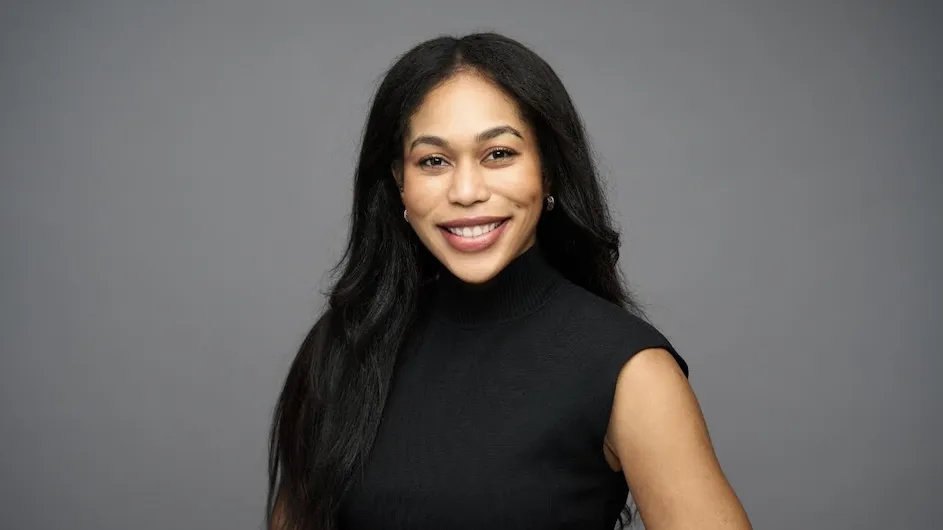
Sergine Delma worked as a registered nurse before deciding to return to school to pursue her doctorate in nursing. Columbia News caught up with Delma to discuss her path to Columbia, and what she plans to take on next.
What drew you to the field of nursing?
I grew up in Haiti, where I witnessed firsthand the devastating effects of limited access to healthcare. Losing loved ones to preventable conditions instilled in me a sense of purpose, to be part of the solution. Nursing offered the perfect balance of science, compassion, and advocacy. It’s a field that allows you to meet people at their most vulnerable moments and make a tangible difference in their lives.
What made you choose Columbia?
Columbia stood out because of its commitment to leadership, innovation, and health equity. I wanted a program that didn’t just teach clinical skills but empowered nurses to become change agents within healthcare systems. I valued the in-person format of the program, which allowed me to truly build relationships and network with colleagues across specialties and schools. That face-to-face collaboration has been invaluable in broadening my perspective and strengthening my professional growth.
You worked as a registered nurse before pursuing a doctorate. What made you want to pursue further education?
Working as a palliative oncology nurse was deeply fulfilling, but I saw gaps in continuity of care—moments where better systems and innovation could improve outcomes. I wanted the knowledge and authority to address those gaps on a broader scale. The Doctor of Nursing Practice degree is preparing me not just to provide excellent clinical care but to lead initiatives that transform how care is delivered. I couldn’t do that effectively without more training in evidence-based practice, leadership, and systems thinking.
Can you describe the work of the Columbia Nursing Pathways Collective Club?
Absolutely. I co-founded the Columbia Nursing Pathways Collective Club after recognizing a gap at the School of Nursing. While Columbia excels at preparing clinicians, there wasn’t a space for students interested in expanding their skills into areas like tech, consulting, and entrepreneurship.
Our motto, “Built on Nursing, Bound for Anything,” reflects our belief that nursing is a foundation—not a limitation. The bedside teaches us grit, compassion, critical thinking, and communication—the very skills that make us exceptional leaders in any space.
Through our Beyond the Bedside panel series, we bring together students, alumni, and industry leaders to explore how nurses can drive innovation across sectors. This doesn’t mean we don’t need nurses at the bedside—we absolutely do. Our message is simple: nurses belong everywhere—from boardrooms to AI labs to Capitol Hill. Nursing isn’t a limitation; it’s a launchpad. Our mission is to empower nursing students to see themselves everywhere and to provide the network and resources to make that possible.
You’re working on AI in nursing. Do you see more potential or harm in the use of AI?
There’s incredible potential, but only if it’s implemented thoughtfully. My research explores how AI can predict the development of type 2 diabetes in primary care to support early intervention in high-risk populations. I’m also part of a study analyzing how natural language processing (NLP) can optimize nursing documentation in home care notes and help mitigate bias.
At the same time, I’m mindful of the risks—particularly algorithmic bias that could worsen disparities if nurses aren’t included in AI design and testing. That’s why I believe nurses must be at the table from conception to implementation, ensuring these technologies truly benefit every patient equitably.
We’re already seeing exciting progress. Schools like Florida State University have launched master’s of science in nursing programs with a concentration in AI to prepare nurses as leaders in this field. And here at Columbia, we have incredible researchers and leaders—such as professors Maxim Topaz, Jacqueline Taylor, and Stephen Ferrara—who are championing the integration of nursing and technology both within the university and across the broader healthcare landscape.
AI isn’t the future, it’s the present. The key is ensuring that nurses are equipped to use these tools ethically, effectively, and compassionately so that technology enhances care.
What kind of work do you hope to pursue after graduation?
I’ll be starting as an oncology nurse practitioner, but my long-term goal is to combine clinical practice with innovation and leadership. I’m already working with a couple of incredible startups as a consultant, leveraging my background in quality improvement, research, and clinical practice to help develop solutions that improve healthcare delivery. I want to continue building relationships with ventures and founders at the intersection of nursing, technology, and business—driving innovation from both the clinical and strategic sides.
Looking ahead, I hope to build a career that bridges clinical practice, technology, policy, and health system leadership. Through translational research and advocacy, I aim to close the gap between evidence and practice while amplifying the voice of nurses in policy decisions—ensuring that we are not only providers of care, but also architects of the systems that shape it.
Geographically, I plan to stay in New York or return to Boston, both incredible hubs for healthcare innovation, but I’m open to wherever the next opportunity to create meaningful impact arises.
What’s the last bit of media you consumed that had nothing to do with nursing?
I recently listened to the Aspire podcast hosted by Emma Grede where she interviewed Mellody Hobson, Co-CEO of Ariel Investments, who said, “You have to want to be great and act with urgency every day.” That line hit me deeply. It’s a reminder that success isn’t just about talent or opportunity; it’s about intentionality, consistency, and the refusal to coast. I still feel that same fire in myself—the desire to move with purpose and treat every day like it matters.
I also listened to Olamide Olowe, founder and CEO of Topicals, on the Working Hard or Hardly Working podcast. She said something that’s stayed with me: “Death to nonchalance.” I’d take it a step further: death to complacency. Whether in healthcare, entrepreneurship, or personal growth, I believe that the moment we get comfortable is the moment we stop growing. Both quotes capture how I want to show up—in my work, my leadership, and my life—with urgency, curiosity, and conviction.
What’s the best place to grab a bite near the Nursing School?
Definitely Kozy Fresh, they make the best salads. It’s my go-to spot when I need something quick but still healthy between classes or meetings.