A Book About the Links Between Poetry and Music
Fred Lerdahl proposes a theory of the sounds of poetry conceived in musical terms.
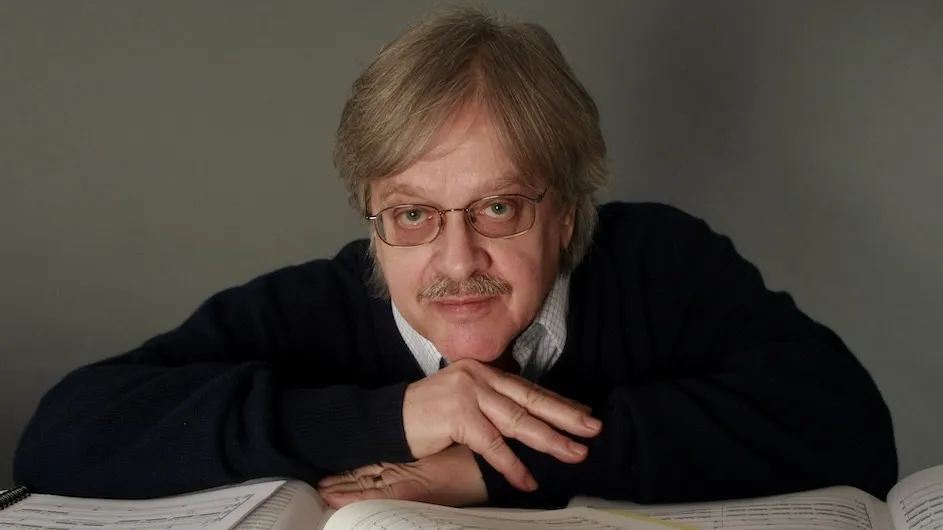
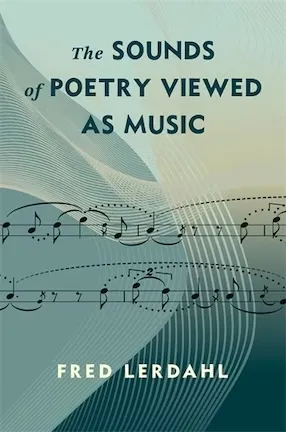
Poets, literary critics, and lovers of poetry often speak of the “music of poetry.” The Sounds of Poetry Viewed as Music by Fred Lerdahl, Fritz Reiner Professor Emeritus of Musical Composition, gives substance to the metaphor by building on recent research in linguistics and music to propose a theory of the sounds of poetry conceived in musical terms. The book develops a rule-based methodology for assigning normative readings to the rhythms and contours of poetic lines. Each component of the theory is compared to earlier treatments both in traditional prosody and in generative metrics and intonational phonology. The theory’s predictions correspond well to recorded readings by poets and actors. The book also advances an original hierarchical treatment of syllabic rhyme, alliteration, and assonance.
The Sounds of Poetry Viewed as Music is an interdisciplinary project. In reconceiving prosody in musical terms, it offers a detailed treatment of the cognitive organization of poetic sounds, and, by implication, it supports the claim that music and language have a common ancestry in expressive vocalization. This volume will engage readers of poetry, literary scholars, musicians, philosophers, and cognitive scientists interested in the intersection of the musical and linguistic capacities.
Lerdahl discusses the book with Columbia News, as well as other recent work and his ideal dinner companions.
What was the impetus for this book?
My first book, A Generative Theory of Tonal Music, was written in collaboration with the theoretical linguist Ray Jackendoff. The book drew significant parallels between musical and phonological structures. I wanted to investigate these issues further, especially after John Halle, who had studied phonology, became my composition student. John and I published a paper proposing a formal model for setting poetic lines to music. After that, the project stalled, mainly because I pursued other projects as a composer and music theorist. But I always meant to return to this topic, and finally did so when I gave the Schoff Memorial lectures at Columbia in 2018.
What is the idea you propose in the book, based on recent research in linguistics and music theory, about sounds of poetry conceived in musical terms?
Music and poetry both project hierarchical groupings of sounds—stressed and unstressed events, strong and weak beats, short and long durations, the rise and fall of pitch contour, and patterns of similarity and contrast among events. The Sounds of Poetry Viewed as Music explores these parallels in depth and relates them to previous work in traditional scansion, generative metrics, and intonational phonology. The book offers a musical reconception of prosodic analysis and tests its predictions against recorded readings by poets and accomplished actors.
What books have you read lately?
I read widely on prosody while writing the book. Of studies in a historical or traditional vein, I would mention Joshua Steele’s An Essay Towards Establishing the Melody and Measure of Speech, Paul Fussell’s Poetic Meter and Poetic Form, Northrop Frye’s Sound and Poetry, D.W. Prall’s Aesthetic Analysis, Helen Gardner’s The Art of T.S. Eliot, Derek Attridge’s The Rhythms of English Poetry, and Brad Leithauser’s Rhyme’s Rooms: The Architecture of Poetry.
In generative metrics, essential readings are Morris Halle’s and Jay Keyser’s English Stress: Its Form, Its Growth, and Its Role in Verse; Paul Kiparsky’s and Gilbert Youmans’ edited volume, Phonetics and Phonology: Rhythm and Meter; and Bruce Hayes’ Metrical Stress Theory. Regarding speech contour, Robert Ladd’s Intonational Phonology is an indispensable reference. All these books provide background for my work.
What’s next on your reading list?
Dmitri Tymoczko’s Tonality: An Owner’s Manual. He builds a theory of pitch space entirely from a mathematical point of view. His work contrasts with my book, Tonal Pitch Space, which embeds its formal theory of pitch space within the framework of psychoacoustics and empirical research in cognitive science. I want to understand better how our respective models converge and diverge. (Incidentally, pitch space is an area of music theory that has little to do with the sounds of poetry.)
What are you working on now?
I have just completed a large work for solo piano, Concentric Circles. I am editing it in consultation with Steven Beck, the pianist for whom I composed it.
Do you miss teaching?
I miss working with gifted composers who were my students in Columbia’s graduate composition program. Many of them continue to send me their music, and I am always interested in what they are doing. I do not miss the administrative side of academia. I maintain cordial relations with my former colleagues, but I am no longer involved with the music department. My focus is on my creative work and my family. In addition, I administer two foundations dedicated to contemporary music, the Koussevitzky Music Foundation and the Alice M. Ditson Fund (the latter housed at Columbia University).
Which three scholars/musicians would you invite to a dinner party, and why?
I would like to discuss prosody with the poets Gerard Manley Hopkins and T.S. Eliot and the literary scholar Helen Gardner. In his letters, Hopkins makes confusing comments about music in relation to poetic scansion and his invented “sprung rhythm.” I would hope to clarify the issues he raises. I am curious how Eliot thought about poetic rhythm in his Four Quartets. He disavowed traditional scansion. Gardner says that the characteristic meter of Four Quartets is “perhaps Mr. Eliot’s greatest achievement,” but does not go beyond suggestive observations about its varied rhythms. To what extent, and in what way, did Eliot think systematically about his prosody?