From the Pacific Northwest to New York, Via Berlin
Emily Mei-Mei Taw’s wide-ranging interests led her to the Graduate School of Architecture, Planning, and Preservation (GSAPP).
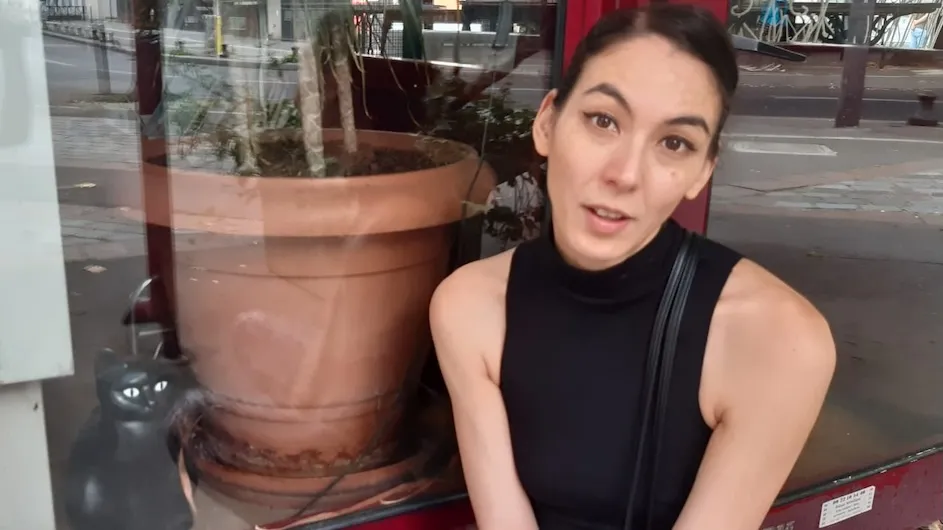
When she isn’t working on her two GSAPP master’s programs, Emily Mei-Mei Taw is finding community beyond the campus gates and all around the city—at exhibitions, archives, screenings, lectures, and eating in Chinatown.
When will you graduate from GSAPP, and what is your dual degree in?
I'll be graduating in May 2026 with a Master’s of Architecture and a Master’s of Science in Critical, Curatorial, and Conceptual Practices.
What was your path to pursuing graduate work at Columbia?
My path to Columbia was somewhat circumstantial. As an undergraduate at Reed College, I became interested in the built environment from a critical perspective, focusing on architecture’s complicity in structures of violence, exclusion, and erasure. After graduating in 2013, I spent several years in Berlin working in bars and nightlife, as well as writing for cultural magazines such as Numéro Berlin.
In 2018, I moved to New York, and for the next couple of years, I managed a private art collection, worked in event production, and continued bartending until the world entered its COVID era. Around this time, I began working with singer and TV personality Luann de Lesseps as well as artist, educator, and publisher Kandis Williams and her publishing house, Cassandra Press.
Like many people confined to their homes at the time, I began to think about my next steps. Given my ongoing interest in architectural theory and aesthetic practices, and propelled by both existential crisis and curiosity, I decided to apply to the Master of Architecture Program at GSAPP. It was the only program I applied to, and at that point, I considered it to be more of a personal exercise rather than a realistic goal. I had no architectural background and hadn’t been in academia for nearly 10 years, so I didn't think I’d be accepted. But to my surprise, I was. I’m very grateful to Luann and Kandis for encouraging me to apply, and to my family for their enthusiasm and support.
Has there been a special mentor/professor during your time here? Or a particular class that inspired you?
Mark Wasiuta, co-director of the Critical, Curatorial, and Conceptual Practices in Architecture Program, has been an amazing mentor. He’s always encouraged me to run with my ideas—whether it be a JonBenet Ramsey Dollhouse or a series of strange zines. Perhaps recognizing that I was not destined to become a traditional architect, he encouraged me to apply to the CCCP Program, and I’m excited to be working with him again this year as my thesis advisor.
I’m also grateful to writer, educator, and interdisciplinary artist Tao Leigh Goffe, whose conversation, body of work, and generosity as a secondary advisor to my thesis have been incredibly inspiring and formative to the development of my research.
Two courses that continue to resonate with me are Spirits and Matter: Architecture and the Modern Middle East, taught by GSAPP doctoral candidate Alireza Karbasioun, and Camera in the Tropics, taught by Professor Debashree Mukherjee. I would also highly recommend any courses with GSAPP professors Felicity Scott and Reinhold Martin. I am always motivated by their academic rigor and unwavering dedication to their students.
In my final semesters of the Master’s in Architecture Program, Emanuel Admassu, as well as Ada Tolla and Giuseppe Lignano, were amazing studio instructors—each offering invaluable guidance and support.
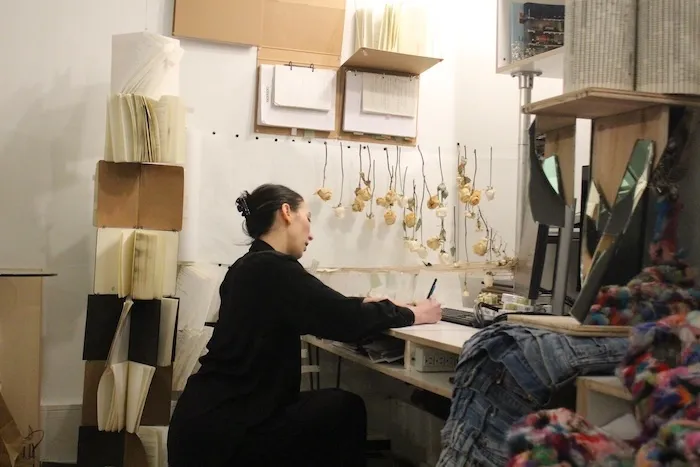
How do you like studying in the city? What are your favorite urban pastimes?
New York is not only where I study, but also where I live. As a student, my relationships to and within this city have come to be informed by an awareness of my fluid position between the gates of Columbia and the city outside of it. For me, it’s important to think of my academic work as it moves between the context of the institution and that which exists beyond its gates.
New York has provided endless opportunities to continue learning and engaging beyond the institution. There are always new publications, exhibitions, conversations, spaces, and projects emerging from the city’s intellectual and creative communities.
Any specific recommendations for things to do beyond campus?
Eat some Chinese food—Spicy Village, Nom Wah, Dim Sum Go Go. Support Chinatown street vendors while you’re there. Metrograph always has nice screenings. Green-Wood Cemetery in Brooklyn is a lovely place for a stroll. Tatiana, a restaurant in Brighton Beach, is fun if you want to go to another dimension for a bit.
I highly recommend spending some time at Interference Archive, which is also a library and gallery. Printed Matter has a great selection of artists’ books and publications. A83, a gallery, studio, and archive, is perfect for those interested in art, architecture, and printmaking. And Efraín López, where I’ve previously worked, has beautiful exhibitions.
How have you found community at Columbia and in New York?
I’ve found that the best way to do this anywhere is by doing things that interest me. Going to lectures, openings, book launches, and artist talks has been generative for finding like-minded people, both at Columbia and throughout the city. Finding community off campus is important. Getting out of the academic bubble and into different social contexts opens up new possibilities for connection, broadens the scope of conversation, and keeps things in perspective.
What’s something about being a Columbia student that you think is underrated?
I wouldn’t say that being a Columbia student is underrated. I think it’s quite a privileged position—though a privilege that differs across individual circumstances. What might be underrated is the work students are doing to build community and support one another, often through organizing and collaboration that happens outside formal structures. But I do believe that some of the privileges that come with being a Columbia student—access to archives, special collections, museums, and amazing faculty—can support that work.
What are your plans post-graduation?
First, sleep. Sleep is important.