For This Columbia Climate Student, Film Photography Is Its Own Kind of Environmental Work
With her trusty secondhand Nikon from the ’90s, Erin Frank shoots film around New York City and finds that her camera and coursework have more in common than she expected.
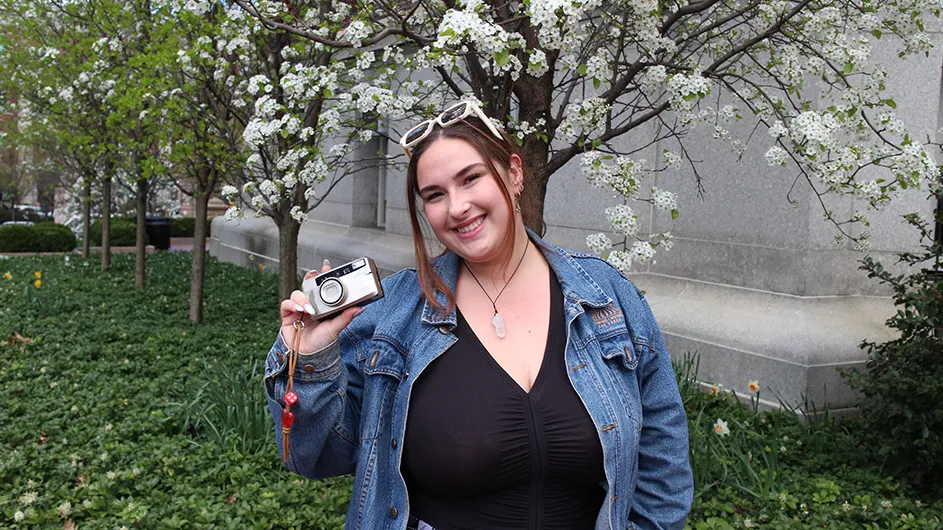
When Erin Frank (CS’26) took her first official step onto Columbia’s Morningside campus as a student, she immediately reached for her camera. She had never visited before, committing to the program sight unseen, convinced by a course catalog that read like a dream scenario. That first walk across campus in August, everything green and verdant and older than anywhere she’d studied before, was a genuine revelation.
She pulled out her Nikon OneTouch and started snapping.
That instinct, to look closely and to document, is at the center of everything Frank does. A master’s student in the Columbia Climate School’s Climate and Society program, Frank came to New York from UC San Diego (by way of the northern suburbs of Chicago) with a conviction: climate change is fundamentally a story of the humanities as much as it is a scientific one.
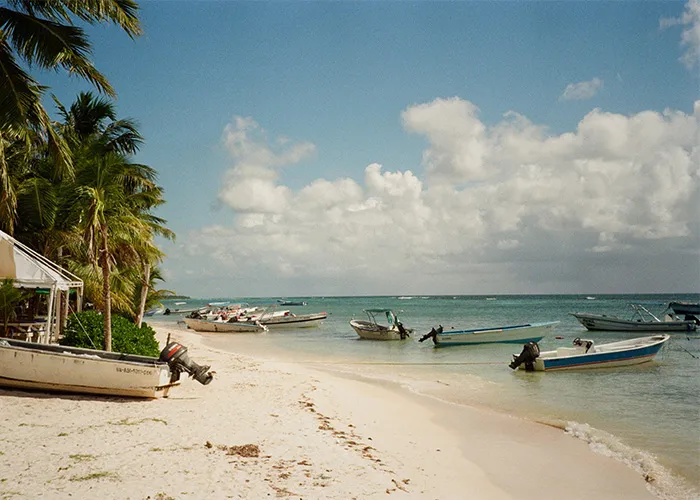
She volunteers at the Olo Be Taloha (OBT) Lab with Professor Kristina Douglass, where her work centers on knowledge co-production and environmental knowledge systems that Western science has often sidelined. She’s currently working on a website of photographs from a recent trip to the Dominican Republic, exploring tourism in the Caribbean through multiple, sometimes uncomfortable, lenses.
And, of course, she makes a weekly journey to a film lab near NYU (we won’t hold it against her!) to pick up her developed rolls.
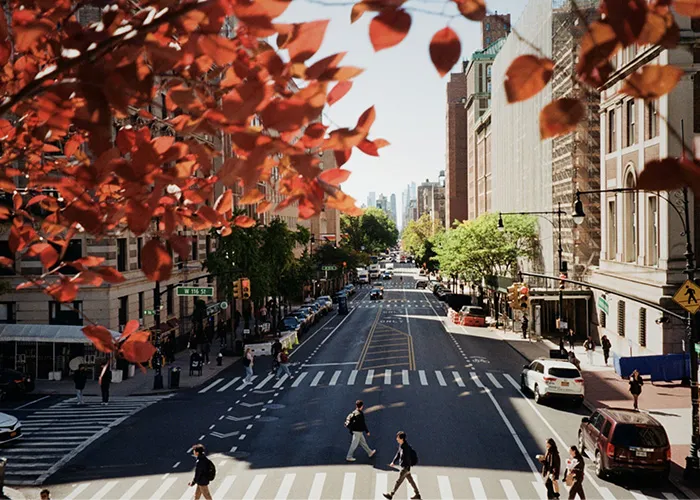
Frank will graduate this fall, and we were first connected to her through her submissions to our “Show Us the World Through Your Columbia Lens" form (we’d love to see your photos, too!). We were taken with her dreamy, atmospheric shots of New York. So we thought we’d reach out to learn more (and share a few of her photos as well).
Below, Frank discusses how to get into film photography as a meditative practice, circular economies, photo walks through the city, and why moving to New York sight unseen is less scary than you might think it would be when you have a camera in hand.
Take me back: How did you find your way to Columbia University?
I was raised in the northern suburbs of Chicago, but I always knew I didn't want to stay in the Midwest. I’ve always been really drawn to nature, and it was just too cold for me. So I applied to schools in California, and I did my undergrad at UC San Diego.
I knew I was really passionate about climate change and the environment. It was actually my sophomore year that UCSD created this major, Climate Change and Human Solutions. It was in the anthropology department, so it was really more like an anthropological view on climate change. And so I switched to that, and that really kind of led me down the path of wanting to do climate work, but not necessarily strictly STEM climate work. I'm really interested in the humanities of it all.
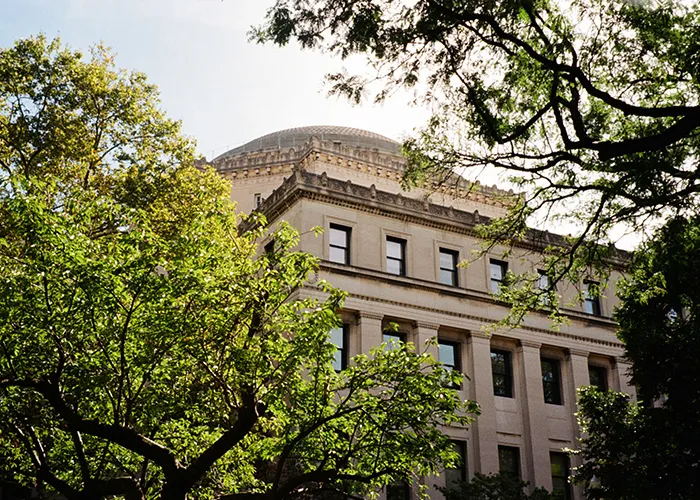
I applied to Columbia kind of as a dream. I was like, maybe I'll get in. And then I did, and I just couldn't say no. New York, Columbia — that's such a huge opportunity. And every single course that was offered was something I knew I'd be passionate about. It's been so much better than I could have imagined.
Has the program helped you chart more of the humanities path you were looking for?
One hundred percent. Two of our core classes (Climate Change Adaptation and Climate Change Justice) really opened my mind to how climate change is woven into everything. And I'm taking a class right now called Black Ecologies, where we learn about how colonialism set us on this path of environmental degradation. There are injustices ingrained in the infrastructure and systems we've built post-colonialism that we just don't talk about enough.
We talk about climate change as if it's this dystopian problem we need to engineer our way out of, but if you look at the history of it, indigenous cultures have been adapting to climate change for centuries, and there's so much to learn from those knowledge systems. Colonialism has really dismantled a lot of that. That's something I'm trying to focus on through my work with Kristina Douglass at the OBT Lab. I'm lucky enough to get to volunteer there, and there's a lot that we get to focus on in terms of knowledge co-production and learning about knowledge systems and environmental relations with humans that are not part of Western knowledge.
When did photography come into the picture?
I've always been in a creative space. My mom loves crafts, and I grew up in an environment where the attitude was always, “at least try, see if you can enjoy it.” It doesn't have to be beautiful at the end. So it was always part of my life, but never something I really leaned into until I was in San Diego. There's just so much beautiful nature there. I felt like I had to capture it.
But I wasn't really consistent about it until I moved to New York. In San Diego, it was mostly coincidental: I'd happen to be near a beach and think, oh, this is so pretty, let me get my camera out. In New York, I've had to be much more intentional. I go on photo walks. I go to Washington Square Park just to spend time with my camera.
“Photography gave me a way to feel artistically aligned with the space I was in, to connect with the city in a way I was scared I wouldn't be able to.”
After you emailed me about wanting to talk about the intersection of climate and photography, I started thinking about why I've taken so many more photos since moving here. I think nature is what makes me feel connected and calm. And when I first realized I was going to move to New York, I was scared—I was like, what am I going to do without the ocean? But looking back, I have to attribute that to photography. It gave me a way to feel artistically aligned with the space I was in, to connect with the city in a way I was scared I wouldn't be able to.
And you shoot on film specifically. Why?
I actually started digital. The cameras I began with were just sitting in a drawer in my childhood home. I asked my dad if anyone was using them, and he said no, and that was that. But eventually, I got my Nikon OneTouch, secondhand, from what they think is the 1990s. It was $100.
There's something about film where each picture can really stand on its own. You can't just rapid-fire a thousand shots. It's a practice in patience, and it's also a practice in really looking. You can see something and think it would make a great picture, but it's so different when you actually put the camera up and see what the camera sees. I've learned so much about finding beauty in the mundane that way.
“There's something about film where each picture can really stand on its own. You can't just rapid-fire a thousand shots. It's a practice in patience, and it's also a practice in really looking.”
What is the exact type of film camera that you use?
I use a Nikon OneTouch Film Zoom 90, and I normally just use an ISO 400. But recently, because I've been going to the Chelsea Flea, I've been really trying to get into using expired film. People talk about it a lot—they're like, that's such a huge risk, you don't know how it's gonna come out.
But this is actually another climate connection I wouldn't have thought of: secondhand is just a huge part of my life in terms of clothing, accessories, my school bags. I really believe in the circular economy. And so I try to implement aspects of that in my film photography.
I go to 5R Photo Lab: it's a women-owned business, and they're so lovely there. Every week or two, I go in, pick up my rolls, and see them. There's real community in it. I really like the idea that I'm using a roll that someone from the ‘90s never got around to using—I get to complete that cycle. You never know exactly what you're gonna get.
Has photography been a communal experience for you at all?
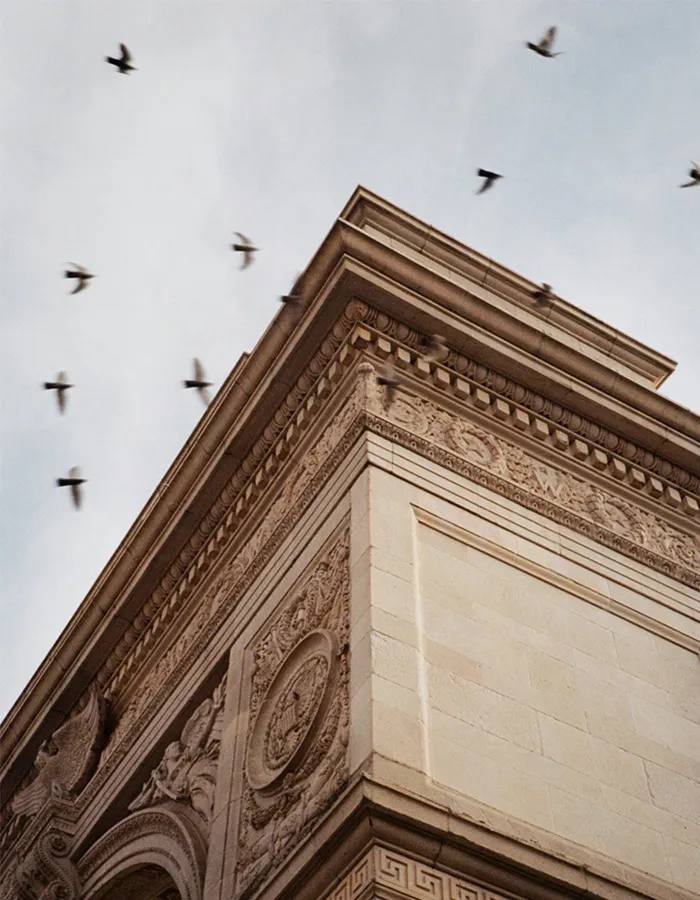
Totally! Actually, this past weekend I was at Washington Square Park, and I don't know if you've heard of him, but I've seen him online as the Pigeon Man. He has this big bag of birdseed, and he walks around and offers it to people, like, “Do you want to feed the birds?” And I was taking some pictures of him, and a bunch of other photographers were there too, and it wasn't something where we were really like, “oh, tell me about this.” It was just this collective joy. We were all just so happy with the pigeons, and then we were all feeding the pigeons, too. It was just fun to get to chat with people.
If an incoming student wants to start shooting film, do you have any tips?
Don’t feed into a lot of those things you see online! I see a lot of people posting like, if you're gonna get into photography, you need this camera. Then you look it up, and it's a $2,000 Canon. If that's really calling to you and you have the resources, fine. But I think a lot of the time online, it's positioned that you need these really fancy materials. You don't, at all.
I would recommend looking secondhand. It might not be perfect quality, but for someone who's just starting, as long as you have anything that can get you in the door, that's all you need. And if you've never shot a physical camera in your life and the whole mechanism of loading film seems scary, which it did to me, maybe your first few times, go ahead with a disposable. That can allow you to practice with framing and figuring out what's important for your shot.
And then mostly: just start shooting. That was really the only thing that made me better. I just had to take pictures. There were a lot of times I'd get my film back and be like, oh, that's not what I thought that was gonna look like. But now I know. And with every roll I got back, I was able to adjust, and the next one was just slightly more focused, slightly more intentional. It's such a cliché, but practice does make perfect.
Of all the photos you've taken since you've been in New York, what stands out as your favorite?
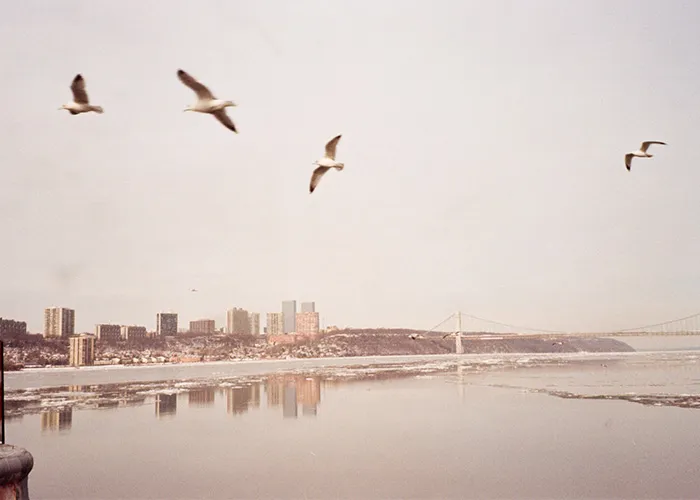
I live right by the river, right by West Harlem Piers, and I always have a great time during sunset. But in my opinion, the best pictures I've taken have all kind of been at Washington Square Park. I love the pigeons there, and the picture I took of the arch with the pigeons flying past it, I think that might be one of my favorite pictures I've taken in New York. I made a website called Cosmopolitan Beauty about my favorite pictures from New York.
Has there been any direct intersection between your photography and the climate work?
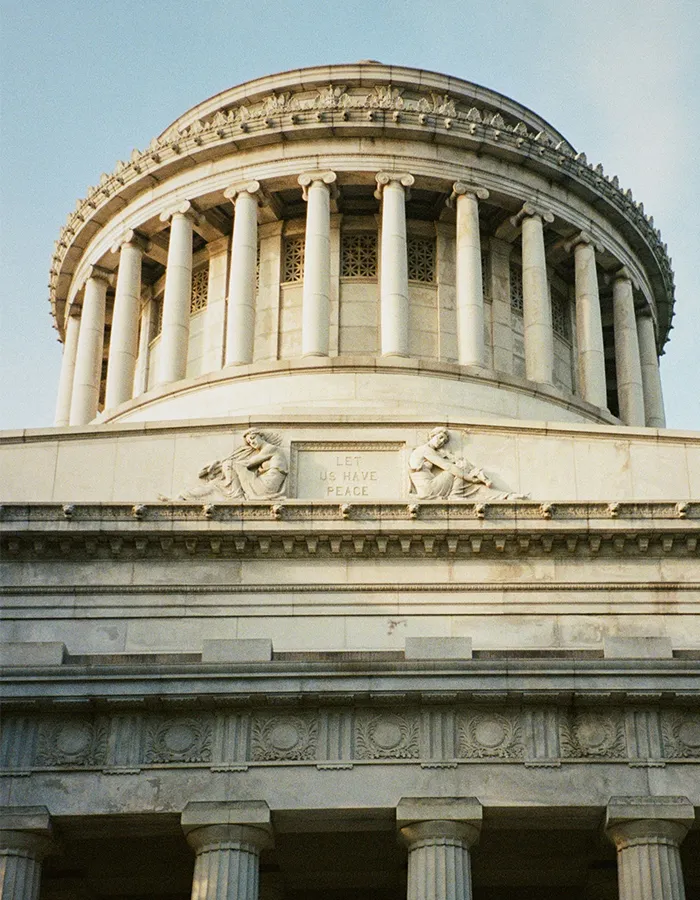
This past winter break, I went to the Dominican Republic with my family, and I brought my cameras. I left with a lot of insights. I'm very grateful I was able to go, but I have a new lens since studying at Columbia: I view the economic benefits, but also the environmental downsides to tourism.
There's so much beauty, but also a lot to think about in terms of displacement, and in terms of what people have had to adjust in their lives to make way for tourism. I'm actually making a website right now about the pictures I took, about the different lenses you can use to look at tourism in the Caribbean through.
What's next after August graduation?
I would love to jump into a job, but I've also started genuinely thinking about a PhD. I never envisioned myself getting one, but I have so many questions I love researching and writing about. The more I talk to other students, the more I think, well, that is kind of the basis of a PhD: you go in with a question you want to spend years on.
I also really love connecting with communities. I'm very outgoing, and I feel like I could use my knowledge in outreach. And then there's the artistic and creative side: I would love to do some kind of environmental storytelling that involves photography or art.
Climate change work intersects with so many different industries and aspects of the world. I don't know exactly where I'm going yet, but I'm hopeful I'll find something that's fulfilling.