Breakthroughs in Decoding Speech Have Medical Potential but Raise Privacy Concerns
To prevent an erosion of mental privacy, it is urgent to protect and legislate the protection of neural data in consumer tech.
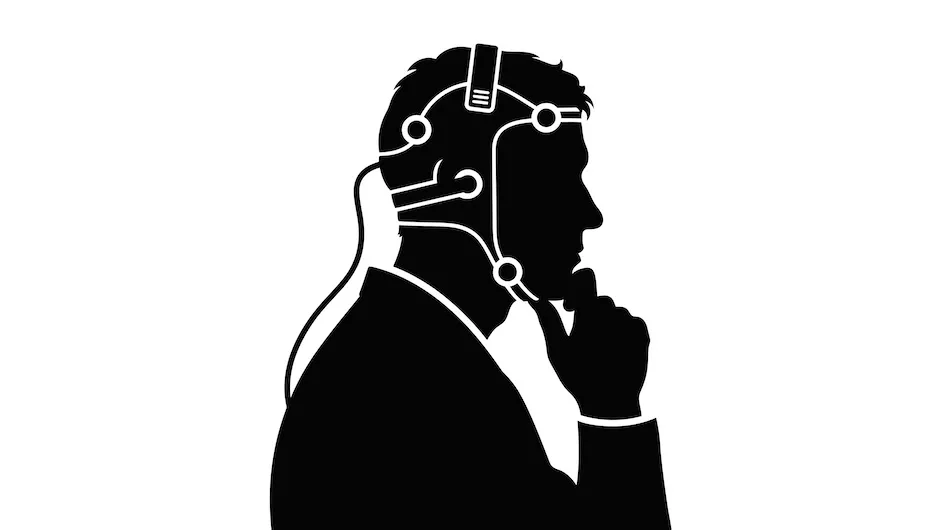
A new study out this month from Stanford University researchers uses microelectrodes implanted in the motor cortex and generative AI to decode the intended and inner speech of four paralyzed patients. The researchers can detect 125,000 imagined words with 74% precision.
This work is a follow-up to a similar 2023 University of California, San Francisco study, which also decoded mental speech in a paralyzed patient using an implanted microelectrode in the motor cortex. In that study, researchers achieved a similar precision, decoding 75 words per minute, and also decoded emotions and facial gestures using all the information to generate a computer avatar of the patient endowed with her voice, emotions, and expressions.
Together, the two studies demonstrate that mental language can be effectively decoded from brain signals in real time using implantable neurotechnology and AI. This is a scientific and medical breakthrough, with immense potential for neuroscience and the treatment of neurological conditions, as it could enable communication with non-verbal or speech-compromised patients, but it also raises the possibility of the systematic decoding of mental processes in non-clinical settings using wearable neurotechnology such as electroencephalogram (EEG) caps, devices that can be freely purchased on the consumer market.
Indeed, in the last two years, several studies, including one by Meta, have demonstrated effective language decoding with EEG caps.
Columbia University has played a central role in the efforts to regulate neurotechnology. A 2017 symposium at Columbia’s Neurotechnology Center convened the “Morningside Group” of 25 international experts who first raised awareness of the ethical and social implications of neurotechnology, proposing in a Nature article a new set of human rights (“Neurorights”) to protect brain activity and neural data. This led to the creation at Columbia of the Neurorights Initiative, which then became the Neurorights Foundation, focused on research, advocacy, and outreach of neurorights. Last year, the foundation released a report on the user agreements of 30 consumer neurotechnology companies and found that all companies took full possession of the users' data and that most companies also allowed the sale of that data to unspecified third parties.
What could these third parties do with that data? Companies could, for example, collect data without our knowledge on our inner monologue or moods and target advertisements to us based on what they see. Companies could also pass that information on to our employers, who could use it to make hiring decisions. Or our insurers could collect this information and base insurance premiums on the data, or even deny care if they saw our mental health as burdensome. Or a malicious third party, or a foreign power, could acquire and decode this information to pressure or blackmail individuals. These technologies will offer companies a powerful opportunity to decode mental activity, and they must be regulated to avoid dangerous uses such as these.
To prevent a major erosion of mental privacy, it is urgent to act. Partly due to the effort of the Neurorights Foundation, legal protection of brain data has already been approved in Chile and Brazil’s Rio Grande del Sur, and in California, Colorado, Connecticut, and Montana, all with unanimous votes. While Chile and Rio Grande decided to protect brain activity and brain data with constitutional amendments, the rest of these bills of law provide a legal definition of neurotechnology and neurodata as a specific type of personal data, and then apply existing regulations on sensitive data to them by law. This simple legal maneuver is fast and effective as it does not require an overhaul of existing laws or extensive discussion of future scenarios. The Foundation is currently working with other states, the U.S. Congress, several countries and the United Nations to promote similar legislation nationally and internationally.

Rafael Yuste is a professor of biological sciences, and director of the NeuroTechnology Center at Columbia University. He led the “Morningside” consortium, which proposed novel human rights (“Neurorights”) to protect brain activity and brain data.
This column is editorially independent of Columbia News.