Building the Fusion Future
John Labbate is part of Columbia Engineering’s Fusion Research Center, which is focused on clean energy’s next frontier.
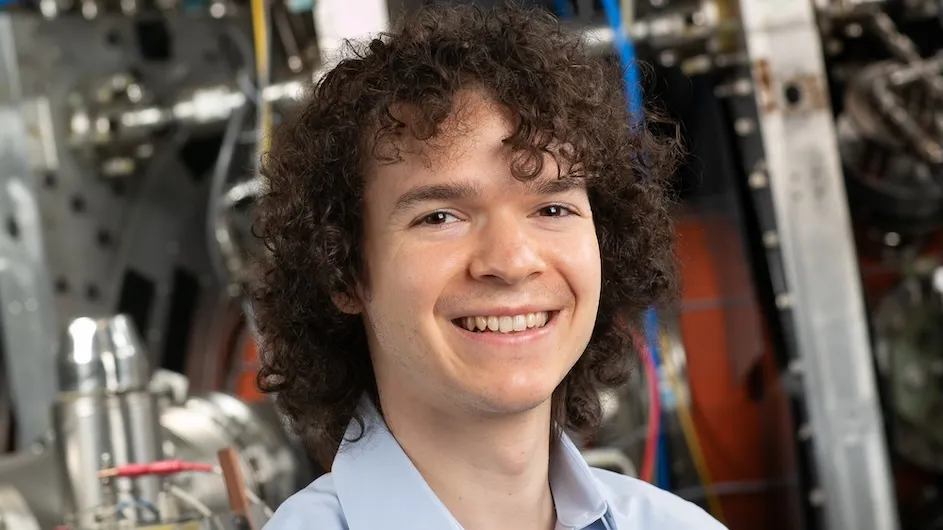
When John Labbate, who is now a PhD student at Columbia Engineering, started college, he knew that he wanted to build a career helping solve a problem that mattered to society. He was fairly sure that the problem he wanted to focus on was climate change. But he wasn’t yet sure how to use science to address it.
He found his answer during a summer internship at the Princeton Plasma Physics Laboratory, where researchers were working on how to make fusion–a process in which two atoms are fused together to create a torrent of energy–a sustainable and cost effective energy source. When scientists eventually achieve that goal, it will revolutionize how clean energy is produced and consumed. Columbia News spoke to Labbate about how what he learned at his internship led him to Columbia’s Fusion Research Center, what’s next for the field, and how he spends his downtime.
What are you studying and how far along are you in your program?
I’m a second-year PhD student at Columbia Engineering. I’m part of the Fusion Research Center, which is led by professor Carlos Paz-Soldan.
What’s the state of fusion research right now? Is the technology close to being part of our everyday lives?
We know how to do fusion itself very well, but doing it on a large enough scale that we can create energy efficiently is what we haven’t quite figured out yet. We’re not at a place where this can economically compete with energy sources like fossil fuels. Every day we’re running experiments to get us closer to that goal.
The Fusion Research Center does a lot of outreach. Can you tell us about those efforts?
A lot of what we do is aimed at middle and high school students, but we also do outreach with younger children and adults. We regularly visit local schools with hands-on demos, like plasma balls, which are fun to look at, and help people get excited about the technology. Each year we also take part in Science Saturday at Rockefeller University, an event for kids from early childhood through high school, where we run similar demonstrations, including a “magnetic battery train” that’s always a hit.
We also teach a 10-week Science Honors Program course on plasmas and fusion for high school students. Beyond New York, we work with the broader U.S. fusion community, especially during Fusion Energy Week, a nationwide series of public events—from lab tours to talks at local bars—designed to explain what fusion is and why it matters.
We really have two main goals. One is to inspire young people, especially students from groups underrepresented in STEM, by giving them early, hands-on exposure to science and showing that there’s a place for them in fields like fusion and plasma physics. The other is to help the broader public feel more informed and comfortable with fusion and with science in general. As fusion becomes more visible, we want people to see it as something they can understand and ask questions about, not just a mysterious technology in the background.
Can you tell us about the YouTube channel you created?
With other members of the group, I created a YouTube channel where I post videos that explain how fusion works. It’s another way we’re trying to get the word out about this technology and demystify the science for the public.
How did you choose to pursue your graduate work at Columbia?
Columbia has one of the fastest-growing, and, in my opinion, best fusion research programs in the world. The lab is really connected to other labs around the country and internationally. I met two of the professors here, Elizabeth Paul and Carlos Paz-Soldan, before joining, and I felt they would be fantastic mentors, both scientifically and personally. It was pretty much a no-brainer once I was admitted.
Do you have any hobbies outside of the fusion lab?
I play in a band called Stamps. Some of the members are people I know from my undergrad, which I did at the University of Maryland, who have moved up to New York, and others are friends I’ve met here. A bunch of our lab mates have come to our shows.
Do you have a favorite music venue in the city?
Silvana in Harlem is a great spot. I’ve played there and have gone there to listen. I also love the West Village for music: Groove, the Blue Note, and The Red Lion have great options and lots of variety. I still feel like I’ve just scratched the surface.