Columbia Launches Strategic Framework for Student Well-Being
Student leaders, faculty, staff, and administrators gathered to witness this important milestone in the University’s commitment to supporting student well-being.
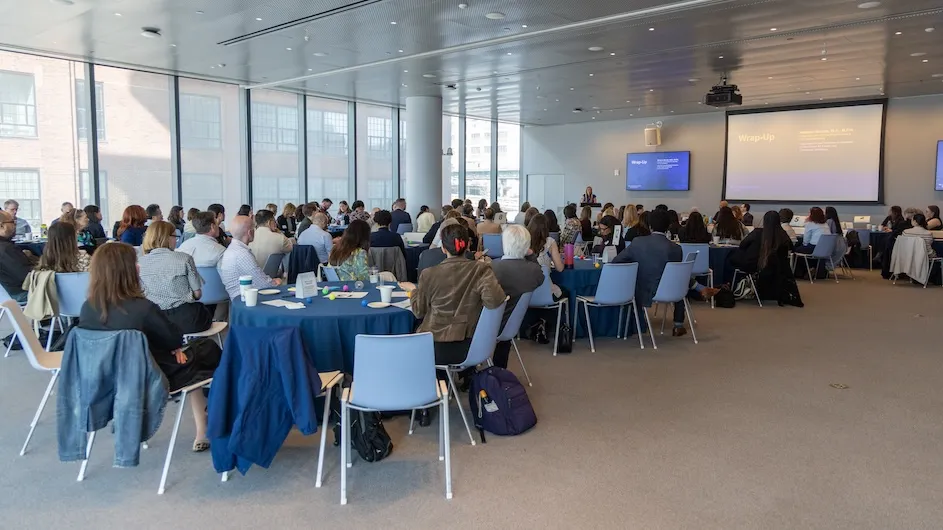
On Monday, April 13, 2026, a group of student leaders, faculty, and University staff and administrators gathered at Geffen Hall on the Manhattanville campus for the launch of Columbia University’s Strategic Framework for Student Well-Being, marking an important milestone in the University’s ongoing commitment to ensuring that students are supported not only academically, but across all dimensions of their Columbia experience.
At a time when students are navigating myriad academic, social, and global challenges, the Framework reflects a shared understanding across Columbia: Student well-being is foundational to educational excellence and the overall Columbia experience.
“Student well-being is foundational to academic success,” said Provost Angela V. Olinto, Rutherfurd Professor of Astronomy and professor of Physics, speaking on behalf of Acting President Claire Shipman at the launch event. “We cannot be at our best if our students are struggling.”
What Is the Strategic Framework for Student Well-Being?
The Strategic Framework is a long-term, University-wide approach designed to align and strengthen existing efforts, reduce barriers, and create conditions in which all students can thrive. Rather than being a single program or office, the Framework provides a shared structure for how students, faculty, and staff can work together more effectively to advance well-being across Columbia’s diverse campuses and schools.

Central to the Framework is the idea that supporting student well-being is shared work. According to Melanie Bernitz, executive vice president for University Life and Well-Being, “Without us working together, this simply won’t work. And that’s not just by design; it’s because student well-being is so much bigger than a counseling visit, a stress reduction workshop, or even a free massage.”
Marcy Ferdschneider, assistant vice president for Student Health on Haven at Columbia University Irving Medical Center (CUIMC), further explained: “At Columbia, we have adopted the World Health Organization’s definition of well-being, which is a positive state experienced by individuals and societies. It is a resource for daily life, and it is determined by social, economic, and environmental conditions.”
She noted that it is very different from narrow, individual-focused concepts such as “health” and “wellness,” which are often used interchangeably with well-being.
The concept of well-being at Columbia is much broader, Ferdschneider said: “We want to capture the individual, community, and environmental experience, as well as the various factors that impact them.”
Why This Is an Exciting Moment for Columbia
As shared by Jane Bogart, executive director, Well-Being and Health Promotion for CUIMC Student Health on Haven, and Alic Czachowski, senior executive director, Alice! Health Promotion at Columbia Health, the Framework is being implemented using a collective impact approach, a model for meaningful, sustainable change at a systems level that has been used successfully in other higher education institutions, including at CUIMC (see feature on CUIMC’s Student Health Impact Partnership initiative).
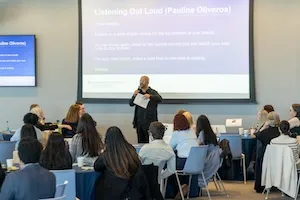
These efforts will be guided by a steering committee of campus leaders and carried forward through focused working groups comprising students, faculty, and staff. This work is supported by a dedicated backbone organization—Columbia Health and CUIMC Student Health on Haven—which will provide coordination, facilitation, and support.
Four initial priority areas will anchor the work:
- Student Development
- Information and Resources
- Relationship Building
- Systems and Policies
Through these areas, working groups will identify opportunities, learn together, and develop coordinated actions that can make a meaningful difference in the student experience over time.
What’s Next—and How to Get Involved
Over the coming months, the steering committee and working groups will be finalized, with opportunities for students, faculty, and staff from across the University to participate. Additional campus conversations and activities are planned to sustain momentum and deepen engagement.
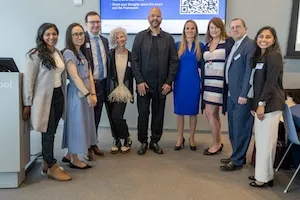
At the close of the April 13 event, Oscar Wolfe, the president of the School of General Studies Student Council, shared his enthusiasm for the Framework: “The collective approach of the Strategic Framework for Student Well-Being has the potential to dramatically improve the student experience and efficiency in all schools throughout the University. It was a pleasure to attend such a promising launch event with so many dedicated Columbia leaders.”
Sarah Cole, dean of the School of the Arts, noted: “The event was a reminder of what amazing work goes into thinking about our students’ needs, and the broader aspirations of our community. I was moved by how much thought, research, and care went into creating this new framework, which will bring tangible benefits to all of us.”
This is just the beginning. As the event wrapped, Bernitz reminded participants of the bold, long-term vision driving this effort: a Columbia where student well-being is embedded into how the University teaches, leads, and designs systems—standing alongside academic and research excellence as a core institutional priority.
“This evidence-based Framework formalizes that compassionate approach to University governance, uniting every member of the Columbia community around our collective well-being,” said Celeste Xenia Woloshyn, a Columbia Law School student senator. “I could already see it taking shape at the Launch, as people gathered to reflect, listen, and walk away feeling empowered.”
Faculty, staff, and students who are interested in contributing are encouraged to submit the interest form to learn more about opportunities to get involved and stay connected as the work moves forward.
Through the Framework, Columbia is building a more connected, coordinated, and compassionate approach to student well-being—one that reflects the best of who we are and who we aspire to be.