Devoting Your Life to Studying the Disease That Afflicts You
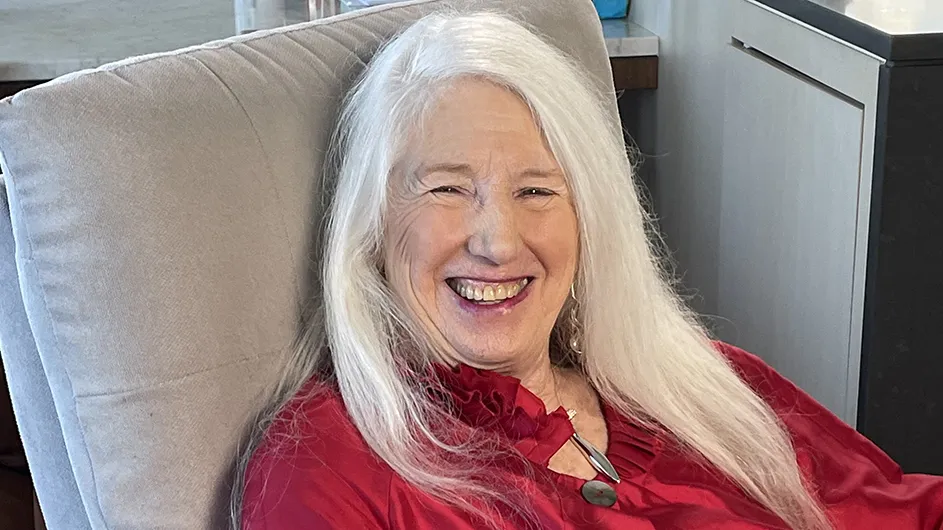
In “My Life, My Science,” Nancy Wexler, a longtime professor of neuropsychology at CUIMC, describes her pursuit of the causes and a cure for Huntington’s disease.
Columbia University has long been central to the study of Huntington’s disease (HD), a fatal, inherited neurodegenerative disorder that causes progressive breakdown of nerve cells in the brain, leading to involuntary movements, emotional struggles, and cognitive decline. In 1872, Dr. George Huntington, who had graduated in 1871 from Columbia’s College of Physicians and Surgeons, first outlined Huntington’s disease in an article he published, “On Chorea,” which described the condition’s symptoms and progression.
Fast forward to 1968, when Nancy Wexler, Higgins Professor of Neuropsychology at Columbia University Irving Medical Center, was 23, and her father revealed that the mysterious illness inexorably diminishing her mother had a name: Huntington’s chorea, later called Huntington’s disease. Newly aware that she had a 50/50 chance of developing the same condition, Wexler could have retreated. Instead, she immersed herself in what has become a lifetime’s pursuit of the causes of the disease and a cure. She pioneered groundbreaking fieldwork that enabled the identification of the responsible gene. She took charge of what is now the Huntington’s Disease Foundation and made it a force to be reckoned with. And when the human genome became a focus of scientific study, she was an eloquent voice for patients in disease gene research, and an insistent advocate for ethical use of genome sequence information.
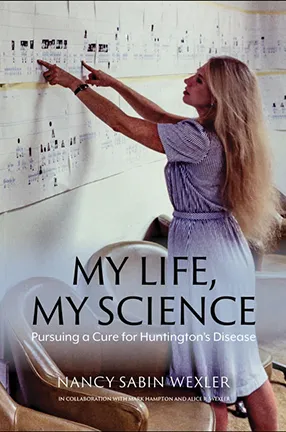
Now living with Huntington’s disease, Wexler has drawn on decades of diaries, research notes, and vivid memories in My Life, My Science: Pursuing a Cure for Huntington’s Disease.
Why did you write this book?
I wanted to tell the story from my own perspective, of what it felt like going to Venezuela and getting to know people with Huntington’s in a completely different environment, yet who looked so familiar to me, as a person at risk for Huntington’s disease. Other people have told parts of this story, but I felt I needed to tell it from my point of view.
I wanted to express my appreciation and admiration for the Venezuelan families, some of whom I got to know quite well over the 22 years we visited annually. It was especially hard to see the children—some of whom were healthy and lively when we began the research—become a little slower and stiffer year after year, as the symptoms of juvenile HD emerged. They had trouble doing the simplest activities, until one year they were gone. It was so, so sad. I wished desperately to be able to save them—and I couldn’t.
For me, the Venezuelans were not simply study participants: they became friends, family even, and I felt at home among them, even though my Spanish was somewhat limited. Often, I got to know three living generations of a family—the grandparents, the children, and the grandchildren, with Huntington’s in every generation. It was heartbreaking. What kept me going was the love and bravery of people who were willing to do anything to help find a treatment, or, hopefully one day, a cure for the disease to protect their kids and grandkids. I wanted to talk about that in my memoir.
The close relationships I had with my team of fellow scientists and clinicians were instrumental, including many medical students and postdocs from all over the world, who came with me to Venezuela every year. And, of course, the Venezuelan nurses and doctors who worked with us, especially Dr. Margot De Young, an amazing physician who became my Venezuelan sister.
Working in harsh conditions, the team members all became very tight, like one big family. The team gathered family histories to construct a giant pedigree, took biological samples to extract DNA, and followed clinically, year after year, those at risk and those with the disease, all the while offering them whatever medical assistance we could. While there was sorrow, there was also immense joy, and the deep satisfaction of knowing we were on this great mission together to save lives, including my own, and that made it all worthwhile.
How did you first learn about the Venezuelan families with HD?
In 1962, a Venezuelan physician, Dr. Américo Negrette, diagnosed Huntington’s in Venezuela and published a monograph about it—Corea de Huntington: Estudio de una sola familia investigada a través de varias generaciones. But the book did not attract much notice outside Venezuela until 1972. That year, the World Federation of Neurology held an international symposium to honor the 100th anniversary of George Huntington’s original description of the disease. Attending that symposium was a student of Negrette’s, Ramón Ávila Girón. He presented a paper (later published in the proceedings), and showed a dramatic film of his compatriots with Huntington’s. That was our first encounter with HD in Venezuela, learning that the country had the highest prevalence of Huntington’s in the world, and that the village of Laguneta had the largest cluster of HD families in Venezuela.
We initially traveled there in 1979, and then began the annual team visits in 1981 to gather clinical data and samples for the mapping project and offer medical assistance to the families. We continued visiting each year until 2002, the year of an attempted coup in Venezuela, after which the U.S. State Department advised the team against returning, and our research visits ceased. I went back several additional times on individual visits with more of a humanitarian agenda, to check in on the people I knew, and to see the Casa Hogar (more on that in the next answer).
Can you share some of the most meaningful events in your Venezuela and HD research?
Going to the village of Laguneta, in western Venezuela, for the first time, in July of 1979, was definitely one of those events. I went with Tom Chase, a neurologist from the National Institute of Neurological Disorders and Stroke, in search of a family in which both parents, and one or more of their children, had Huntington’s. (Two years earlier, a pair of researchers had discovered the fundamental cause of a disorder called hypercholesterolemia, a condition associated with early heart attacks and strokes. They did so by examining someone who had inherited the condition from each of her parents, a so-called double dose. We thought maybe we could unlock the secret of Huntington’s by finding someone with a double dose of HD.)
Tom and I first flew to the city of Maracaibo where Dr. Negrette introduced us to some of the HD families in a barrio called San Luis. After this orientation, we headed south along the shore of Lake Maracaibo, first by car, then by boat, and the last hour in a large canoe called a chalana, which brought us to Laguneta. I wasn’t prepared for the scene before us as we rounded a spit of land and entered a lagoon: we saw a scattering of tiny houses perched on stilts over the water, just a few hundred yards from the dense rainforest on shore.
This impoverished village in a spectacularly beautiful setting was completely different from anything I had ever experienced. I remember approaching one of the houses where a family with Huntington’s was said to be living. A woman walked unsteadily around her porch with choreic movements just like those of my mother. She seemed totally familiar to me. So despite the dramatic difference in the setting, I remember feeling right at home.
When they invited us inside their little house, I saw a man lying in a hammock who had choreic movements similar to those of the woman. I thought they were brother and sister, but it turned out they were married and had many children, some of whom also had HD. For a moment, I felt elated, thinking that one of the children may have inherited a double dose of HD and would help solve the mystery of HD. But then a feeling of tremendous sadness came over me, as I realized that most of these children would likely get the disease.I knew that this research was going to be both gratifying and painful, since the illness that made the people here so valuable to our work also condemned them to a difficult decline. And I knew there and then that I wanted to help them, to bring them aid and comfort, while we were also getting their histories and taking samples to try to identify the aberrant HD gene.
A second meaningful experience was a moment in the summer of 1983, when I received the phone call from a student of Mike Conneally, a geneticist at Indiana University working with us, saying that we had found a genetic marker linked to the Huntington’s gene. We had mapped the HD gene to the top of chromosome four.
I was in my office at the National Institutes of Health when the call came, and I let out such a shriek that people came running in to find out what was wrong. This was incredible news, as some people said, when we started, it could take 50 years, or at best, 10 years to map a gene that could have been anywhere in the genome. And now, just three years later, we had succeeded, validating the then-new technology of riflips, or RFLPs—restriction fragment length polymorphisms—for finding genes. Gathering all those samples in Venezuela and constructing all those pedigrees had been worthwhile. Predictive testing for the marker—something neurologists, and even many families, were eager for— would soon become possible for some people at risk for HD. This marker discovery had huge clinical implications, even for me personally. Like everyone else at risk, I would have to decide whether to get tested for the marker, and learn whether I was fated to develop HD.
Of course, the moment 10 years later when we learned we had found the HD gene itself was also one of incomparable joy!
Finally, I want to mention the opening day of an HD nursing home, the Casa Hogar Corea De Huntington—Amor Y Fe (Huntington's Chorea Home of Love and Faith), in San Luis. It had taken 10 years of lobbying, fundraising, and construction work, by Venezuelans and by me, before this facility opened in 1999. Casa Hogar meant so much, because there were patients in the community who were left alone for hours a day as family members worked, with no one to care for them and no ability to go anywhere. We hired Dr. De Young as director, who ran the Casa Hogar, trained staff—most of whom came from HD families—oversaw the functioning, and helped out with the research. She made sure the patients were treated with respect and their dignity was protected.
The Casa Hogar was a place of pride, as it was something we could do to help the Venezuelan families who had helped us so much. I will never forget the opening day—a dream realized, even though it had to close around 2014 due to lack of funding and political pressures. I pray that the facility may reopen one day soon.
How is gene hunting different today than it was in the 1980s and 1990s?
It’s now a completely different universe. In those days, some of what we know as the basic technologies of gene mapping—PCR, riflips, SNPs, GWAS—were just being discovered or developed. Over the course of the HD gene search, from 1980 to 1993, researchers came up with many new technologies that would later become standard, such as exon trapping. During the 10 years between finding the marker (1983) and finding the gene (1993), we often felt as if we were flying to the moon while inventing the rocket ship.
Is there anything you would like to add?
I’m excited about the number of clinical trials that are currently testing an array of therapeutic approaches that, by the way, could also be used for other diseases. First, there are several approaches that reduce the production of the toxic huntingtin protein in the brain, known as huntingtin lowering approaches.
A second approach attempts to prevent the expanded huntingtin gene in neurons from expanding further during a person’s lifetime into disease-causing territory, when symptoms start to develop. This approach is known as targeting somatic instability. A third strategy under development uses stem cells to replace damaged or destroyed neurons in the brain.
A fourth approach targets modifier genes—genes other than the huntingtin gene that seem to either hasten the onset of the disease or postpone it. I am particularly excited about the possibility of targeting two of these genes, known as ALFY and FAN1. FAN1, in its variant form, seems to help control somatic instability, keeping the huntingtin gene from expanding to a size that causes disease. Increased ALFY helps the cells’ garbage disposal system become more efficient, slowing the pileup of toxic clumps of the huntingtin protein, and thereby increasing the cells' longevity. My Columbia colleague Ai Yamamoto, an associate professor of neurology, pathology, and cell biology, has done fantastic work on ALFY and hopes to initiate a clinical trial soon.
A word of caution: some of the approaches currently being tested require extremely expensive, high-risk interventions, such as hours-long brain surgery, which will make access difficult globally, especially in places like Venezuela.
My fervent hope is that what we learn from clinical trials involving brain surgeries and other high-tech strategies may help researchers develop less invasive and less costly procedures, and possibly even a pill, which would achieve similar results.
Finally, I want to add that I’m currently living with Huntington’s in the apartment I shared with Herb Pardes, until he passed away in April 2024. I do what I can to stay informed about HD research and the world, and visits from researchers, family, and friends keep me engaged. I’m fortunate to have around-the-clock care from dedicated home health aides and a brilliant physical therapist, who keeps me as strong and mobile as possible. I wish this level of care were available to everyone, and I will do whatever I am capable of to bring this about.
A previous version of this article misstated the month that Herb Pardes died. It was April 2024, not May.