Growing Up in a Jewishly Ambivalent Family in New Orleans
In Returning, Nicholas Lemann traces his family’s story from Germany to the Deep South to New York, where he embraces Judaism.
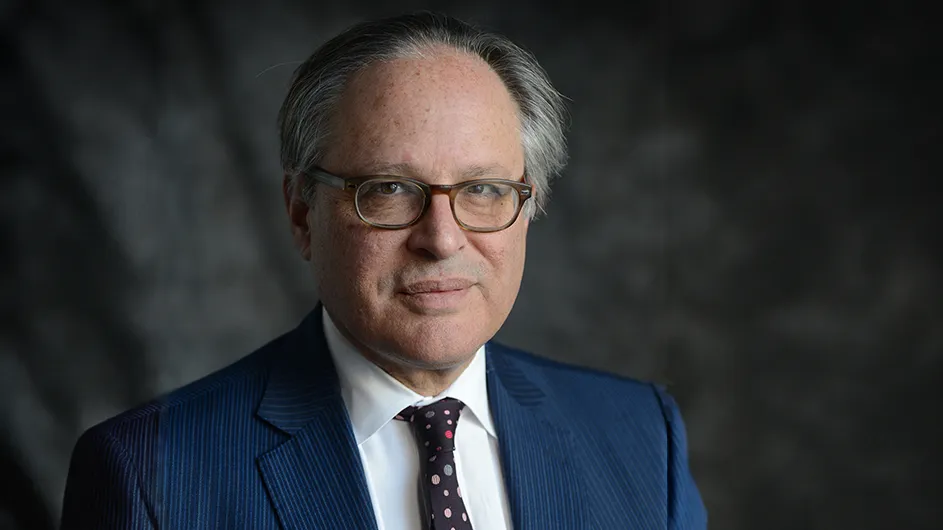
Nicholas Lemann, Joseph Pulitzer II and Edith Pulitzer Moore Professor of Journalism and Dean Emeritus of Columbia Journalism School, grew up in New Orleans, the son of German Jews in a privileged family. In contrast to his parents’ generation, which always sought to downplay their religious background, Lemann was intrigued by his Jewish roots.
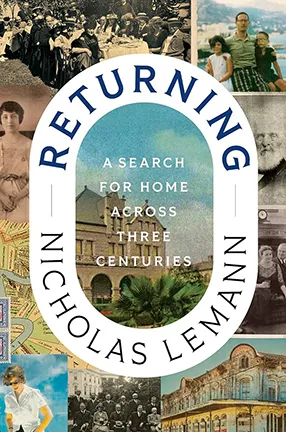
In Returning: A Search for Home Across Three Centuries, he delves deeply into his family’s story—from their arrival in the 1830s as peddlers from Germany, to their becoming plantation owners and department store owners after the Civil War, to their emergence as aspirants in the aristocratic world of New Orleans, where they could never quite belong.
In its depiction of a German-Jewish family where young scions matriculated at Harvard and liveried staff served “crustless duck sandwiches” at cocktail parties, Returning showcases a parade of colorful family characters—from Lemann’s grandfather’s cousin, who participated in a campaign to prevent a Jewish state in the 1940s, to Lemann’s father, a wealthy business lawyer in a Deep South seigneurial city, who took his kids to temple only on Thanksgiving, to Lemann’s New Jersey–raised mother, who “went into a kind of cardiac arrest of the soul” upon meeting her husband’s family. As the Lemanns climbed the ranks of New Orleans’s high society, their struggles became part of a larger metaphorical story of the challenges faced by Jews, even wealthy ones, to fit in.
Keenly aware of these contradictions, Lemann began chafing both at the South’s strict racial hierarchy and at his relatives’ eagerness to be accepted in a subtle, but distinctly antisemitic environment. Returning then follows Lemann as he rejects this assimilated society, embraces religion, and chooses, along with his wife, to raise his children in a Jewish world.
How did this book come about?
About 60 years ago, a cousin of mine spent time collecting family papers and records, and deposited them in the Louisiana Research Collection at Tulane University. I would guess it’s one of the most extensive collections of a Jewish family’s papers in the United States—more than 100 linear feet of material, going back to the early 19th century. I spent most of my career never looking at it, even though I love doing historical research. Over the years, I got more interested in my family’s history and also more involved in Jewish life, and it struck me that I was being perverse in not exploring this gold mine of material, so I did.
Can you pinpoint a moment or experience in your childhood when you knew you wanted to live a more committed Jewish life?
It was more gradual, building steadily over four decades. Our family was completely detached from Jewish custom and practice, so it took me a very long time to have a sense of what I was missing and to figure out how to have access to it. But, looking back, it’s clear to me that a somewhat mysterious, very strong pull was always there.
How has living in New York contributed to your deeper Jewish existence? And how did becoming a parent affect your Judaism?
I moved to New York, from Austin, Texas, 40 years ago (and almost immediately started teaching as an adjunct at Columbia Journalism School). I lived in the suburban town of Pelham, New York, for the first 20 years after that, and in Morningside Heights for the next 20 years. I joined the local synagogue in Pelham, partly because I was thinking of my children and their Jewish identity. Moving to the city definitely raised my game: The Upper West Side is one of the world’s great centers of Jewish life, with many synagogues, Jewish day schools, events, cultural resources, and the Jewish Theological Seminary (JTS), where I completed a two-year certificate program a few years ago.
What are you teaching this semester, and what will you teach in the fall?
This semester, I am officially on sabbatical. Off the books, so to speak, I am advising three master’s thesis projects (set in Brazil, Vietnam, and Texas), and giving an individual tutorial to another student. In the fall, I will be teaching a course I developed 20 years ago, Evidence and Inference. It’s the Journalism School’s version of a standard item in graduate education—a methods course. It aims to teach journalists to be more rigorous, less purely instinctive, in the search for truth. The course also introduces them to a set of non-standard, but journalistically applicable, research skills imported from other disciplines.
What are you working on now?
I am writing for The New Yorker, and continuing to direct Columbia Global Reports, a nonprofit imprint of Columbia that brings out six short but significant works of nonfiction a year. I am beginning to think about a next book project.
What are your thoughts on the current state of journalism?
Not very cheerful. Our field has suffered enormous job losses in this century, and also a diminution in public trust and a rise in government interference. We need the equivalent of a constitutional convention—a grand rethinking of how to create a strong network of institutions that will allow the socially essential aspects of journalism to thrive. I try to spend as much time as I can participating in such efforts.
Which three scholars/writers, dead or alive, would you invite to a dinner party, and why?
Let’s make the question less dauntingly broad by restricting it to Morningside Heights and to the topic of my book. My dinner guests would be Salo Wittmayer Baron, Abraham Joshua Heschel, and Henrietta Szold. Baron served on the Columbia faculty for four decades beginning in 1929, and is generally considered the founder of modern Jewish studies in the United States.
Heschel, a rabbi, mystic, and social reformer, taught at JTS for a quarter century beginning in 1946. Szold, founder of Hadassah, the largest Jewish women’s organization in the United States, creator of a health care system in Mandatory Palestine, and rescuer of European Jewish refugees, spent the early decades of the 20th century at JTS, where she was co-creator and translator of a towering scholarly achievement, Louis Ginzberg’s multi-volume Legends of the Jews.