How Can Healthcare Be Fixed?
In her book, Halle Tecco provides an insider’s guide to transforming the system through innovation.
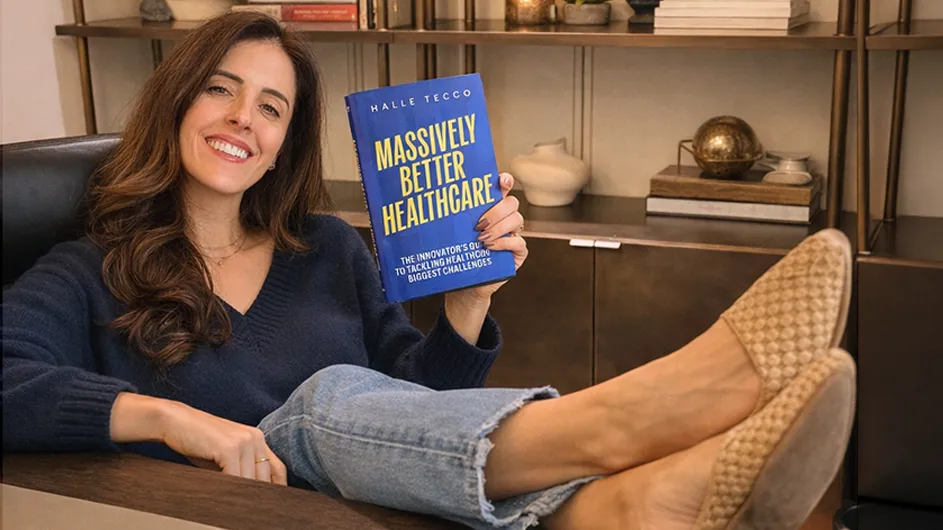
Healthcare is broken—but it can be fixed. The current system is plagued by staggering costs, inadequate outcomes, and pervasive inequities. How can long-overdue change happen so that the system can work for everyone?
In Massively Better Healthcare, Halle Tecco, an adjunct assistant professor at Columbia Business School, provides an insider’s guide to transforming the healthcare system through innovation. Drawing from her extensive experience as an entrepreneur, investor, and professor, she delivers a practical roadmap for addressing the most pressing challenges. Combining personal narratives, case studies, and actionable frameworks, Tecco explores how to identify opportunities for meaningful change and build sustainable, scalable solutions that align profit with purpose. She acknowledges the difficulties—such as regulatory hurdles, misaligned incentives, and resistance to change—but shows how entrepreneurs can turn obstacles into their competitive advantage.
Why did you write this book?
The book came from a mix of optimism and frustration. For 15 years, between founding the venture fund Rock Health, investing in dozens of companies, and teaching at Columbia and Harvard, I've seen the same patterns—brilliant, mission-driven people hitting the same walls and making the same avoidable mistakes. The book is my way of distilling everything I’ve learned—from what works to what absolutely doesn’t—into a clear, actionable guide.
We are at a breaking point in healthcare, an inflection point, where we can either reinforce the same broken system or use this moment—combined with new tools like AI—to rebuild the system for the better. I felt personally ready to share this insider perspective and give the next generation of builders and leaders the map I wish I’d had when I started.
Can you provide some examples from the book of healthcare's most pressing challenges and possible solutions to those challenges?
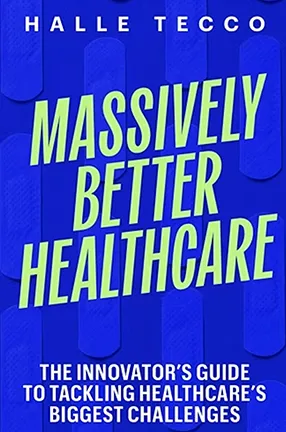
In the book, I argue that many of healthcare’s critical problems stem from a system that rewards the wrong behaviors. Misaligned incentives push organizations to prioritize volume over outcomes, while fragmented infrastructure leaves patients struggling with access, coordination, and cost. The book highlights how healthcare data is simultaneously underused and misused, trapped in silos that delay care yet exposed in ways that erode trust. Geographic disparities, workforce shortages, and logistical failures further widen gaps in access, even as the system spends more than ever. Too often, “innovation” adds surface-level novelty without meaningfully improving outcomes or scaling in a sustainable way.
Massively Better Healthcare pairs these challenges with practical solution patterns grounded in real examples. Case studies show how aligning revenue with real-world outcomes can strengthen both business performance and patient impact. On the data side, the book calls for treating health data as something to be stewarded rather than exploited, enabling interoperability and responsible use while protecting patients. Taken together, the message is not that technology alone will fix healthcare, but that progress happens when incentives, business models, data practices, and policy are deliberately designed to reinforce better health rather than work against it.
Who did you write this book for?
For any healthcare innovator who wants to create lasting change.
What books have you read lately that you would recommend, and why?
I just finished A Giant Leap by Dr. Robert Wachter. It’s one of the clearest, most grounded examinations of how AI is actually entering healthcare, written by someone who understands both the technology and the clinical realities. What I appreciated most is that Wachter is optimistic, but recognizes that we need guardrails for AI in healthcare.
What's next on your reading list?
I’m just starting my book tour, so I probably won’t have much reading time in the near future! That said, I always like to consume industry reports, long-form journalism, and a few trusted newsletters I can dip into between events—things that keep me grounded in what’s actually happening in healthcare without requiring a deep, start-to-finish commitment.
What are you working on now?
In addition to my book tour and teaching, I serve on the boards of companies like Collective Health and Cofertility, which keeps me close to the operational side of building at scale. I’m also the creator and co-host of the Heart of Healthcare podcast.
What are you teaching at Columbia this semester?
This semester, I'm supervising two independent studies. These days, I only teach in the fall.
Anything you would like to add?
I’ll share something I keep telling my students: The healthcare system was built by people, which means it can be rebuilt by people. The most important thing, especially for innovators, is resisting the learned helplessness that this industry often teaches you. Stay idealistic, stay pragmatic, and focus on the leverage points where your effort can truly move the needle. You have to keep the faith that change is possible, even when facing inevitable setbacks.