A Novel About Love, Mothers, Daughters, Generational Grief, and Community
In This Is the Only Kingdom, Professor Jaquira Díaz tells a story about the barrio of el Caserío Padre Rivera in Puerto Rico.
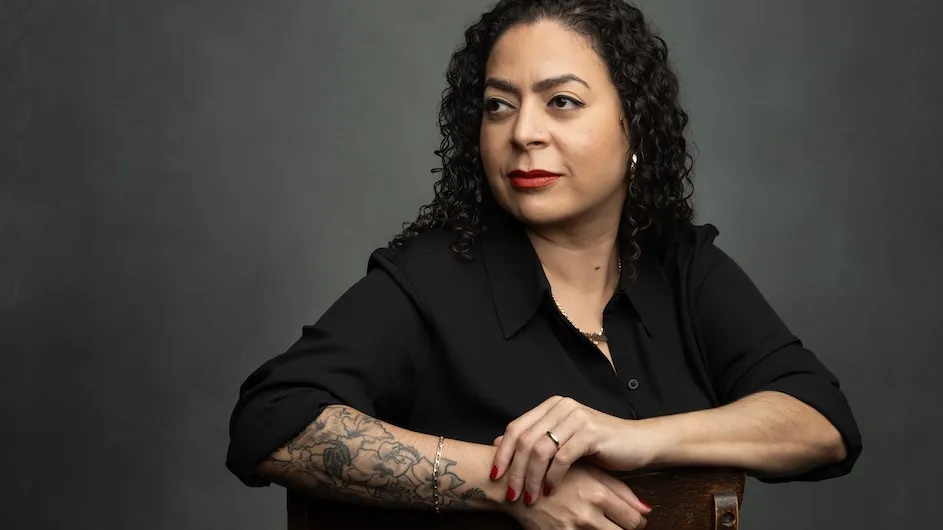
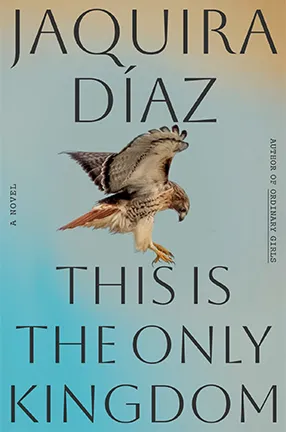
In This Is the Only Kingdom, School of the Arts Writing Professor Jaquira Díaz tells the story of Maricarmen and what happens when she meets local musician Rey el Cantante. She begins to envision a life beyond the tight-knit community of el Caserío, Puerto Rico, and beyond cleaning houses and waiting tables. Breaking free is more difficult than she imagines, and she soon finds herself struggling to make a home for herself, Rey, his young brother Tito, and eventually, their daughter, Nena. One day, everything changes.
Fifteen years later, Maricarmen and Nena are in the middle of a murder investigation, as the community that once rallied to support Rey turns against them. Now Nena, a teenager haunted by loss and betrayal and exploring her sexual identity, learns to fight for herself and her family in a world not always welcoming.
In This Is the Only Kingdom, Díaz explores family and community, generational grief, and the love between mothers, daughters, and the barrios that make them.
How did this book come about?
This Is the Only Kingdom is a project that came out of love—for the community where I learned all about storytelling, for the ways we tell stories, make music, raise families, work, take care of each other, and dream. But also, out of a deep respect for the ways we allow each other (and ourselves) to fail and fail again, and get back up and keep trying. For the ways we are not always our best selves, the ways we are flawed and complicated, and yet we continue to love each other and the place we call home.
Part of the story was passed down to me by my father and the people of el Caserío Padre Rivera. Not the whole story, just bits and pieces about Rey. But out of that small part, the novel grew. I’ve been thinking about this story since I was a child growing up in Puerto Rico, but over the last six years, the characters evolved, took on lives of their own. I was very interested in characters that were flawed, who were not villains or heroes, who were imperfect in the ways they lived and loved. I wanted to capture something human, something about the ways we are capable of both cruelty and compassion, of loving and hurting each other in ways large and small.
What was it like to write fiction as opposed to nonfiction, as your first book was Ordinary Girls: A Memoir?
Writing fiction felt liberating. There was a kind of freedom I felt writing a novel, because I could change anything about the story, and I didn’t have to worry about how it would affect real people. But fiction also allows me the freedom to tell the truth in ways that may not always be possible in nonfiction when I'm writing about real people. Writing about other people, I feel a sense of responsibility, not just to the truth, but to justice and fairness. When I finished writing Ordinary Girls, I was sure I’d never be able to write another memoir. When I finished This Is the Only Kingdom, I immediately started thinking of the next novel.
How important to the craft of writing is reading?
For me, reading widely and diversely is one of the most important things I do.
How does the intersection of your own writing and teaching affect you, or do you keep the two separate?
I know most writers take time off in order to be more productive, and a lot of writing happens during sabbatical, but that’s not the case for me. I need to teach in order to write, and I need to write in order to teach. These things are inextricable for me. I do my best writing while I’m teaching, because I’m thinking deeply about craft, I’m reading, I’m planning lectures and discussions.
When I leave the classroom after teaching a seminar or workshop, I’m energized and creative. That’s when the best writing happens. Similarly, when I’m deep in the creative work, I’m thinking creatively about teaching, about how to help students generate more creative work. Every day, I feel grateful that I get to do what I do. I love it.
What are you teaching this semester?
I’m teaching a nonfiction workshop and a speculative nonfiction seminar.
What are you working on now?
I’ve been working on multiple projects over the course of the last year, but most recently I’ve been writing speculative essays.
Which three writers would you invite to a dinner party?
Caro De Robertis, Angie Cruz, and Lilliam Rivera. We’d have an amazing time.
Jaquira Díaz will discuss This is the Only Kingdom, her “powerful love letter to mothers, daughters, and the barrios that make them,” with Edwidge Danticat, Wun Tsun Tam Mellon Professor of the Humanities, on April 23 at 6 pm at the Lenfest Center for the Arts.