From SIPA to Scaling a Startup: A Columbia Alumna’s Guide to Utilizing the Columbia Network
Allia Mohamed (SIPA’18) co-founded the startup Openigloo with fellow Columbians to help New Yorkers vet their landlords. Here’s her advice for making connections here that could define your career from the very start.
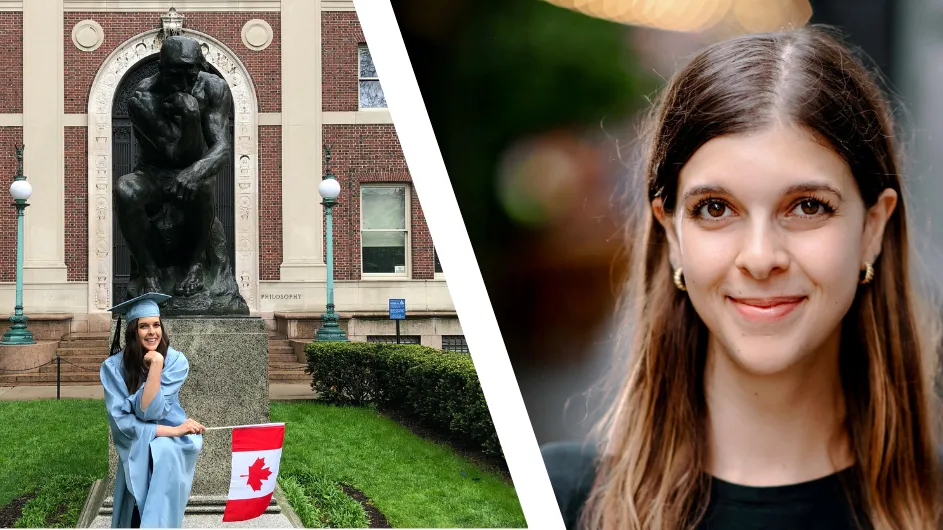
Before she launched Openigloo, a platform that’s now helped more than three million New Yorkers vet their landlord before committing to a lease, Allia Mohamed found herself in a place countless people in the city have found themselves: standing outside of potential apartment buildings, waiting for strangers to walk out of their apartments, and asking them to spill the tea.
“Hey! You live here. How’s the landlord? Should I live here? What’s the story?”
Those strangers, it turned out, were happy to talk. And what she learned standing on those sidewalks became the idea behind her company.
As an international student herself who’d arrived in the U.S. without domestic income history or U.S.-based parents to co-sign a lease, she watched as classmates were taken advantage of in the New York rental market. Mohamed remembers one in particular who paid an entire year’s rent up front to get a landlord to accept her application, only to be ignored any time something broke in the apartment.
“There was always this feeling I had that New Yorkers, especially students and young people, are in really a vulnerable position,” Mohamed said. “In the sense that they can get taken advantage of if they don’t have the right information or the right access.”
Mohamed had worked in sales and trading before she came to Columbia’s School of International and Public Affairs (SIPA) to study international finance and economic policy from 2016 to 2018. After graduation, she worked in venture capital, investing in other people’s startups. All the while, that germ of an idea to help New York City’s renters took root. Then COVID-19 shut everything down.
“This is the perfect moment to take a reset and really give it my all,” Mohamed said.
She quit her job alongside two SIPA classmates she’d recruited to build Openigloo with her. Within a few months, they had 100,000 users, even as headlines proclaimed everyone was trying to get out of New York.
It’s been five years since that turning point and the startup has partnerships with landlords across all five boroughs, a hiring pipeline built partly out of Columbia’s own startup ecosystem, and a founder who still credits a lot of her success to lessons she picked up, in easy and hard ways, during her two years on Columbia’s campus.
That’s why we at Columbia News asked Mohamed to be one of our guides for this year’s “Choose Your Own Adventure”-focused Columbia Welcome series. We asked her to distill her experience, particularly leveraging the Columbia network while a student, into advice for students just getting started.
Get Out of Your Program’s Bubble
Mohamed did not want to make Openigloo by herself. That’s why she pitched the idea to two SIPA classmates—Srujan Routhu (SIPA’18), an engineer before grad school, and Lidor Bar David (SIPA’18), who came from PR, consulting, and operations—specifically because their skills filled in what hers did not.
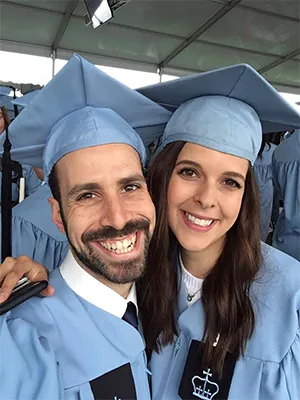
“I was at an advantage having gone to SIPA because my classmates came from a lot of different diverse backgrounds and experiences,” Mohamed said.
She is candid, however, about the network gap from earlier in her life. When she was in undergrad, her friend group had been almost exclusively “finance people,” which didn’t quite help when it came time to build a team with wide-ranging expertise.
Her advice now is blunt, but useful for students just getting started: get out of your program bubble before you need to.
“You have to step outside of your bubble on campus, because it is just so easy to get wrapped up in your coursework,” Mohamed said. “If you don’t carve out that time to network with other faculty, you could be graduated five years down the road, and you’re looking to hire someone who knows something about one particular subject, and you realize ‘wow, I don’t know anybody from the medical school or dental school or philosophy department.’”
“The reputation you build for yourself during your time at Columbia does matter.”
Picking who you build a startup with isn’t sentimental, Mohamed said.
“In school, I got to experience firsthand how they operate under pressure,” she said. “How were they during their capstone? How were they during exam time?
“The reputation you build for yourself during your time at Columbia does matter.”
How to Actually Utilize the Columbia Network
Mohamed’s tactical advice for tapping into the alumni network is one any student can use starting today: go on LinkedIn, find people who studied what you’re studying, and see where they landed.
“Now you have a map of what different paths could be,” Mohamed said. “And then you reach out to people who you think have interesting profiles and ask to pick their brain.”
She’s convinced an authentic message works far more often than a student might expect: “You would be surprised at how many people will engage with a really thoughtfully crafted cold message that says, ‘I’m studying the same thing that you studied. I would love to chat about what your path looked like. Can you spare 20 minutes for a call in the next couple of weeks? I'd be really grateful.’
“Who would say no to that? I definitely did that while I was at SIPA—sent messages to people who worked at the IMF, ended up at the UN, ended up at a global money manager, ended up being a diplomat, as I was exploring what could be an interesting path for me.”
Investing time in those connections paid off in a very concrete way once she started building Openigloo. Mohamed and her team participated in Almaworks, an undergraduate-led accelerator for Columbia-affiliated startups, which brought in mentors, advisors, and eventually some of Openigloo’s earliest investors. She also reconnected with SIPA professors, several of whom became advisors and wrote the company’s first checks.
“You don’t really fully appreciate the value that the Columbia network brings you until you’re a couple of years graduated,” Mohamed said. “I’m building this company and look at all the people who are so eager to help and support.”
It’s Almaworks, too, that has a great internship program where students can apply to be interns and Almaworks matches them with Columbia-affiliated startups.
“We’ve hired several Columbia interns over the past five years—people from all programs: computer science, engineering, SIPA,” Mohamed said. “We’ve hired some full-time people from the internship program as well.”
Allia’s Advice For Your First Weeks on Campus
By her own admission, when Mohamed started at SIPA, her first year was much heavier on coursework than connecting with classmates.
That changed in year two, when she started saying “yes” to everything: student-organized trips, informational interviews, events all over the city that students had put effort into organizing.
“It really opened up my world and opportunities,” Mohamed said. “Getting to meet people that I otherwise would’ve never met.”
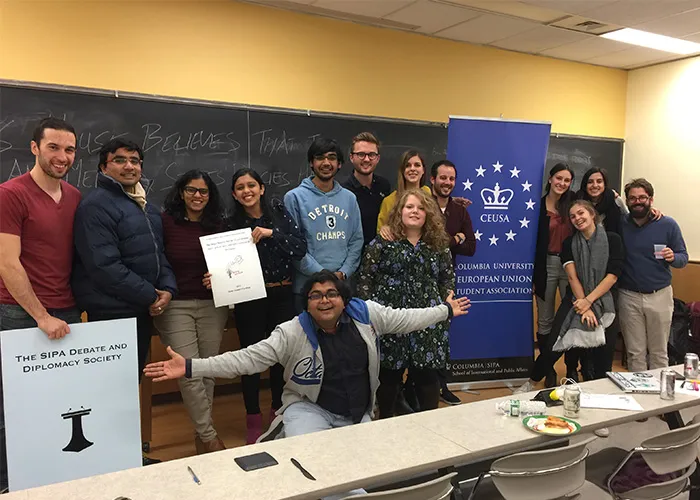
Here’s what did work from the start: Join things immediately, even without committing to everything. She went to intro meetings for a wide range of clubs and became president of SIPA’s Debate and Diplomacy Society (a lifelong love), which doubled as a way to widen her circle without much extra effort, since the club co-hosted events with groups like the European Union Student Association and Latin American Student Association.
As for what she regrets? Not exploring campus itself sooner. Mohamed said she spent most of her two years between Butler Library and SIPA’s basement before discovering, late in her final semester, how much of Columbia she hadn’t seen.
“How did I not know about the theology library or Philosophy Hall?”
“I really encourage people to do a whole campus tour,” Mohamed said.
Allia’s Favorite NYC Spots, On and Off Campus
Mohamed's soft spot is for Burke Library at Union Theological Seminary on Broadway and 120th St.
“There’s something very magical about that building,” Mohamed said, no offense intended to SIPA’s own Lehman Social Sciences Library, Butler Library, or even Low Library.
But her pick for new arrivals looking to get away from campus: Roosevelt Island, which she says she did not discover until embarrassingly late in her own New York years.
“Get a Citi Bike, ride around the entire island, see the lighthouse, grab an ice cream, grab a beer, take the tram—it has a ‘wow’ factor that I discovered too late,” Mohamed said. “So I’m now spreading the word everywhere I can.”
And When You’re Ready to Rent That First NYC Apartment...
It shouldn’t be surprising for someone whose entire company exists to demystify New York’s rental market, but Mohamed has plenty of advice for students about to sign their first lease.
- Don’t treat a New York lease casually. “Signing a one-year lease in New York City is not a willy-nilly decision that it might be elsewhere in the country—it’s a very costly decision,” Mohamed said. “People are spending tens of thousands of dollars a year.”
- Resist optimizing for the trendiest neighborhoods. Moving every year, chasing the next cool block, tends to cost more in the long run than staying put. “I really encourage renters to, one, do your research, be open to different neighborhoods, and prioritize finding a rent-stabilized apartment,” Mohamed said. “Not the in-unit washer and dryer.”
You can follow Mohamed on @openigloo on Instagram and TikTok for more tips.
And, as Mohamed likes to remind Columbia students, Columbia University is one of the largest landlords in New York City, which means tips on current Columbia housing can be found on Openigloo too.