How Does Culture Shape the Human Brain?
In Socially Wired, Matthew Schelke answers this and other questions.
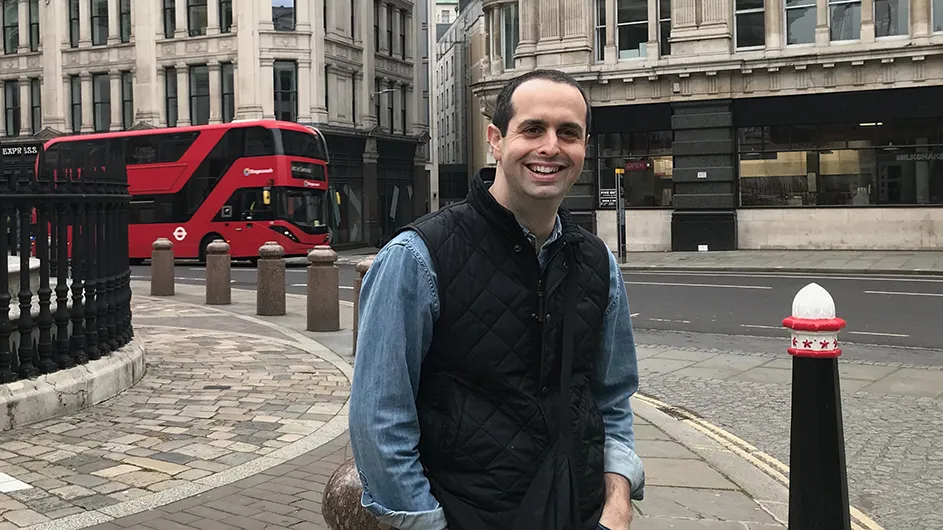
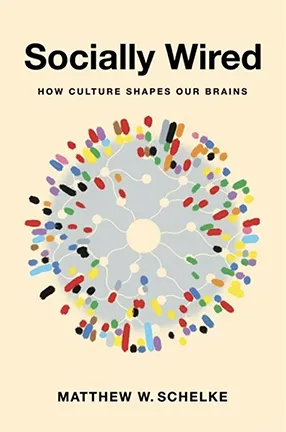
From birth, our brains are shaped by other people—in our families, schools, workplaces, neighborhoods, countries, and cultures. These social worlds make us who we are, but how this process works remains mysterious on a neural level.
In Socially Wired, Matthew Schelke, a general neurologist at Columbia University Irving Medical Center, uses the stories of patients with neurological illness to show how social and cultural environments transform the brain. In the neurology clinic, the experiences of patients with the same illness can vary tremendously depending on their backgrounds, providing a window into the complex interactions between brain and culture.
Through cases ranging from an amateur chef who suddenly stopped cooking to an art lover who was removed from a gallery for touching the art, Schelke explores what neurological injury can reveal about social and cultural behavior. He demonstrates how specific practices—shared emotion, apprenticeship learning, imagination, language, art, and collective memory—shape neural networks, the experiences of patients, and, ultimately, our encultured minds.
Going beyond neuroscience, Socially Wired integrates insights from anthropology to philosophy to ecological psychology. Highlighting patient stories, this book illuminates how the brain wires us to participate in culture and how, in turn, culture rewires the brain.
Why did you write this book?
It’s a common saying in neurology that once you’ve seen one patient with diagnosis X, you've seen … one patient with diagnosis X. Many of the most interesting aspects of human behavior and, in turn, the experiences of patients in the clinic cannot be explained only by brain anatomy or neural networks. In order to think, remember, imagine, or feel, the brain has to become encultured and learn how to do these through interactions with others. This is increasingly recognized, and I wrote Socially Wired in order to show how it happens in detail through specific kinds of cultural experiences like ritual, apprenticeship, or pretend play, and the way these shape specific neural systems. Socially Wired is one attempt to explain how we can have such a variety of experiences (and symptoms) even though our brains are anatomically similar.
How do neurologically ill patients embody the ways in which social and cultural environments transform the brain?
One of the early chapters of the book focuses on a patient with frontotemporal dementia (FTD), whose first symptoms were loss of interest in cycling and cooking. This was not because FTD affects “cycling” or “cooking” areas of the brain, but because those activities were closely tied to important social groups for that patient, and FTD causes degeneration of the neural systems that connect social reward with these otherwise arbitrary activities. Our brains transfer the motivation of face-to-face interaction to whatever activity we are participating in at the time, so in another patient with a different history of social interactions, the same illness would likely affect different activities.
What are other examples from the book of complex interactions between the brain and culture?
There are case studies in the book of patients who have neurological symptoms—inability to speak or walk, for example—without any damage to the brain, which in neurology we call “functional neurological disorders.” These occur because in order for the brain to function, we have to be embedded in the right environment, which for humans is primarily cultural and social. If there are disruptions in our social relationships, brain regions can actually malfunction and cause symptoms that mimic those of more traditional neurological illnesses. This sort of co-dependence between organism and environment, and humans and their cultures, is something that is very important in modern philosophy and social science, and that I try to bring to neurology in Socially Wired.
What books have you read lately that you would recommend, and why?
Anthony Chemero’s Intertwined Creatures approaches similar themes from a more philosophical and cognitive science lens. A particular highlight is his use of dynamical systems to show how humans coordinate with each other moment to moment at the micro level across activities ranging from jazz improvisation to conversation, which Chemero calls social “synergies.” He also discusses some of the ethical and political implications of our deeply social selves, which are especially important today.
I cite this book in Socially Wired, so it’s not exactly a recent read. Cecilia Heyes’s Cognitive Gadgets is an exceptionally clear account of how what seem like basic cognitive mechanisms—imitation, language, theory of mind—are actually culturally learned skills and not innate mental capacities. Heyes describes this as culture providing not just the grist or content for our cognitive mills, but the mills themselves, and this aligns very much with my argument in Socially Wired.
Finally, Alva Noë’s The Entanglement is a wonderful exploration of how certain cultural practices loop back and affect our basic sensorimotor experiences. Visual art, for example, shapes how we see and focus our attention, and written language shapes how we understand and parse verbal speech. Noë argues convincingly that there is no basic experience of seeing or speaking that is prior to or unaffected by this relationship.
What's next on your reading list?
The list keeps growing, but at the moment: Larissa Buchholz’s The Global Rules of Art, and a neurology classic, Martha Farah’s Visual Agnosia.
What are you working on now?
Mostly clinical work. I see patients four days a week, direct the neurology residency clinic at Columbia, and co-chair the neurology quality improvement committee.
Which three doctors/scholars, dead or alive, would you invite to a dinner party, and why?
Among physicians, W.H.R. Rivers (1864-1922). He was one of the most multifaceted neurologists, doing everything from self-experimentation (!) on the effects of peripheral nerve injuries to anthropological expeditions to New Guinea to pioneering treatment of shell shock (what we now call PTSD) in the First World War.
Among social scientists, Mary Douglas (1921-2007). Her writings first introduced me to the ways in which culture can deeply influence our seemingly internal patterns of thought, and she played a significant role in the ideas developed in Socially Wired.
And among scholars in general, John Dewey (1859-1952). Dewey has always been an intellectual hero for me, for many reasons—his evolutionary approach to philosophical questions, his emphasis on the social origins of individual psychology, and his view of human culture as an ongoing process of inquiry and reconstruction rather than a fixed set of norms or practices. On top of that, he was a local: He taught at Columbia for 25 years, and lived on 112th Street for over a decade.