5 Columbia University Podcasts You Need to Listen to This Summer
Whether on the road, the beach, or chilling next to the AC, let these podcasts made by Columbians be your summer audio accompaniment.

Whether heading out on a road trip, settling into a beach chair, or just trying to make your morning commute a little less boring, we’ve got you covered with timely, thought-provoking, and fascinating podcasts coming out of the Columbia University community right now.
We’ve identified five podcasts (some new, some returning) and starter episodes that feel particularly tuned into this summer’s mood. From the geology beneath our feet to what the Declaration of Independence means 250 years on, take a listen and ignite your curiosity.
This summer, the United States turns 250. It is a milestone that invites reflection on what the founding documents of this country really mean, not as an abstract history but for today.
To US, from US is a limited series from the Imagining Liberty Project at Teachers College, and it takes a simple approach: ask everyday people what the Declaration of Independence means to them, then pair those answers with the work of scholars who have spent their careers thinking about it.
Episodes feature scholars, including Enid & Lester Morse Professor in Teacher Education Ruth Vinz on the role of women in the Revolutionary era and Steven Mintz of the University of Texas on how the Declaration of Independence fueled radical movements beyond its original purpose. With the country marking this birthday, there’s no better time to sit with these questions and let these voices challenge assumptions.
We recommend starting at the beginning:
The ground is warm, the sky is enormous, and the planet feels alive. What better time to develop a genuine appreciation for the geology beneath it all?
The Core of Everything, hosted by Jack Turney, a postdoctoral research scientist at Columbia University’s Lamont-Doherty Earth Observatory, and Mark Boyd, a PhD student at Imperial College London.
Whether the topic is Yellowstone’s supervolcano, the Galapagos Islands, or what happens to rocks when lightning strikes earth, you’ll find yourself thinking differently about the ground you’re standing on.
Here’s a great episode to start with, featuring Lamont Research Professor Brendan Buckley:
Summer is the season of play, but what does it mean to play, and how can we bring more of it into our lives and our children’s lives? That question is at the heart of Pop and Play, a podcast from Teachers College’s Digital Futures Institute, which returned this summer for a sixth season.
Hosts Haeny Yoon, Associate Professor of Early Childhood Education, and Nathan Holbert, Associate Professor of Technology, Media, and Learning, have built one of the most consistently joyful podcasts in the Columbia audio ecosystem.
Past episodes have explored game design, memory and nostalgia, literacy, and the radical act of adults allowing themselves to just play. Also, how can you resist a podcast with titles like: “Is Pickleball all about Dinking in the Kitchen?”
Here’s a great, and timely, episode to start with, about outdoor play:
Do you want to understand what’s happening in the world this summer? Columbia Energy Exchange is required listening to understand the real stakes of the conflicts reshaping the Middle East, the future of global energy supply, and the question of who holds power over the resources that keep our lights on and cars running.
Hosted by Jason Bordoff, Founding Director of the Center on Global Energy Policy (CGEP) at Columbia’s School of International and Public Affairs, and Bill Loveless, Director of CGEP’s Energy Journalism Initiative, this podcast has been a gold standard for serious energy and climate policy for years.
We’re at a particularly urgent moment this summer, though, with recent episodes addressing the conflict in Iran and its cascade effect on global oil markets, and how the energy shock is reshaping investment decisions the world over.
We recommend starting with this episode about the recent Iran deal, from the energy perspective:
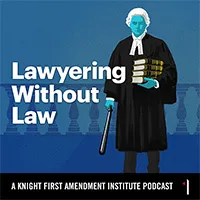
If you’ve been wondering what exactly is happening to the rule of law in the United States, the Knight First Amendment Institute has made a podcast for this exact moment. Lawyering Without Law takes on a counterintuitive, and somewhat unsettling, premise: the most effective assaults on democracy don’t just shut down legal institutions. They use them.
Hosted by Knight Institute Senior Fellow and Columbia Law Professor Madhav Khosla and Research Director Katy Glenn Bass, each episode brings in scholars, litigators, and practitioners to trace how legal systems in countries like Turkey and Hungary have been bent to authoritarian ends. In the process, they show what that pattern illuminates about pressures on the American legal system today.
We recommend starting with this episode featuring Harvard Law Professor Lawrence Lessig on institutional corruption, the bribery you can’t prosecute: