A Book Reconsiders Virginia Woolf’s ‘Mrs. Dalloway’
Edward Mendelson offers a new critical study—and a love letter—to the enduring novel.

Mrs. Dalloway by Virginia Woolf is a novel about almost everything. The story of a single day in London after World War I, the book travels backward and forward in time and consciousness, venturing beyond the ordinary world into epic, mythic, and mystical modes. The novel is celebrated as much for its interwoven webs of meaning as for its moral and psychological vision.
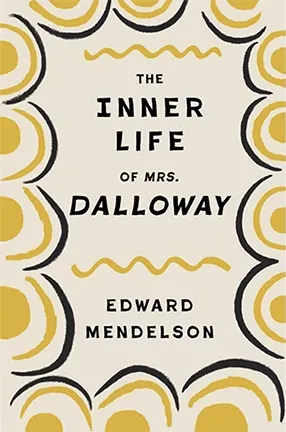
In The Inner Life of Mrs. Dalloway, Edward Mendelson, Lionel Trilling Professor in the Humanities, explores the novel’s deepest questions, focusing on the core themes of medicine, empire, and love. He traces how Woolf thought and wrote, considering the complexities and resonances of her works. Mendelson casts Mrs. Dalloway as an extended protest against authorities that wield power over others and a defense of the equality of inner lives. He also examines the place of the book in literary history, going back to Homer, Dante, and Shakespeare, as well as its influence on later writers from Erich Auerbach to Zadie Smith.
Mendelson talks about his book with Columbia News, along with other books on his mind these days, his current projects, and what courses he’s teaching this year.
How did this book come about?
The University Seminars invited me to give the Leonard Hastings Schoff Lectures, and the Schoff lecturer doesn’t get paid until Columbia University Press accepts a book version of the lectures. I’d been thinking about Mrs. Dalloway forever, and here was a chance to talk and write about it at greater length, and in greater depth than any opportunity I’d had before.
What is it about Mrs. Dalloway that makes it so distinctive and memorable?
Mrs. Dalloway looks like a slim, almost miniature novel, but it has the scope of the great epics from Homer onward, and it combines multiple ways of thinking that shape Western culture. And Woolf does all that while focusing on unique individual persons on a single day. The novel does that especially well, but Woolf does much the same thing in To the Lighthouse, Orlando, and The Waves.
Is Mrs. Dalloway your favorite Woolf novel? If so, why?
This is a bit like asking, “What was your favorite sunset among all the sunsets you’ve seen?” One point that I make in my book is that, when you really value something, you value it for itself, not because you’re measuring it against other things that you may value less or more. So probably the best answer to this question is to say whichever novel by Virginia Woolf I happen to be reading moves me deeply, and it’s impossible to say whether I’m more moved or less moved by one or another.
What’s the last great book you read? What made it great?
Alessandro Manzoni’s 1827 I Promessi Sposi, translated as The Betrothed. I first read it many years ago, and read it again this summer in a new translation because I was on a committee to approve a PhD thesis about it. It’s a massive book about everything, as great as War and Peace or Middlemarch, and from roughly the same era.
Do you read hard copies or on an e-reader?
On paper only. When you read intelligently, you read with your eyes, your mind, and, though you may not be conscious of it, with your whole body. When you read a physical book, your eyes, mind, and body join in the rhythm of page-turning, and they join in the physical sense of how much of the book you’ve read already, and how much is waiting for you to read it. It’s impossible to be moved by something on screen in the deep way you can be moved by something on paper.
How do you balance the demands of your own work/research and teaching?
They’re inseparable. Everything I write about literature emerges from things I’ve said and heard in the classroom. All the research that I do finds its way back into the classroom. I continue to get most of my education by teaching Literature Humanities (Lit Hum) to first-year students and lectures and seminars to everyone.
What are you working on now?
New editions of two novels by Virginia Woolf, to follow my new edition of Mrs. Dalloway. And I’m making progress on a book about what it means to be a unique person in the great epics. Much of that will come out of many Lit Hum sessions over many years.
What are you teaching in the fall and spring semesters?
Lit Hum both terms, as always. Also, a lecture course on modern British literature in the fall, and, I think, a seminar on Virginia Woolf in the spring, though that’s not yet set in stone.
Which three writers, dead or alive, would you invite to a dinner party, and why?
None. I don’t want to be observed by someone who is likely to turn me into a character in one of their books, and the writers (dead or living) whom I admire are more likely to devote their intelligence to their books than to dinner-table conversation. For a dinner party, I want only friends, family, and friends of friends.