International Affairs and Diplomacy Have Always Been Her Passions
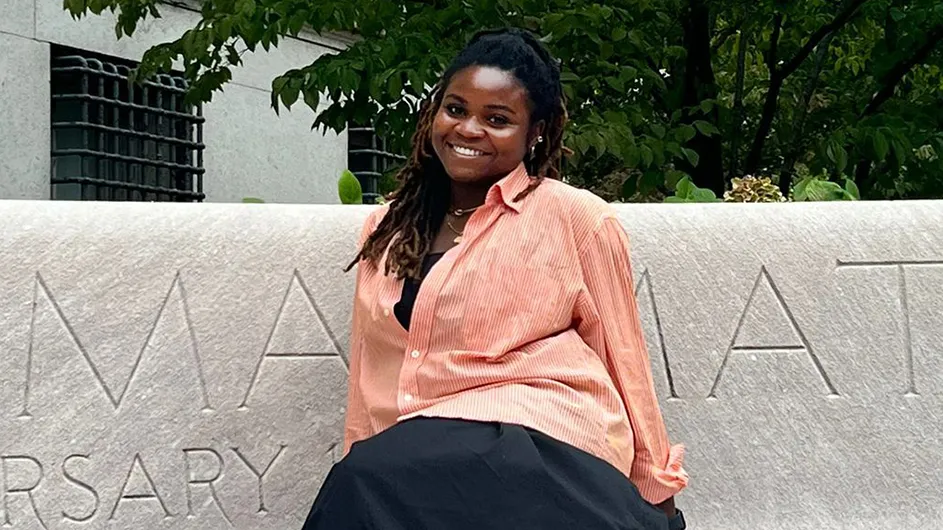
Attending Columbia SIPA has empowered Yedidya Zohore to envision a career of peacebuilding and cooperation across regions.
When will you graduate from SIPA, and what is your degree in?
I am working toward a master’s of international affairs, with a concentration in economic and political development, and specializing in Africa and international conflict resolution. I will graduate in May 2026.
What was your path to pursuing graduate work at Columbia?
International affairs and diplomacy have always been my passions. When I was growing up, my mother instilled in me a deep sense of global citizenship through her continued engagement with her home country, the Democratic Republic of Congo, and by encouraging me to explore the world from a young age. I studied international relations as an undergrad, which led me to a career in development finance and impact investing, uplifting women fund managers and supporting African emerging fund managers to strengthen economic empowerment and demonstrate the vast opportunities across African markets. That experience gave me a new perspective on international development, one grounded in sustainable growth and institution-building.
A SIPA alum who mentored me encouraged me to attend the Columbia Africa Conference before I even considered applying to graduate school. After meeting the incredible community of students and alumni there, I knew SIPA was where I belonged. With her support and guidance, I decided to pursue my master’s degree at Columbia.
Has there been a special mentor or professor during your time here?
Two professors have been particularly impactful: Robert Kiernan, who I had for Portfolio Management and Public Policy, has been a terrific mentor. Despite this being a half-semester course, his generosity and encouragement have extended far beyond the classroom: He’s opened doors, facilitated opportunities, and continually reminds me to pursue my ambitions with confidence.
Jinny Prais, who taught Social Movements and Citizenship in Africa, has also been deeply influential. As one of the few Africa-focused courses at SIPA, her class was intellectually stimulating, creative, and empowering. Dr. Prais encourages critical thinking and authentic expression, and as both a mentor and supervisor, she has been pivotal in shaping my academic experience.
What extracurricular activities have you pursued during your time at SIPA?
I currently serve as president of the SIPA Pan-African Network, where we create spaces for students of African descent and the diaspora to connect, celebrate culture, and engage in meaningful dialogue. We also co-organize the annual Columbia Africa Conference, one of the largest student-led, Africa-focused conferences in the U.S.
Beyond that, I’ve interned with the United Nations Department of Political and Peacebuilding Affairs and the African Diaspora Network, experiences that have deepened my understanding of peacebuilding, development finance, and diaspora engagement.
Back on campus, I also serve as a program assistant in the Office of Student Affairs and as a member of SIPA’s Belonging and Engagement Committee, helping strengthen community and inclusive initiatives.
How do you like studying in New York City? What are your favorite urban pastimes?
I love studying here. I went to undergrad in a city, but nothing compares to the energy and diversity of New York. I often take long walks—sometimes 15 minutes, sometimes an hour—just to explore different neighborhoods like Harlem or the West Village. I enjoy discovering new cafés, restaurants, and small cultural pockets across the city.
New York’s variety means there’s always something happening—lectures, art exhibits, food festivals, or community gatherings. No matter your background or interests, you’ll always find a space where you belong.
Any specific recommendations for things to do beyond campus?
Walk as much as possible, explore the neighborhoods! Visit Central Park, take the Staten Island Ferry on a sunny day, catch a Broadway show, and try all the food this city has to offer. Also, get involved: Volunteer, visit community gardens, or attend local events. It’s one of the best ways to experience the city’s heartbeat beyond the classroom.
How have you found community at Columbia and in New York?
I like to say I’m an introvert with extroverted tendencies. I love connecting with people and learning from their experiences, and SIPA has such a wealth of perspectives from around the world. I’ve always valued community, whether at school, work, or church, and that’s been one of the best parts of my graduate experience.
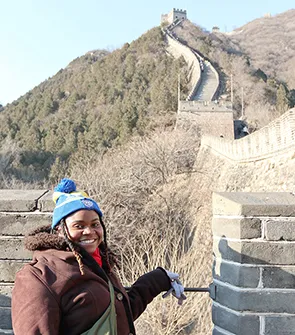
I’ve also taken part in the Treks that SIPA offers. These are student-organized trips to various countries, where you get to interact with students outside of your specific concentration or area studies, people you wouldn’t ordinarily speak to on a daily basis. I was a part of the 2025 China trek delegation, and it was one of the most enlightening and exciting experiences of my life. The trip opened up a new path and interest for me. The people you meet here will likely be the ones shaping the world alongside you in the future, and that’s such an inspiring feeling.
What’s something about being a Columbia student that you think is underrated?
The access to people. SIPA students are future policymakers, presidents, governors, and entrepreneurs, and many professors have shaped global policy themselves. Being in New York, surrounded by international organizations, missions, and NGOs, means you’re always at the center of global conversations. It’s truly unparalleled.
What are your plans post-graduation?
I hope to travel and continue my language studies in Korea, exploring how to strengthen Africa–Asia relations through youth engagement, trade, and cultural diplomacy. My long-term goal is to work at the intersection of development finance, peacebuilding, and international cooperation, building sustainable and inclusive institutions across regions.