Preparing for a Career in Military Medicine, at Home and Abroad
Ryan Leone hopes to use his medical degree, which he’ll earn next spring, to treat both service members and veterans.
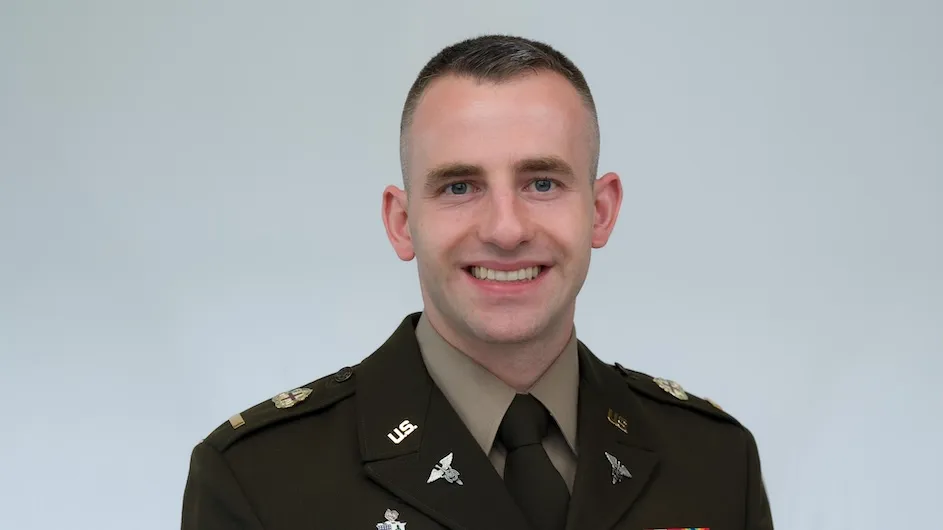
Ryan Leone, a fourth-year medical student at the Vagelos College of Physicians and Surgeons, is pursuing the U.S. military’s Health Professions Scholarship Program, which means that he’ll join the military as a physician as soon as he graduates. It’s a longtime goal of Leone’s, given his longstanding interest in how war and disaster affect soldiers and veterans’ bodies and minds. Columbia News spoke to Leone about his busy four years on campus, and what he plans to do after graduation.
When did you first know you wanted to be a medical doctor, and why?
I realized I wanted to go into medicine near the end of high school, after years bouncing around between aspiring to be a marine biologist, a theoretical physicist, or a professional magician. While I didn’t have any physicians in my family, I learned from my own encounters with doctors that it was a career I could see myself doing. Medicine could combine my love for science with the teamwork skills I learned as a football player and the desire to help other people that my parents instilled in me.
What does training for a career in military medicine look like? Do you tell the Army that you’re planning on practicing, and they help guide you through opportunities to get you there, or is it more of a self-driven path than that?
The military recruits physicians at various stages in training, but two of the most well-known pathways are either attending the Uniformed Services University for medical school or pursuing the Health Professions Scholarship Program (HPSP), which is what I am doing through the U.S. Army. For HPSP students, you go to officer training and spend a few months rotating at military hospitals during medical school, but you are otherwise expected to mainly just study hard to become a great doctor. I’ve been fortunate to participate in some self-driven, voluntary military trainings, research projects, and professional development efforts while in school, and I’m working with the Army to help expand those offerings to others who may want to take advantage of them.
You have a master’s in War and Psychiatry, and have a particular interest in the effects of PTSD. What got you interested in that area?
My experiences studying neuroscience, working with a trauma surgeon on traumatic brain injury research, and working for the military at the U.S. Army Institute of Surgical Research and the Defense Health Agency made me acutely aware of both the physical and mental toll that trauma takes on our troops. As a result, I thought the unique program at King’s College London in War & Psychiatry would be a great way to understand the psychological side of wartime or disaster stress. After being admitted, I was fortunate to receive the Thouron Award to fund me. I focused my coursework on the psychological sequelae of exposure to chemical warfare agents, mental health consequences of nuclear disasters, and protective versus risk factors concerning the mental health of Special Operations Forces.
Do you have a sense of where you might work in the future? Would it be in war zones or with veteran populations back in the U.S., or potentially both?
Ideally both! Immediately after graduating I will train in emergency medicine at Brooke Army Medical Center in San Antonio, Texas. Military physicians will often work at global hospitals or clinics run by the Department of Defense, taking care of service members, their family, and retirees, which is a separate mission from the Department of Veteran Affairs which cares for veterans after they have served. For me, I’d like to start my career in operational medicine, deploying overseas from a stateside base to provide the best care in some of the most austere, remote environments for operators who put themselves in harm’s way. In the longer term, I’d like to stay clinically active, but focus on strategy or policy jobs in Washington, D.C., that deal with health security and disaster preparedness for both the military and the broader American populace.
What made you choose Columbia?
Columbia felt like the perfect fit for me as early as my interview day, when I met students and faculty who were incredibly supportive and welcoming. I was really drawn to the wealth of research opportunities, the world-renowned clinicians we can learn from, and the flexibility the curriculum offers to have varied clinical and non-clinical experiences. To top it all off, I’d get to be close to my home, family, and friends on Long Island while living in one of the most fun cities on Earth!
You mentioned that curricular flexibility was something that drew you to Columbia. What did that look like in practice?
Columbia has a 1.5-year preclinical curriculum, where you learn the basics of medicine, followed by a year of core rotations in our Major Clinical Year. Then, our last 1.5 years involve various required and elective rotations in our specialty of choice, two of our major licensing exams, at least four months of research, and residency applications.
For me specifically, given that we can take courses at other Columbia schools, I was able to take a class on global health through the Mailman School of Public Health in my first year. I also participated in the International Fellows Program through the School of International and Public Affairs in my second into third year, which included trips to the United Nations and with senior governmental leaders in Washington, D.C.
During our busy clinical year, I loved working at NewYork-Presbyterian for my medicine and neurology rotations, but I was also able to leverage Columbia’s relationship with partner hospitals to complete my surgery rotation at Bassett Medical Center in Cooperstown, NY, my psychiatry rotation at the Bronx VA Hospital, my primary care rotation at an Indian Health Service hospital in Zuni, NM, and my pediatrics rotation at Harlem Hospital.
Throughout each of these periods in medical school, I’ve been able to variably do work for NYC Health + Hospitals’ Emergency Management Office, the Department of Homeland Security’s Office of Health Security, the U.S. Forest Service, and the National Center for Disaster Medicine and Public Health, while still traveling to 20 countries, presenting at and planning for conferences all over the country, and holding leadership positions in several school-based and national groups.
While learning how to be a good doctor has been my main job and should be the primary goal of anyone in medical school, Columbia helped me to ensure that it wasn’t the only role I had throughout my four years.
What piece of advice about Columbia do you wish you’d had before you started?
Great question! I wish I would have known how easy it is to commute to campus from other parts of NYC. I chose to live very close to the hospital, which has been a great and convenient experience, but knowing that it would be fairly easy to commute up could have expanded my apartment search area when I was getting ready to move.
How do you get out and explore the city beyond campus (if you do)? Any favorite NYC activities?
Living near the 1, A, and C trains makes it super easy to explore and visit friends throughout the city, and living by the George Washington Bridge means I can get to the Palisades Park in New Jersey very quickly! As for favorite activities, I’d have to say I love going to concerts at various venues like Le Poisson Rouge or the Brooklyn Paramount, running or biking around Central Park and the Hudson River Greenway, eating with classmates at excellent local spots like Tasty Deli, and drinking custom cocktails at unique bars like Attaboy or beers at The Dead Poet.