Columbia University Research That Had an Impact in 2025
Columbia News spotlights 2025 Columbia University research breakthroughs you should know about.
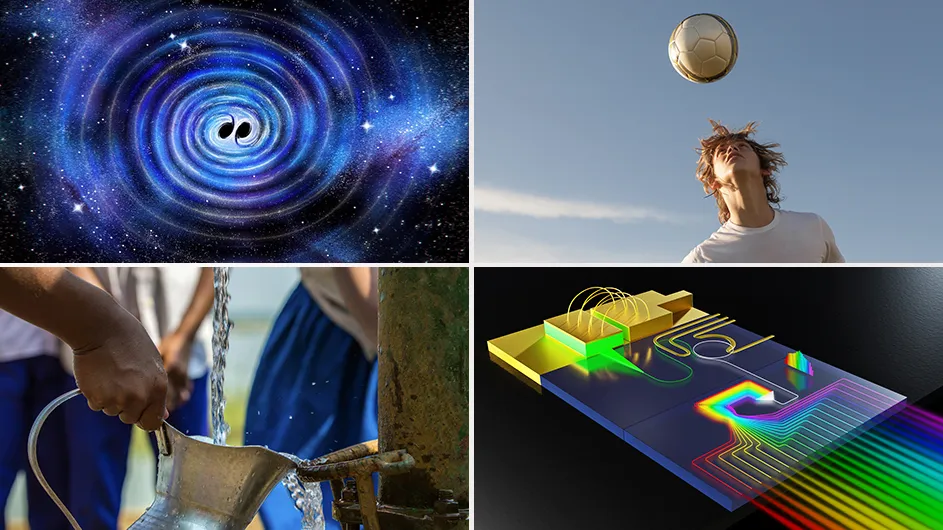
All year long, Columbia University researchers produce cutting-edge research in medicine, engineering, climate science, public health, and neuroscience, among other fields. As the year comes to a close, Columbia News looks back at research stories that made a splash in 2025.
Reducing Arsenic in Drinking Water Cuts Risk of Death, Even After Years of Chronic Exposure
A new study of nearly 11,000 adults in Bangladesh found that lowering arsenic levels in drinking water was associated with up to a 50-percent lower risk of death from heart disease, cancer, and other chronic illnesses, compared with continued exposure. The study provides the first long-term, individual-level evidence that reducing arsenic exposure may lower mortality, even among people exposed to the toxic contaminant for years.
Aging-Related Inflammation Is Not Universal Across Human Populations
Inflammation, long considered a hallmark of aging, may not be a universal human experience, according to a new study by researchers at Columbia University Mailman School of Public Health. The research suggests that “inflammaging”—chronic, low-grade inflammation associated with aging—appears to be a byproduct of industrialized lifestyles and varies significantly across global populations.
Focused Ultrasound Passes First Test in Treatment of Brain Cancer in Children
Columbia University researchers are the first to show that focused ultrasound—a non-invasive technique that uses sound waves to enhance the delivery of drugs into the brain—can be safely used in children being treated for brain cancer.

All of the Biggest U.S. Cities Are Sinking
A new study of the 28 most populous U.S. cities finds that all are sinking to one degree or another. The cities include not just those on the coasts, where relative sea level is a concern, but many in the interior.
An Unprecedented View of Merging Black Holes
Ten years after scientists first detected gravitational waves emerging from two colliding black holes, a research team co-led by Maximiliano Isi, an astronomy professor at Columbia, recorded a signal from a nearly identical black hole collision. Improvements in the detection technology allowed the researchers to see the black holes almost four times as clearly as they could a decade ago, and to confirm two important predictions: That merging black holes only ever grow or remain stable in size—as the late physicist Stephen Hawking predicted—and that, when disturbed, they ring like a bell, as predicted by Albert Einstein’s theory of general relativity.
“Brain Dial” for Consumption Found in Mice
Scientists at Columbia University’s Zuckerman Institute have linked a brain area in mice to the drive to consume not just sweets, but fats, salt, and food. The findings show this area serves as a kind of dial that can amplify or repress consumption.
Poverty and Debt in Early Adulthood Linked to Premature Death
Adults who experience poverty-level family income—whether sustained or intermittent—over two decades spanning young to mid-adulthood face a significantly higher risk of dying prematurely than those who are never in poverty, according to a new study by researchers at Columbia University Mailman School of Public Health. A companion study by the same research team finds that rising unsecured debt—such as credit card debt not tied to an asset—may be one mechanism linking early-life financial hardship to higher mortality risk.
Art Is in the Brain of the Beholder
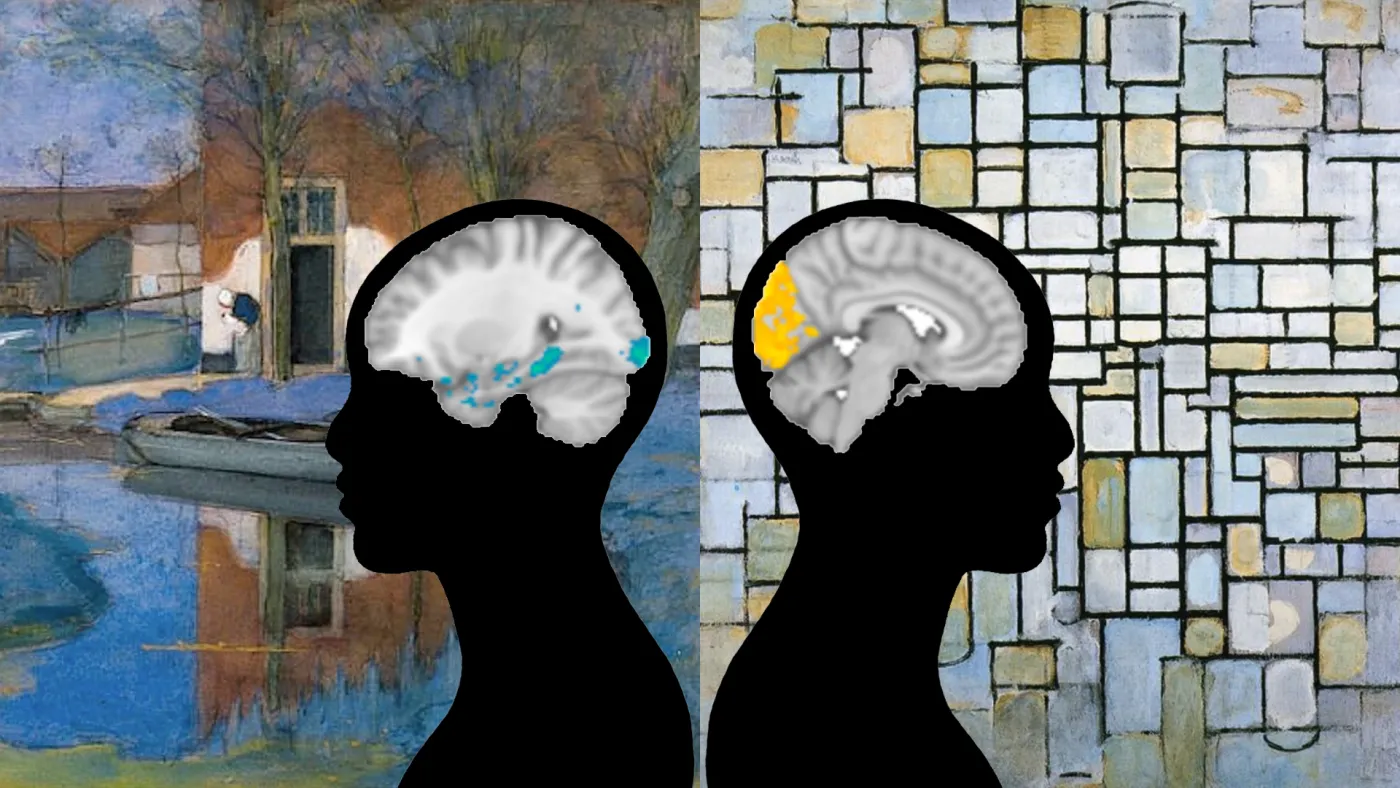
Columbia Zuckerman Institute scientists showed pairs of paintings to people while scanning their brains. The results shed light on how we respond to art and provide a scientific test of a longstanding idea in art theory. They found that people’s brain activity varied more when viewing abstract art, as compared with representational art.
Using Bacteria to Sneak Viruses Into Tumors
Researchers at Columbia Engineering have built a cancer therapy that makes bacteria and viruses work as a team. The system hides a virus inside a tumor-seeking bacterium, smuggles it past the immune system, and unleashes it inside cancerous tumors.
Pancreatic Tumors Plan Their Travels
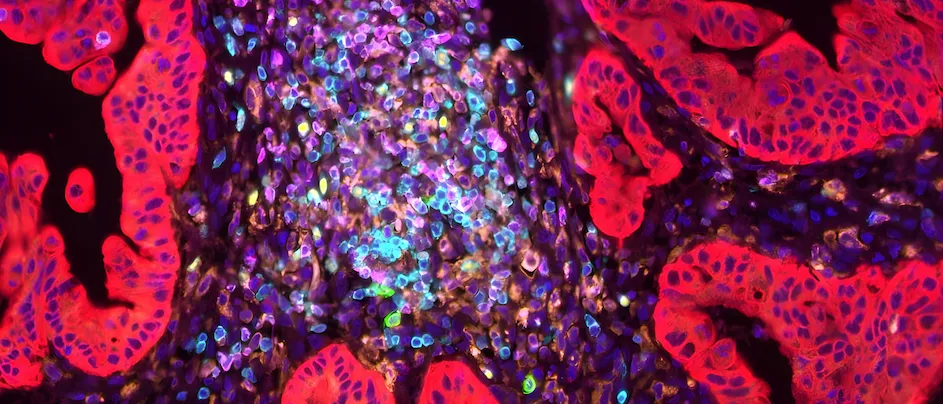
Even as they develop at their primary site, pancreatic cancer cells are already expressing the genes that will determine where they will metastasize. This finding from Columbia researchers reveals a new facet of cancer metastasis, and points toward novel strategies for anticipating and blocking this deadly phenomenon.
This Tiny Chip Could Reshape Treatment for Neurological Conditions
A new implant is orders of magnitude faster and smaller than today’s state-of-the-art brain-computer interfaces.
Powerful and Precise Multicolor Lasers Now Fit on a Single Chip
Researchers at Columbia Engineering have developed a compact light source that generates dozens of high-power wavelengths, paving the way for a new generation of data center hardware and portable sensing technologies.

A New AI Tool for Hand Movement After Stroke
A team led by two Columbia professors has built a new kind of wearable robotic device that interprets what its user intends to do. The project, called ChatEMG, applies the same kind of generative machine learning used in LLMs like ChatGPT, but instead of predicting text, it interprets the patterns of electrical signals that muscles generate and translates them into movement.
Soccer Heading Does Most Damage to Brain Area Critical for Cognition
Imaging analyses developed by Columbia researchers have now found that the junction between white and gray matter—in the outermost brain layer just behind the forehead—sustains the most damage from heading, and this damage leads to cognitive deficits.
Immune Altering Drug Hits Cancer in the Stomach
Working with an international team of collaborators, scientists at Columbia University have found a way to shift the balance of a type of white blood cell inside a stomach tumor, causing the immune system to recognize and attack the cancer instead of ignoring it. The work also sheds light on immune functions that may drive many other diseases.
It’s a Quantum Zoo Out There, and Columbia Just Found a Dozen New “Species”
There are a seemingly endless number of quantum states that describe quantum matter and the strange phenomena that emerge when large numbers of electrons interact. For decades, many of these states have been theoretical: mathematical and computational predictions potentially hiding among real-life materials—a zoo, as many scientists are coming to refer to it, with new “species” just waiting to be discovered and described. In a new study, researchers added over a dozen states to the growing quantum zoo.