Complete Obama Presidency Oral History Archive Is Now Available
Columbia University’s Incite Institute offers more than 450 perspectives from the Obama White House and beyond.
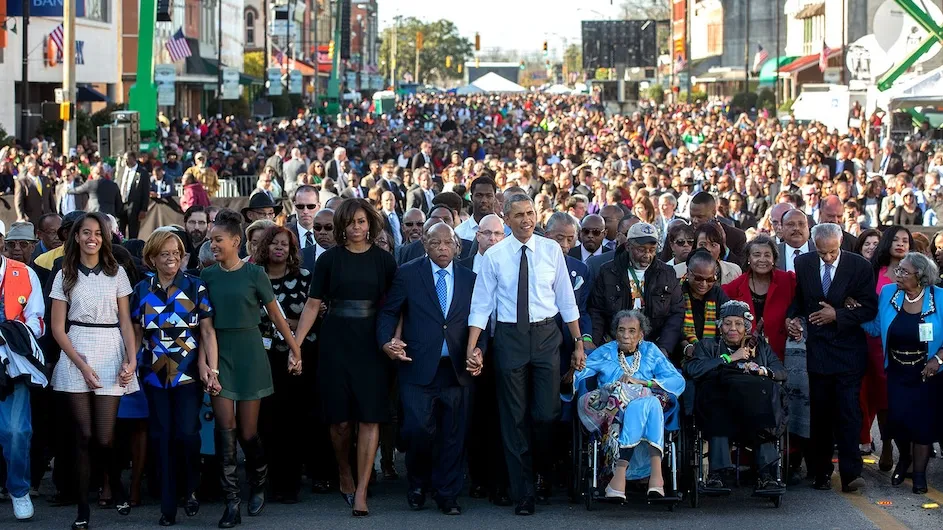
Today, just 10 years after President Barack Obama left office, Columbia University’s Incite Institute opens the full Obama Presidency Oral History archive to the public. This groundbreaking digital archive offers everyone—students, researchers, journalists, and simply the curious—a trove of material for revisiting and understanding the historical significance of Obama’s presidency, an essential period for American democracy and international politics.
Produced by Columbia’s Incite Institute and designed by the digital agency Huncwot, the archive contains the official oral histories of the Obama presidency. The project was funded by Columbia University after Incite was selected by the Obama Foundation. Between 2019 and 2023, Incite conducted more than 450 interviews with officials, activists, artists, organizers, and everyday people from all walks of life. These interviews, often conducted over multiple sessions, contain 1,100 hours of audio and video that provide an exhaustive record of the Obama years. The archive also includes interviews by scholars from the University of Hawai‘i on Obama’s early life in Hawai‘i and from the University of Chicago on his and First Lady Michelle Obama’s years in Chicago.
Presidential oral histories usually only record memories of top administration officials. Incite took a different approach: It centered the experiences and actions of Americans and non-Americans, as well as those of top officials. The result is an archive of diverse viewpoints from both those in power and those seeking to influence power. This design was, in part, a response to the Obama administration’s vow to open government to the people, to make policymaking and governance more transparent and accessible, and to draw connections across political divides and geographic borders.
“This archive,” said Peter Bearman, principal investigator for the project and director of Incite, “reminds us how the government can work to enrich the varied communities that make up our enormously complex world.”
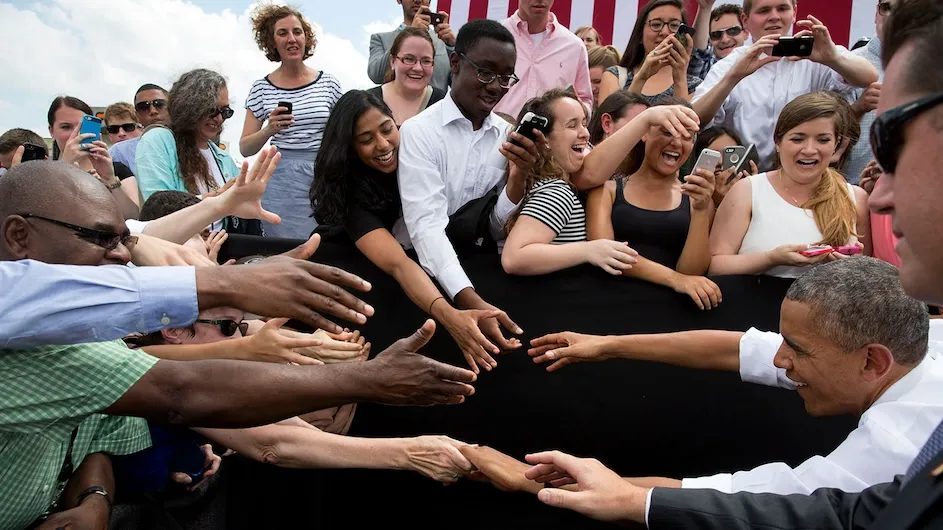
More Than 10,000 Stories Available
The archive tells more than 10,000 stories: reminiscences of Obama supporters and opponents; of Democrats and Republicans; and of artists, mechanics, protest leaders, farmers, policy wonks, and refugees. Because of its social and political breadth, the archive is a source of historical material for understanding the bonds and fractures that exist between the Obama years and the present. The project’s design means that many different people were asked about shared experiences and events, generating distinct takes on the same story, and revealing previously unknown details about some of the most well-known moments. Newly disclosed are surprising agreements and disagreements among “inside” actors, such as political advisers, policy specialists, economists, and communications officials over major initiatives like the Affordable Care Act, the decision to increase troops in Afghanistan, or the deal limiting Iran’s nuclear enrichment efforts. The archive also lets us see anew, or for the first time, the political and individual dynamics between White House officials and the experiences of everyday people, especially those who wrote to Obama about their economic precarity, their struggles to secure health insurance, or the effects of gun violence on their lives. These connections are highlighted in a topic essay on “The People’s House.”
“Even in the realm of foreign policy, a domain typically considered to be the purview of elites, our oral history interviews show the dynamic, often unexpected connections between Obama administration initiatives and the experiences of more ordinary people across the world,” said historian Evan McCormick, Incite’s research director. “It points to a way for historians and the public to more fully understand the hopes, expectations, and realities that accompanied Obama's presidency, not just in the United States but globally.”
The archive’s volume arose from Incite’s sense that preserving such diverse memories of shared events and experiences—from dissimilar actors and multiple standpoints, domestic and global—was needed for America to take in the historical significance of the first Black presidency, the expectations this presidency raised at home and abroad, Obama’s decisions and mode of governing, and the constraints he uniquely faced. The design was not only novel but also informed by what Incite thought it would take to grapple with this presidency in its time.
Recorded almost entirely remotely during the COVID-19 pandemic and the murder of George Floyd, among other turbulent events, the interviews allow researchers, journalists, and others to contrast what’s now with what was then. Some interviewees, for instance, compared the real-time response to the COVID-19 pandemic with Obama’s response to the Ebola crisis; others remembered Russia’s 2014 annexation of Crimea as it was invading Ukraine in 2022; still others compared Floyd to Michael Brown and Trayvon Martin in thinking about the Black Lives Matter movement.
Interviews With About 100 ‘Everyday People’
The archive abounds with unique elements: Interviews with about 100 everyday people, whose lives were organically tied to the Obama presidency or were touched by administration policies. These interviews often revealed unexpected connections between people inside and outside the administration: a Latino farmer whose land Obama visited; young men and women who participated in exchange programs in Africa; letter-writers telling Obama about gun violence in their communities or about their inability to gain healthcare; refugees who came to the United States having been chased out of their countries by violent conflict. Taken together, these and many other stories weave a tapestry of domestic and global life around the power of the American presidency.
The archive also focuses on the development and implementation of the East Wing under Michelle Obama, who as Mary Marshall Clark, the former director of the Columbia Center for Oral History Research and lead investigator of the East Wing study, said: “led change for women and girls everywhere in the world, starting in the DC neighborhood schools she cared so much about.”
Prominent in the archive are interviews with activists and labor union leaders fighting to shape the Obama administration’s agenda, heads of universities and philanthropies showing how civic institutions interact with governmental power in a democratic society, and Republican and Democratic Party leaders making clear how legislation is made. Examples include Black Lives Matter Co-Founder Alicia Garza and whistleblower Chelsea Manning; Carl Takei of the ACLU; Republican Speaker of the House Paul Ryan; and Democratic Senate Leader Harry Reid, to name a few.
The archive also features the voices of artists and cultural figures who responded to and shaped the public imagination around the “Obama Moment.” These voices include those of Oprah Winfrey, author Marilynne Robinson, choreographer Bill T. Jones, poet Claudia Rankine, and Michelle Obama’s portraitist Amy Sherald.
More conventionally, the archive offers reflections of the most senior administration policymakers sharing their firsthand, close-up experiences with how Obama thought, made decisions, and acted. Examples include White House advisers like David Axelrod and Valerie Jarrett; cabinet secretaries like Timothy Geithner and Hillary Clinton; heads of agencies; and military leaders. It also contains interviews with numerous less prominent officials from throughout the administration who were intimately involved in shaping and implementing Obama’s decisions. Across all major domestic and foreign issue domains—from counterterrorism to the response to the global financial crisis and from healthcare reform to nuclear nonproliferation—these interviews report on how policymaking, implementation, and analysis worked, or did not.
“From a multiplicity of voices, from elected officials to everyday citizens, those exploring this archive will discover stories of joy, heartbreak, challenges, and significant moments that gripped the nation and shaped American public life during the Obama Presidency,” said Terrell Frazier, lead interviewer for the project.
These interviews are available at http://www.obamaoralhistory.columbia.edu. Eventually, they will be accessible through the Oral History Archives at Columbia University in its Rare Book & Manuscript Library reading room. Subject to any applicable restrictions, they will also be available in the Columbia University Libraries’ Digital Library Collection. All of the transcripts, video, and audio of this archive will also be housed at the Obama Presidential Center when it opens in Chicago later this year.