Recent health and wellness news from across Columbia.

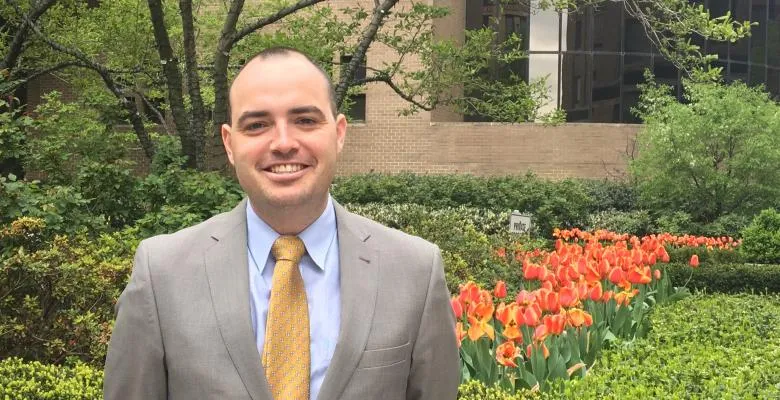
In his senior year of medical school, Benjamin Schwartz enrolled in a month-long elective in narrative medicines that he credits with changing his life.
Research shows that black-legged ticks are rapidly growing in number, expanding geographically and carrying pathogens that can lead to ailments like Lyme disease and babesiosis into places where they were relatively unknown.
Siddhartha Mukherjee, Ken Burns and Barak Goodman were at Columbia on March 24 when the University hosted a media briefing on the future of cancer research. Speakers and panelists included Katie Couric, a co-founder of Stand Up to Cancer, and Columbia researchers Kenneth Forde, Stephen Emerson and Thomas Maniatis.
Gillian Metzger (LAW’96), the Stanley H. Fuld Professor of Law and faculty director of the Law School’s Center for Constitutional Governance, is an expert in administrative and constitutional law, with a specialization in federalism.
Scott Small, director of Columbia’s Alzheimer’s Disease Research Center, the Boris and Rose Katz Professor of Neurology, discusses what is known and what’s yet to be discovered, about the disease.
After serving as chief executive officer of Aetna Inc., Jack Rowe became a professor in the Department of Health Policy and Management at the Mailman School of Public Health. Trained as a gerontologist, Rowe sees longer life spans as posing a challenge to society on such issues as retirement, infrastructure, urban planning and medicine.
Geriatrician Ruth Finkelstein, an assistant professor of health policy and management, works on ways to boost the quality of life and health of those at retirement age or older. “It’s time to rethink our view of retirement, which currently falls short,” she says, noting that it isn’t designed for older people who want to stay engaged, active and stimulated.
Columbia has expanded its Sexual Violence Response Center, opening a location in Lerner Hall in a ribbon-cutting ceremony on Oct. 15 attended by President Lee C. Bollinger, deans, administrators and student peer advocates.
Columbia Health's Sexual Violence Response provides empowering support to survivors and co-survivors of violence and works on prevention of gender-based violence in Columbia community. Step UP! Program facilitates effective training, allowing students to acquire practical strategies and learn how to maintain safety, support survivors, intervene and help others in difficult situations.
On Nov. 11, Dr. Craig Spencer, New York’s first and thus far only diagnosed case of Ebola, was released from Bellevue Hospital Center where his recovery was made possible by expert care.