Early Career Columbia Researchers Advocate for Federal Funding on Capitol Hill
A delegation of researchers traveled to Washington, D.C., as Congress considers its 2027 budget.
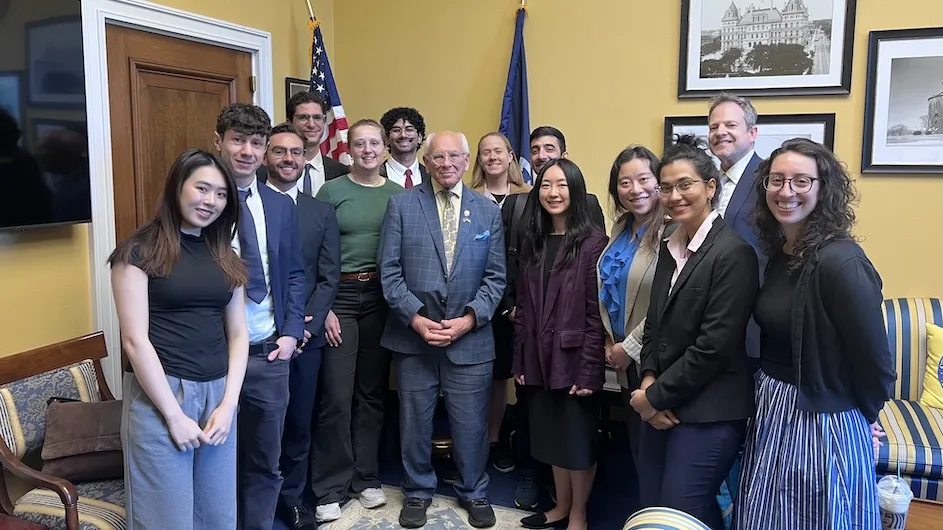
Twelve early career research scientists from Columbia University, who receive federal funding for their work, traveled to Washington, D.C., this month to meet with bipartisan members of Congress and their staff. The delegation spoke about the critical importance of sustained, robust federal research funding in the coming budget year and beyond, and of supporting our nation’s next generation of scientific leaders.
Congress is currently developing and debating the 2027 federal budget, with major funding decisions expected in the coming months before the new fiscal year begins in October. The Columbia researchers who traveled to Washington include faculty members, postdocs, and graduate students who receive funding for their research from the National Institutes of Health, the National Science Foundation, the Department of Energy, NASA, and the USDA.
“This delegation demonstrates the strength and diversity of Columbia's science across a range of disciplines, including medicine, engineering, and climate," said Loftin Flowers, Columbia's vice president for government relations. “We're proud to showcase their work on Capitol Hill at this moment when critical decisions are being made about how funding will be appropriated, with the potential for drastic and devastating cuts.”
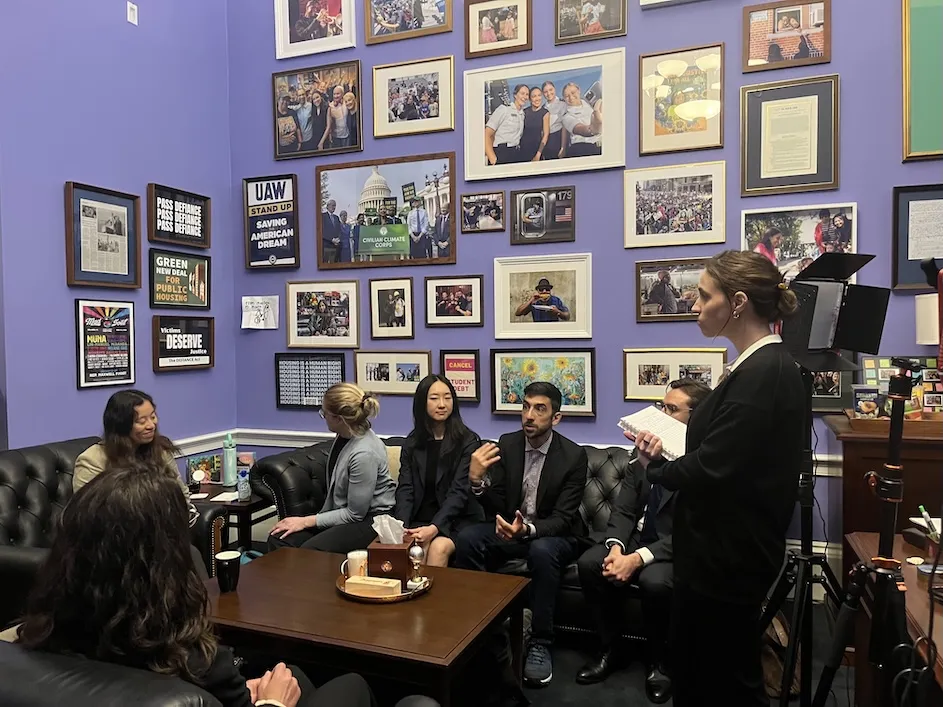
Columbia University's government and community affairs team regularly travels to Washington with University researchers to highlight the critical research that federal funding sustains. In March, researchers from Columbia and Stony Brook University traveled to D.C. to outline the latest in quantum research as Congress considered the National Quantum Initiative (NQI) Reauthorization Bill. In the fall, members of the Columbia University Irving Medical Center community joined hundreds of physicians, scientists, and patients to meet legislators on Capitol Hill and advocate for medical research at the annual Rally for Medical Research. And last summer, Columbia researchers leading the Center for Smart Streetscapes–which aims to enhance public safety, improve transportation, and enable new forms of digital support for cities’ physical infrastructure–traveled to D.C. to discuss the importance of that project and other National Science Foundation-funded efforts.
The Columbia representatives met with staff who work for members of Congress on the House Science, Space and Technology Committee, and the Senate Commerce, Science and Transportation Committee, along with representatives for a range of New York districts where Columbia operates, and members of both House and Senate staff.
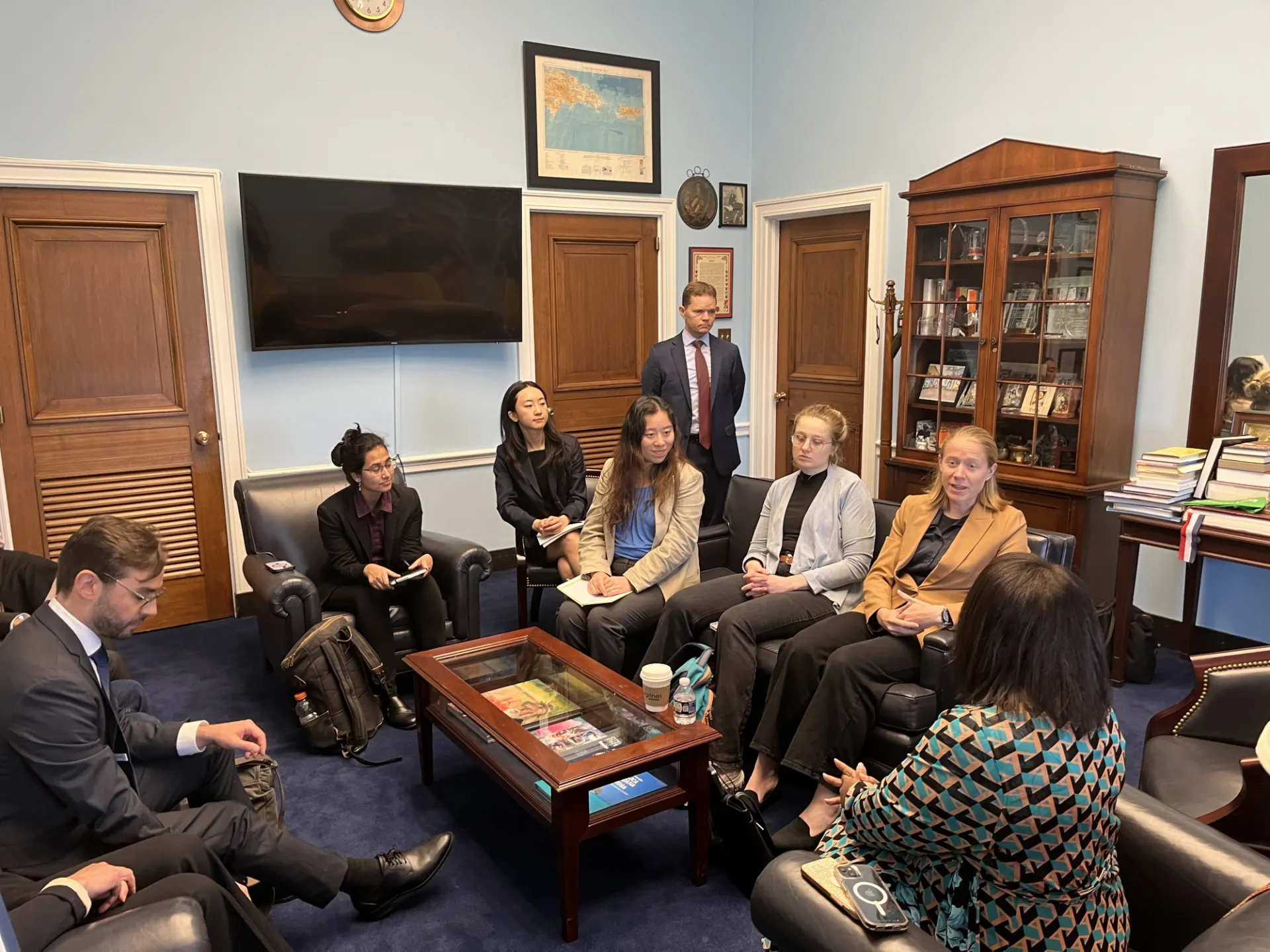
The delegation included faculty members Michele Simoncelli and Elizabeth Paul (Columbia Engineering); Zoey Yiyuan Zhou and Yushu Xia (Columbia Climate School); Milan Delor and Maximiliano Isi (Arts & Sciences); and Catherine Spina (Vagelos College of Physicians & Surgeons). Helen Dinh, a PhD candidate at the School of Nursing; Edridge D'Souza and Risha Chakraborty, MD/PhD candidates at Vagelos College of Physicians & Surgeons; and Stefano Cataldi and Sherida de Leeuw, postdoctoral candidates at Vagelos College of Physicians & Surgeons, also attended.
“The NIH is the world’s greatest funder of biomedical research, and second place isn’t close,” said Edridge D’Souza a fifth-year student in the MD-PhD Program at Columbia's Vagelos College of Physicians and Surgeons. “The funding opportunities that we came to D.C. to advocate for help support academic researchers, hospital staff, and patients. They also play a crucial role in sustaining the United States' global reputation as an innovation-based economy.”
“Stable and predictable federal funding allows young investigators to establish careers, compete successfully for grants, and train the next generation of scientists and engineers,” Flowers said. “Federal investment in early career researchers is essential to sustaining the nation’s long-term scientific and technological leadership.”