Need a Quiet Place to Pray or Meditate?
Columbia University and the Office of Religious Life are here to help.
Places for prayer and meditation exist in shared communal spaces like hospitals and airports all over the world. At a university, where students, staff, and faculty spend much of their time working, studying, and living these spaces are especially important.
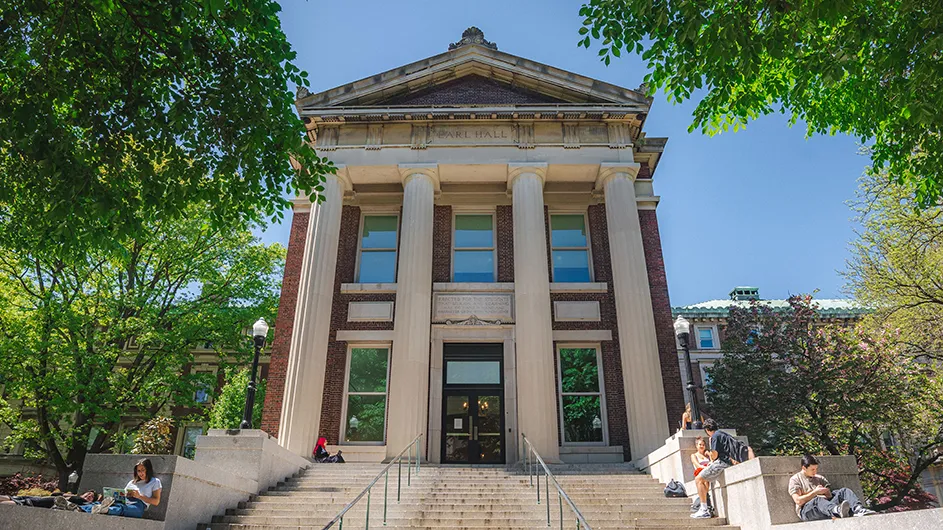
“People need to be their whole selves and feel spiritually well” in university settings, Rev. Dr. Ian Rottenberg, dean of Religious Life at Columbia University, said recently, sitting in his office in Earl Hall as the afternoon sun streamed through the window. “Taking time to reflect quietly or to pray is one of the common elements of spiritual well-being.”
That’s also true, Rottenberg added, for people who might not come from any tradition at all but who recognize the need for “a very quiet place in a very busy, often very anxious, work or academic culture. These spaces of sanctuary are designed to help us respond to the stress and anxieties of our everyday lives and establish a different relationship to the world.”
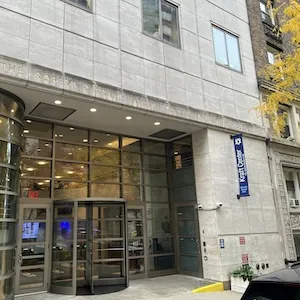
Thanks to several recent additions and upgrades, there are now even more spaces in the Morningside campus area that are available to students, faculty, and staff to use for prayer or meditation. The most well-known spaces at Columbia are Earl Hall, which serves as a center for student religious, spiritual, and philanthropic life; the Kraft Center for Jewish Student Life; and St. Paul’s Chapel, originally designed for Christian worship and used today by many faith traditions. Other spaces, however, are spread across the Morningside, Manhattanville, and Medical Center campuses, and at Columbia’s affiliated institutions. These spaces—some of which are also open to the public—can be found in schools as well as in administrative and residential buildings.
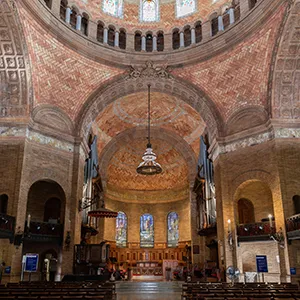
Several recent upgrades have been made to existing prayer and meditation rooms. These improvements most often came to be thanks to student-driven initiatives working together with the Office of Religious Life. For instance, the Study Room, which is in the lower level of St. Paul’s Chapel, was outfitted about a year ago with rugs, meditation cushions, and a bookshelf with Hindu iconography that can easily be accessed. These updates were the result of the University working closely with Hindu student groups to understand what they needed to practice according to their tradition. This space joins the Chamber and Choir Rooms, also in St. Paul’s Chapel, which have long been used for worship and prayer for the broader Dharmic communities, including Columbia’s Buddhist student association.

A new prayer room, designed with specific elements to support Muslim prayer, will open this week in the lobby of Nussbaum Residential Hall on West 113th Street. An informal public room for daily prayers had existed in Nussbaum already, but the new space includes a place for ritual washing and is more accessible to the public. It joins other rooms used for Muslim prayers, including those in Earl Hall and a smaller one in Butler Library. The space in Butler came about last summer because students are always in the library and had requested a place nearby that was open 24 hours a day. The Butler space “is another example of students coming to us with a particular need. We are always eager to learn about ways that we can make something work with the resources we have,” Rottenberg said.
All of the prayer and meditation spaces at Columbia are “open to everyone,” said Rottenberg. While the spaces that exist have been developed over time based on specific community needs, “the goal is always inclusivity and never exclusivity.”
What’s “rare and wonderful” about Columbia, Rottenberg added, “is that not only are those traditions being practiced on any given day, all of them within our University community, but the communities that gather in their diversity are learning from one another.”
An inscription in stone written above the main entrance to Earl Hall speaks of “character” growing “with knowledge.” Rottenberg enjoys seeing those words everyday as he comes to work. For him, “building character along with intellect” is the reason people come to learn, teach, and work at Columbia. And he hopes that the prayer and meditation rooms give everyone the space to do exactly that.