New Chair of History Says the Discipline Should Document the Past and Engage With the Present
Camille Robcis believes that historical analysis allows us to elucidate contemporary political, economic, social, and cultural questions.
While the teaching of history at Columbia began in the mid-19th century, a separate Department of History was only formally established on November 16, 1896. Five history professors taught in the department at the time of its founding: Herbert Osgood, William Sloane, John Burgess, William Dunning, and James Harvey Robinson.
Throughout the first half of the 20th century, the history department continued to add illustrious members to its faculty, including Jacques Barzun, Salo Wittmayer Baron, and Henry Steel Commager. In 1942, the department reorganized its curriculum and introduced nine new courses on the British Empire and its problems; American foreign policy since 1900; and Far Eastern, Russian, and Latin American history. Moving forward, this process of broadening the range of the department continued, most notably, in the creation of regional institutes after World War II, such as the Russian Institute, which was founded in 1946.
Women were hired for full-time, professional appointments in the department starting only in the late 1960s. Marsha Wright, a scholar of East Central Africa, was the first woman to be hired as an assistant history professor in 1967. Nina Garsoïan, who came to Columbia in 1962, became the first female professor to receive tenure in the department in 1969. In the early 1970s, largely as a result of government pressure, Columbia committed to expanding the number of female faculty.
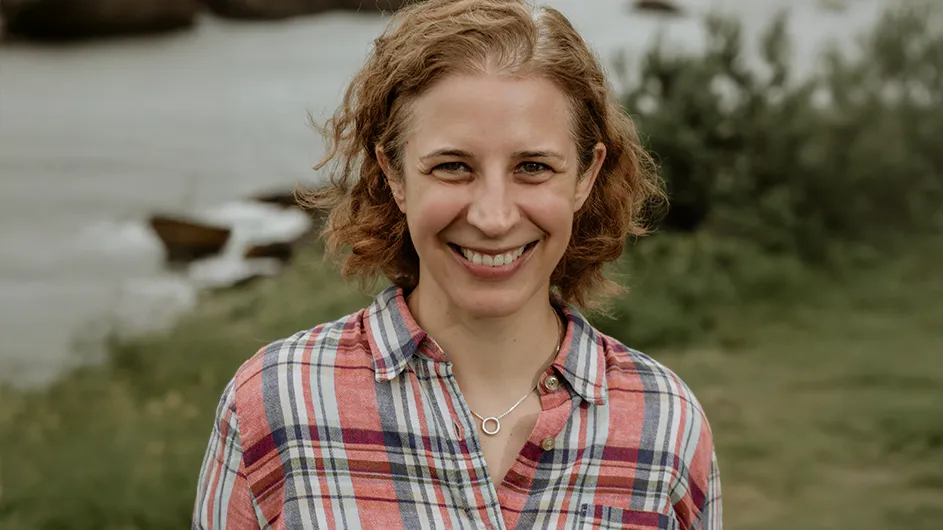
Fast forward to 2025, and Camille Robcis, a professor of history and French, who is the new chair of the history department. Columbia News caught up with her recently, to discuss her ideas for the department, her advice to students, and what projects are currently occupying her.
As the new chair of history, what are your plans for the department?
Well, we have a pretty amazing history department, so I guess my top priority is to preserve what we have, to protect the culture of collegiality and strong internal governance that we have built over these last few years. This has been a tumultuous time for Columbia and for higher education, to say the least, but the department has remained remarkably solid and cohesive.
We certainly have many challenges ahead of us, including understanding the impact of AI on our teaching and our research, defending intellectual freedom, and coming up with creative ways to rethink our graduate and undergraduate programs, without sacrificing the quality of either. We have one of the most flourishing majors in the University and one of the best graduate programs in the country, so this is absolutely central. I also hope we can hire new faculty to replace many of the excellent professors who have retired in recent years. On a much smaller scale, however, I am instituting a monthly happy hour so that we can get together to talk about someone’s work over drinks!
While chair, will you continue to teach? If so, what are you teaching this semester, and in the spring?
I will indeed, although I am teaching only two courses a year. This semester, I am offering my European Intellectual History lecture course, which is always fun. We start with the French Revolution and end with neo-liberalism. In between, we discuss the Enlightenment, Romanticism, liberalism, socialism, modernism, colonialism, fascism, the two world wars, the Russian Revolution, decolonization, feminism, gay liberation, structuralism, and post-structuralism.
Next semester, I am excited to be co-teaching a new graduate seminar, History, Politics, and Theory: Keywords, with my friend and colleague, Anthropology Professor Nadia Abu El-Haj. We have both been thinking about the new configurations of the global Right, about contemporary iterations of fascism, and about the differences between liberalism and illiberalism. We designed this course together to try to better apprehend these phenomena through contemporary readings, but also through a historical lens.
What sort of programming is planned for the department this year?
We recently co-sponsored a big conference on Postwar Worlds: Past, Present, and Future for the 80th anniversary of the end of World War II. We are also having a presentation of Ira D. Wallach Professor of History Mark Mazower’s new book on antisemitism. The graduate students have organized some excellent seminars with outside guests, including the International, Global, and Transnational History Workshop, the U.S. History Workshop, and the British History Seminar.
Why is the study of history so important?
As I see it, the main purpose of history is not simply to document the past, but to engage in a dialogue with the present. Historical analysis allows us to elucidate contemporary political, economic, social, and cultural questions by making visible the historical process through which certain things come to appear as natural, obvious, self-evident, or universal. How did we come to take for granted certain assumptions and norms, and how can we think (and act) differently once these blind spots are exposed or unmasked?
As an intellectual historian, I am also very interested in the relationship between ideas and politics. Much of my work has been concerned with the ways in which political leaders invoke certain forms of knowledge to justify their actions. In both my research and my teaching, I try to think dynamically about texts and their various contexts. Can we find, for instance, certain paradoxes embedded within a text that complicate a purely symptomatic reading? How are different identities negotiated under specific circumstances, and how is our own identity, as a reader, implicated in this complex process of negotiation?
What was your path to a career as an educator and writer?
It was not straightforward. I grew up moving from country to country because my mother, who is Mexican, worked for the Mexican foreign service. My father is French, so my parents sent me and my brother to French schools. I was pretty sure I would end up living in Mexico City or Paris, but then I miraculously got into Brown. (I say miraculously because I had the worst SAT scores, having never taken a multiple-choice test in my life!) I fell in love with Brown, and with academic life more broadly. I was taking classes in critical theory, literature, gender and sexuality, psychoanalysis, anthropology, and film, but history seemed like the best discipline to allow me to pursue the questions that were (and still are!) troubling me.
I worked in publishing in New York City for a year after college, and having to sit in an office from 9 to 5 promptly sent me running back to graduate school. I got my PhD at Cornell with Dominick LaCapra, who was the best advisor I could have hoped for—brilliant and deeply engaged, as well as kind and supportive. After a postdoc at the University of Pennsylvania, I was hired back at Cornell, where I taught for 10 years. In 2018, I came to Columbia with a joint hire in History and French.
What are you working on now?
I just finished a book called The War on Gender: The History of a Dangerous Idea. It’s an attempt to write an intellectual history of what I call anti-genderism—the idea, extremely popular in right-wing circles these days, that a gender ideology forged in academia and premised on the distinction between gender and sex has become the driving force behind social policy and politics more broadly. Politicians across the globe have invoked gender ideology to restrict access to abortion and contraception; revoke marriage equality and anti-discrimination laws against LGBTQ individuals; ban medical care, school sports, and gender-neutral bathrooms for trans-identified youth; and censor books and public performances, from pride marches to drag shows.
I am interested in understanding when this word “gender” first became a problem, and what its critics take it to mean. There is, of course, no gender ideology as such—only a field of gender studies that has always been diverse and internally contested. But how did this particular term, “gender,” come to encapsulate so many fears and fantasies about social and political belonging? And what about gender as a concept has ignited this global movement? The book is currently being reviewed and edited, but I was eager to finish a draft of the manuscript before I began as chair.
Advice for anyone interested in pursuing a trajectory similar to yours?
You need to be obsessed with research and with writing to be happy in this profession. I find that writing demands extreme discipline, a kind of daily routine that allows one to concentrate and block everything out for a few hours a day. At the same time, when students tell me they want to become historians, I always advise them to read as much as they can, to follow current debates, to attend talks and public events, even if these events do not appear to be exactly relevant to their object of study.
I took all kinds of courses in college and graduate school, and classes like African Cinema, Sentimentalism, or the German Romantics were as foundational to my intellectual formation as straight European history classes. The most important thing, I would say, is to study only with professors who will inspire you and amaze you, and to be open to changing your mind and questioning some of your most profound beliefs and assumptions.
What’s special about teaching at Columbia and in New York?
I feel extremely lucky to be teaching at Columbia because of the University’s incredible faculty and students. I am constantly awed by the brilliance of my colleagues, their ethical and political commitments, and the care with which they approach pedagogy. I am also a huge fan of the Core Curriculum, especially of Contemporary Civilization, which I have taught several times. Many of the students that I meet as sophomores end up taking my lectures and seminars in later years, and I have even advised their senior theses when I can convince them to become history majors. I am certain that the Core is one of the reasons why the humanities are still thriving at Columbia.
And, of course, New York is an endless source of stimulation and excitement. Just the other day in my lecture, when we were discussing the Protestant Reformation, I encouraged my class to go see the musical Six on Broadway. I also try to take my Contemporary Civilization seminar students to the Metropolitan Museum of Art at least once a year. I love pretty much everything about New York—the opera, the theater, the museums, the film festivals, and also the fact that you can get any food from any region of the world whenever you want. And that the yoga classes here are hard!
Anything you want to add?
If you are an undergraduate and have not yet taken a course in the history department, make sure you do: I promise that you will not regret it.