What to Know About Tick-Borne Diseases in New York City This Summer
Maria Diuk-Wasser, an expert on ticks, explains her latest research on carriers of Lyme disease and babesiosis.
Maria Diuk-Wasser, a professor in the Department of Ecology, Evolution, and Environmental Biology (E3B), studies tick-borne diseases including Lyme disease and babesiosis. In recent years, her efforts have focused on how ticks are spreading in urban areas—an unintended consequence of park renewal efforts. With tick season well under way, Columbia News checked in with Diuk-Wasser about what New Yorkers should know about ticks this summer, and her latest research.
How should recent changes in tick behavior and geography affect how people in the New York area behave outdoors this summer? Is there advice you would give New Yorkers now that you wouldn't have a few years ago?
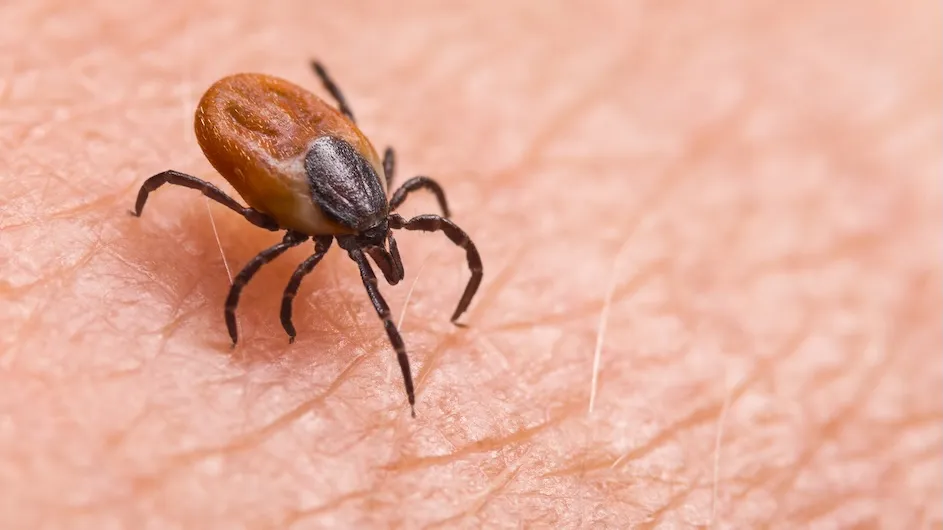
Because tick surveillance in New York City is relatively recent, we can't yet establish clear trends. People must be aware that blacklegged ticks (also known as deer ticks) could be found in parks on Staten Island, the Bronx, and eastern Queens. To protect themselves, people should walk in the middle of open trails and wear long pants and long-sleeved shirts, ideally sprayed with permethrin, which impregnate the clothes (pre-sprayed clothes can also be bought) as well as deet-based bug spray. A great resource maintained by our lab and collaborators is the Tick App, which has prevention strategies as well as identification services for ticks.
A new paper that you co-authored was published this spring in Landscape Ecology. It suggests that as cities try to introduce more wildlife, one unintended effect may be the introduction of more ticks into cities. Is that something that urban dwellers should be worried about?

The focus of that publication was the blacklegged tick, which is dependent on white-tailed deer for reproduction. These ticks have been found in urban green spaces that are connected with each other and to other green space surrounding cities, which leads to both deer (and ticks) making their way into cities. In particular, forested habitats are the most suitable for deer and ticks, so people should be careful while walking on trails or near forest vegetation.
Are reforestation efforts in cities the primary driver of the changing tick presence in New York City or are there others?
Increases in deer and tick populations in the regions around New York or any other city can lead to an increased number of ticks in the city. These days, deer are being 'pushed' into the city as deer populations grow and as human populations expand out into areas that were previously forested or uninhabited.
A tick bite that can cause a meat allergy is headed for the New York area, is that right?
The lone star tick, which can cause this meat allergy, is already in New York City, in particular on Staten island. It actually has been on Long Island for a long time, where it is increasing in abundance, similar to the blacklegged tick.
Is New York the area experiencing the most changes right now, or are there other hotspots of new tick-borne diseases?
Babesiosis and anaplasmosis are rarer than Lyme disease but are expanding in all areas where Lyme disease is established (the Northeast, the Upper Midwest, and the Mid-Atlantic). In some areas, babesiosis is more prevalent than anaplasmosis. In other areas, it's the opposite. Their relative abundances are probably due to the local abundance of different hosts they are associated with, such as mice, deer, other mammals or birds.