Columbia University Discoveries in 2025-26 to Know About
Here are some of the top scientific research findings of the past academic year.
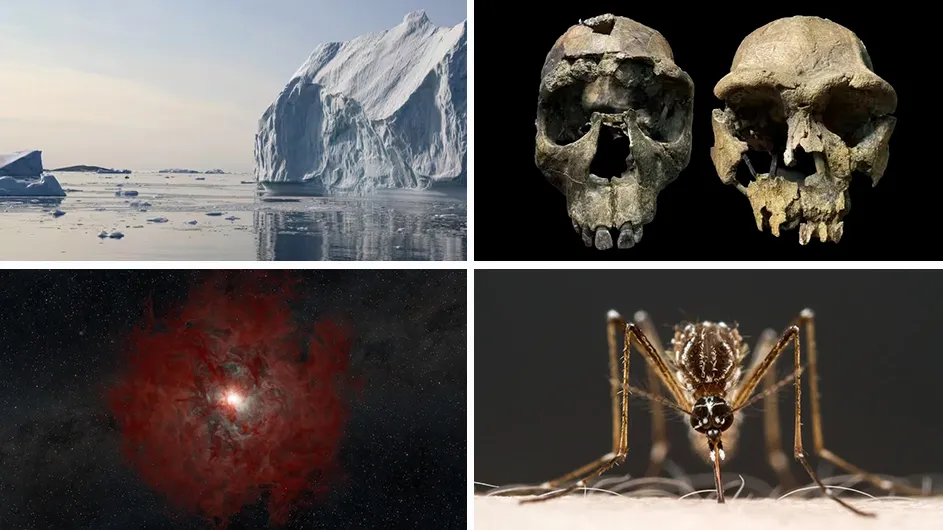
With the 2025-26 academic year behind us, and the summer stretching ahead, Columbia News is looking back at some of the top research that our faculty have produced in recent months. Columbia researchers have made discoveries in outer space, in Antarctica, and in tiny petri dishes in labs on our campuses in New York. They’re tackling cancer, sleep deficits, hearing loss, and questions about the future of AI and the deepest recesses of our universe. Below is just a smattering of what they’ve found, and how it could change the world.
Columbia Research Helps Propel Daraxonrasib, a Potential New Standard of Care for Pancreatic Cancer
A new targeted therapy for pancreatic cancer that was supported by research from Columbia is generating unprecedented excitement across the oncology community after early results showed the drug nearly doubled overall survival in patients with previously treated metastatic pancreatic cancer. Read the full story.
Cells in the Mosquito’s Gut Drive Its Appetites
Researchers have known for decades that female mosquitoes—the ones responsible for the itchy and irritating bites that can also transmit disease—lose their desire to bite humans for several days after feeding, as they digest blood and convert it to yolk protein that they deposit in their eggs. Read the full story.
Scientists Capture the Clearest View Yet of a Star Collapsing Into a Black Hole
A research team led by Kishalay De, a Columbia astronomy professor, demonstrated that an unexplained signal captured years ago by a NASA telescope was a star collapsing and giving birth to a black hole—an event that astronomers have anticipated for decades, but have had limited convincing observational evidence for. Read the full story.
Superfluids Are Supposed to Flow Indefinitely. Physicists Just Watched One Stop Moving.
In the early 20th century, researchers discovered that when helium is cooled, it transitions from a seemingly ordinary gas into a so-called superfluid. Superfluids flow without losing any energy, among other quantum quirks, like an ability to climb out of containers. A team led by physicists Cory Dean from Columbia University and Jia Li from the University of Texas at Austin has observed a superfluid, which normally remains in constant motion, come to a standstill. Read the full story.
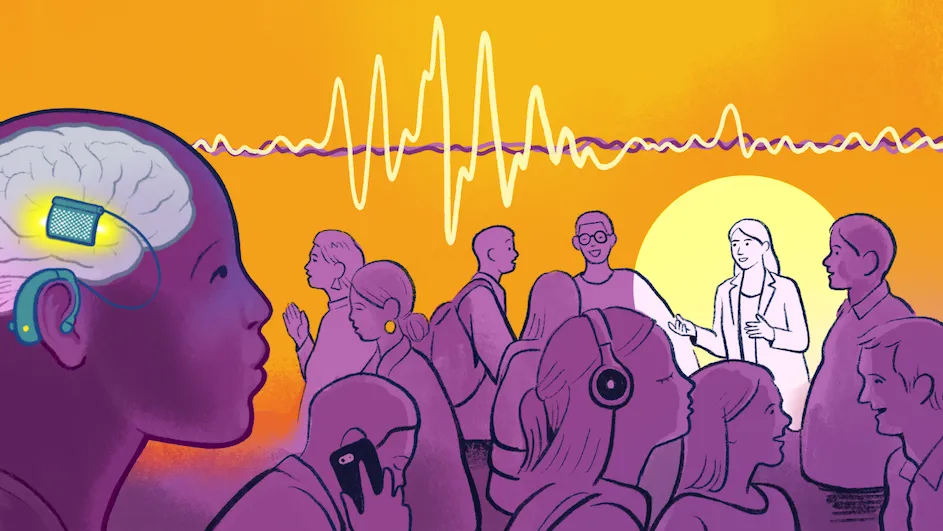
Brain-Controlled Hearing System Proves Itself in First Human Studies
Scientists at Columbia University’s Zuckerman Institute have the first direct evidence from human studies that brain-controlled hearing technology can help people single out a voice in a crowd. These early findings suggest that researchers may one day develop a hearing augmentation device that can, among other feats, overcome the problems that conventional hearing aids have with noisy surroundings. Read the full story.
Could AI Supplant a Mathematician?
Professor Andrew Blumberg is part of a team that tested AI’s upper limits by asking it to answer unsolved math problems. Columbia News spoke to Blumberg about the project, and the group’s findings. Read the full story.
Can This ‘Living Knee’ Revolutionize Joint Replacement?
Two Columbia professors are leading a project, funded by a contract from the Advanced Research Projects Agency for Health (ARPA-H), to create a new biological knee joint that can last a lifetime, expand joint surgery to younger patients, and provide a better joint for all patients. Read the full story.
Sea Levels Are Rising—But in Greenland, They Will Fall
Even as global warming causes sea levels to rise worldwide, sea levels around Greenland will likely drop, according to a new paper co-authored by researchers at the Lamont-Doherty Earth Observatory, which is part of the Columbia Climate School. That seemingly paradoxical dynamic results from several factors. Read the full story.

In Eastern Africa, the Cradle of Humankind Is Tearing Apart
Eastern Africa’s Turkana Rift is both a hotbed for fossil discoveries of our earliest ancestors and a literal hotbed of volcanic activity caused by shifting tectonic plates. New Lamont-led research has found that Earth’s underlying crust in the region has been significantly thinned, presaging Africa’s eventual breakup—and with that finding, the researchers offer a new perspective on how Turkana’s world-famous fossil record of human evolution came to be. Read the full story.
A New RNA Therapy Could Help the Heart Repair Itself
Researchers at Columbia Engineering and Columbia University Irving Medical Center demonstrated that a single shot can improve the heart’s own ability to protect and heal after a heart attack. The therapy stands to be less expensive and more accessible than existing interventions, such as organ transplantation or stem cell therapies. Read the full story.
More Sensitive Cell Therapy May Be a HIT Against Solid Cancers
CAR-T cell therapy has revolutionized the treatment of many blood cancers, but has shown little success against solid tumors, which account for over 85% of all cancers. Columbia researchers have now found that a new type of cell therapy—HIT cells, a cousin to CAR-T with enhanced sensitivity—overcomes a major obstacle to treating solid tumors with cell therapy and can completely eliminate kidney, pancreatic, and ovarian cancers in mice. Read the full story.
Drop in Financial Well-Being Takes a Toll on Memory
Worse financial well-being in midlife and older age—and declines of the same over time—are associated with lower memory scores and faster cognitive decline, according to a new study by researchers at Columbia University Mailman School of Public Health. Read the full story.
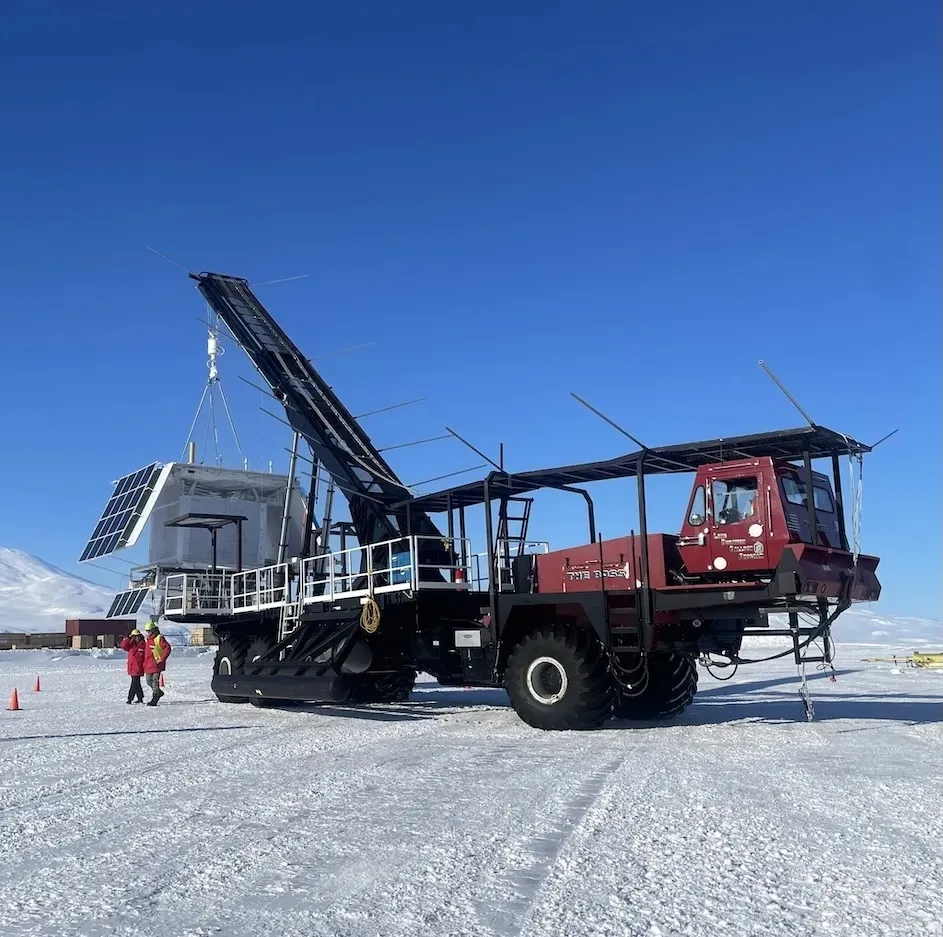
GAPS, a Balloon Experiment Pursuing Dark Matter, Launches in Antarctica
What is the nature of dark matter? A new experiment led by Columbia University physics professors took off in the skies above Antarctica, aiming to find out. Read the full story.
An Innovative Solution to Improve Sleep Health in Kids
Jean-Marie Bruzzese, a professor of applied developmental psychology at Columbia School of Nursing is leading a groundbreaking effort to reverse a growing trend of sleeplessness among children. With colleagues from across the University, she developed an initiative called Sleeping Healthy, Living Healthy—an evidence-based program that has shown promising results in controlled trials at the three New York City schools where it has been piloted. Read the full story.
Is That Solar Panel Pointing in the Right Direction?
A new technique uses a single image to forecast—and maximize—the energy a solar panel will produce over a year. Read the full story.
‘Brain Dial’ for Consumption Found in Mice
It’s natural to crave sugar when you feel tired and want a boost of energy. Now scientists at Columbia University’s Zuckerman Institute have linked a brain area in mice to the drive to consume not just sweets, but fats, salt, and food. The findings show this area serves as a kind of dial that can amplify or repress consumption. Read the full story.
Too Little Sleep—and Too Much—Associated With Faster Aging
A massive study of nearly half a million people found that a “sweet spot” between 6.4 and 7.8 hours of sleep is associated with slower aging in organs across the human body. Read the full story.