The latest earth, climate, and environmental science news from across Columbia.
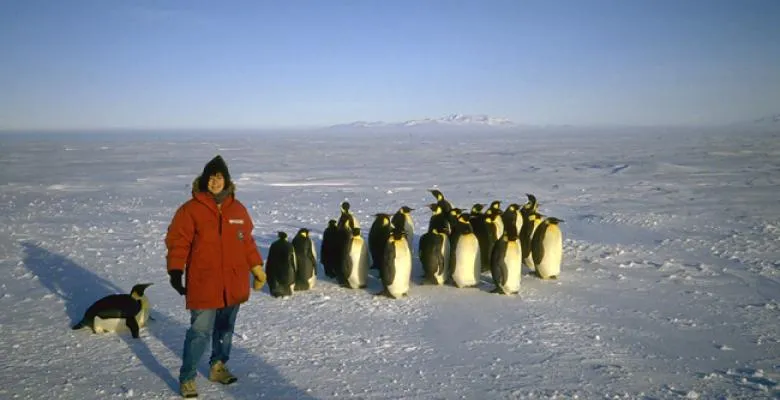
An American atmospheric chemist who led efforts to identify the cause of the Antarctic ozone hole and a French geochemist who extracted the longest-yet climate record from polar ice cores have won the prestigious 2012 Vetlesen Prize. Susan Solomon and Jean Jouzel will share the $250,000 award, considered to be the earth sciences’ equivalent of a Nobel.

When major disaster strikes, Dr. Irwin Redlener is rarely far behind. As a professor at the Mailman School of Public Health and director of the National Center for Disaster Preparedness, Redlener has brought health care to victims of calamities ranging from 1992’s Hurricane Andrew to Hurricane Sandy, which wreaked havoc in the northeast last month.
Columbia’s campuses were largely spared the ravages of Hurricane Sandy, which destroyed neighborhoods, flooded tunnels, forced hospitals evacuations and knocked out power to millions throughout the region. But many in the tri-state area face a challenging path to recovery.
Last month, in the farm belt of Des Moines, Iowa, the 82-year-old Hillel received the annually awarded $250,000 World Food Prize for his life’s work.
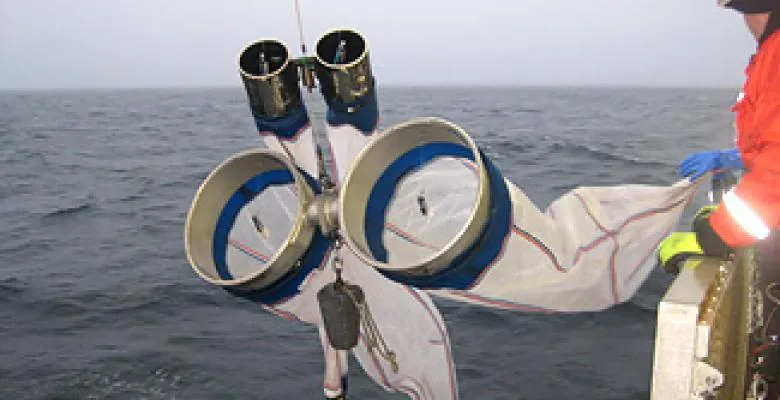
For the first time, scientists have identified tropical and subtropical species of marine protozoa living in the Arctic Ocean.

Columbia University President Lee C. Bollinger and Provost John H. Coatsworth have named Sean C. Solomon, a leading geophysicist whose research has combined studies of the deep earth with missions to the moon and the solar system’s inner planets, to be director of Columbia’s Lamont-Doherty Earth Observatory.

The world’s oceans may be turning acidic faster today from human carbon emissions than they did during four major extinctions in the last 300 million years, when natural pulses of carbon sent global temperatures soaring, says a new study in Science.
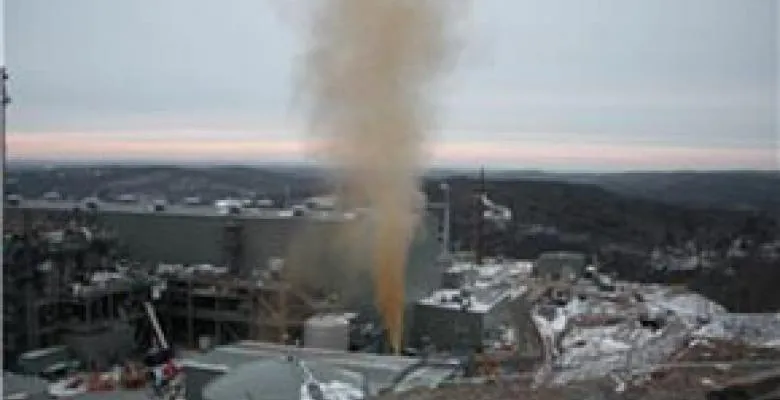
Reducing Soot and Methane Would Bring Fast Results, Says Study
A study by a large international team of scientists says that relatively cheap, simple measures to cut two common pollutants could substantially reduce global warming and improve human health and agriculture in coming decades.
Health costs exceeding $14 billion dollars and involving 21,000 emergency room visits, nearly 1,700 deaths, and 9,000 hospitalizations are among the staggering impacts of six climate change-related events in the United States during the last decade, according to a first-of-its-kind study published in November 2011 edition of the journal Health Affairs.
After less than a month in operation, a new NASA satellite has produced the first map showing how saltiness varies across the surface of the world’s oceans.

In the first study of its kind, researchers have linked a natural global climate cycle to periodic increases in warfare.
A team of researchers from Columbia Engineering, Geophysical Fluid Dynamics Laboratory, and Rutgers University has now demonstrated that evaporation from the land surface is able to modify summertime rainfall east of the Mississippi and in the monsoonal region in the southern U.S. and Mexico.