This page features news and research related to topics on economics at Columbia University.

With much of the nation still recovering from the 2008 financial meltdown, the U.S. economy will be one of the top issues in the midterm elections, says Sharyn O'Halloran.

You might think every company will use innovative technology it receives for free if that technology can increase profits by more than 10 percent. Professors Eric Verhoogen and Amit Khandelwal discovered that is not the case.

When the World Cup kicks off in Brazil on June 12, no soccer fan in the Columbia community will have more invested in the U.S. team’s effort than Sunil Gulati.
Three Columbia faculty members have been named research fellows by the Alfred P. Sloan Foundation, which awards two-year, $50,000 grants to support the work of exceptional early-career scientists and scholars whose achievements and potential identify them as rising stars.

Does Edmund Phelps believe that Europe and America still have what it takes to create “mass flourishing,” that unique combination of wealth and creativity that gave rise to one of the most dynamic periods in human history?
Jagdish Bhagwati has been thinking about how to reduce poverty for more than 50 years, since he returned to his native India with degrees in economics from Cambridge and MIT to work for the India Planning Commission in 1961.
History Professor Carl Wennerlind’s most recent book focuses on a financial system come undone, a public looking to its government for answers, and a monetary system badly in need of trust and transparency.
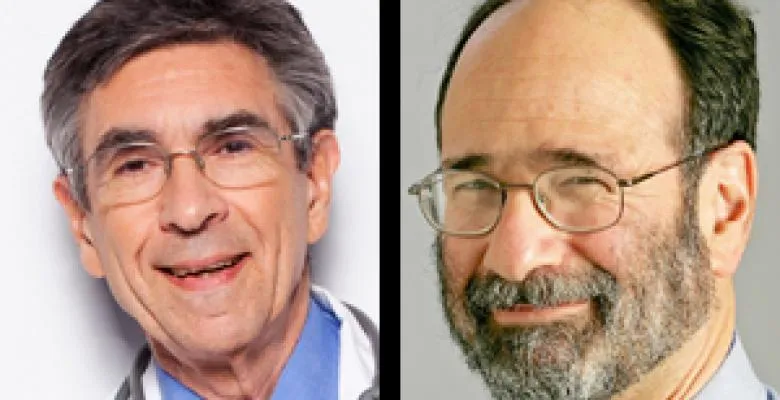
Dr. Robert J. Lefkowitz, a graduate of Columbia College and Columbia’s College of Physicians and Surgeons, has won the 2012 Nobel Prize in Chemistry. And Alvin E. Roth, a Columbia Engineering alumni, won the 2012 Nobel Prize in Economics.
Alvin E. Roth, who graduated from Columbia Engineering in 1971 and is currently the George Gund Professor of Economics and Business Administration at Harvard, was awarded the 2012 Nobel Prize in Economics for his pioneering work in the practical design of market institutions.
“Inequality undermines the strength of our economy and contributes to economic instability,” says Stiglitz. America’s growth was strongest in periods where inequality was far lower, he points out, particularly in the decades after World War II when wages for middle class and blue collar workers steadily increased.

Teachers who succeed in raising standardized test scores have a lasting influence on their students’ lives, helping them avoid teenage pregnancy, go to college and earn more money as adults.