A Conversation With Gregory Wawro, the Rules Administrator
A new Rules report shows how Columbia is working to balance the right of free speech and expression with the University’s academic mission.
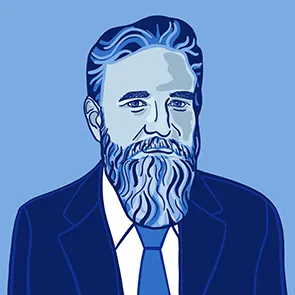
Looking back, Gregory Wawro concedes that he had some concerns about how the University was explaining its actions around the spate of campus demonstrations when he was asked by Interim President Katrina Armstrong in fall 2024 to take on the role of Rules Administrator.
“I thought we could be more open with the community about what was going on with the Rules process,” he said. “There was a lot of information that would be important for the community to know, even while we protect student privacy rights and respect the confidentiality of the process.”
In his new role, Wawro is working to hold his office to a high level of openness.
This week, the Office of Rules Administration (ORA) published its inaugural Annual Report, a detailed public accounting of its work during the 2024-2025 academic year. The report focuses on the University’s handling of demonstrations during that period, and how the system of Rules is being improved, applied, and communicated across Columbia’s campuses.
“When I agreed to take the role, there were three standards by which I thought my performance should be judged: fairness, transparency, and efficiency,” said Wawro. As a long-time Columbia political science professor who specializes in American politics, Wawro recognizes that policymaking and implementation is an imperfect science, and that data and open communication are fundamental to building understanding and earning public trust.
The information in the report, Wawro said, provides a portrait of a university that is working through its Rules system in a responsible, thoughtful way to balance the right of free speech and expression in alignment with the University’s academic mission.
“We’ve made a lot of progress from where we were a year ago,” Wawro said. “Our processes are more explicit and regularized and professional, which speaks to the fairness and efficiency part of how we should be doing it.”
He noted his own and his office’s outreach to engage a variety of constituencies across Columbia to learn their concerns and ideas and take feedback on how the ORA can operate most effectively. That outreach, he said, will continue in earnest. Since taking the role, Wawro has met with students, faculty, and staff; the University Senate; a variety of student associations and councils; alumni; and others.
There will be greater trust in the Rules process when the community has a broader understanding of why the Rules exist and how they are administered, Wawro said.
During the 2024-25 academic year, more than 63,000 events took place on Columbia’s campuses. Those included everything from convocations, graduation ceremonies, featured speakers and awards banquets to dance troupe performances, the annual tree-lighting, and panel discussions. “Some people might think demonstrations are the main things that happen on Columbia’s campus, and that’s just not the case,” Wawro said.
Still, it was an extraordinary year for speaking out on campus, with 108 events designated as demonstrations. Wawro noted that only five of the 108 resulted in the filing of formal charges with the University Judicial Board (UJB) for violating the Rules. Those five cases of Rules violations ended in a range of sanctions, including disciplinary probation, suspension, expulsion, and degree revocation.
Of the 108 events designated as demonstrations, only 47 demonstrations were reviewed through the Rules process because of complaints received. Of those 47 demonstrations:
- Complaints related to 27 of those demonstrations were dismissed for a variety of reasons; either there was no clear violation or there was not sufficient evidence to support charges of violations.
- For 13 demonstrations the ORA did not pursue charges “because other disciplinary processes were deemed more appropriate.”
- For 2 demonstrations, several complaints were resolved via informal resolutions after the Rules Administrator engaged those involved in a detailed discussion of the Rules and the behavior in question.
- For 2 demonstrations, charges were filed with the UJB for respondents who did not respond to attempts to achieve informal resolutions.
- Finally, 3 demonstrations led the ORA to file charges with the UJB due to the seriousness of the charges.
Any member of the University community can submit complaints of Rules violations through the ORA website. They can also be submitted directly by University Delegates, who are appointed by the president or Rules Administrator and attend events to monitor for Rules violations, alongside members of the Public Safety staff.
“If you’re not telling people what you’re doing, they might think you’re not doing anything or somehow you’re trying to hide what you’re doing ... The annual report is important in terms of opening up what’s going on in the process.”
Wawro stressed that his office is strictly content neutral in its approach to demonstrations: “Some people think certain kinds of speech are punished and that’s not true. We are very careful to avoid that,” he said. To illustrate the point, he returns to the data and notes more than 100 demonstrations—representing a range of views and topics across the political and social spectrum—did not end in formal filings.
Still, Wawro is the first to note Rules administration is a work in progress. The report identifies several areas for continued improvement and growth. That includes additional training for University Delegates, who do not have disciplinary authority but provide important on-site, in-the-moment guidance of potential violations at campus events. The Delegates are, as the report notes, “a vital part of sustaining Columbia’s tradition of vigorous debate, open inquiry, and freedom of expression.”
Communication remains an area for development. Wawro noted there are some on campus who care deeply about the Rules process and crave detailed information while others pay it little mind. He is working to achieve a balance and effectively reach all those who want to be well informed.
One year in, Wawro knows his work is just beginning and there is still a lot to be learned, bridges to be mended and others to be built. Through it all, he said, he will be as open as possible about what his office is doing, and why. The new report is the first step.
“If you’re not telling people what you’re doing, they might think you’re not doing anything or somehow you’re trying to hide what you’re doing or keep it from public view on matters of significant interest,” Wawro said. “The annual report is important in terms of opening up what’s going on in the process.”
And for Wawro, that transparency is a key building block, along with fairness and efficiency, to building trust and credibility in the Rules process.
Read the Rules Administrator Annual Report, AY2024-2025, in full here.
A similar annual report is issued annually from the Office of Institutional Equity (OIE). The 2024-25 OIE annual report can be found here.