Finding Community (and Chickens!) Through the Gatehouse Garden in Morningside Heights
Nestled across the street from Schermerhorn Extension next to the old Croton Aqueduct Gate House, the garden has become a source of community and creativity for this Columbia staffer.
Before Buyi Wang, a research analyst at the Center on Poverty and Social Policy, came to work at Columbia from NYU in the middle of the COVID-19 pandemic, he hadn't spent much time Uptown. The work move, paired with several friends moving away, made Wang feel like he was in a totally different, slightly lonelier world.
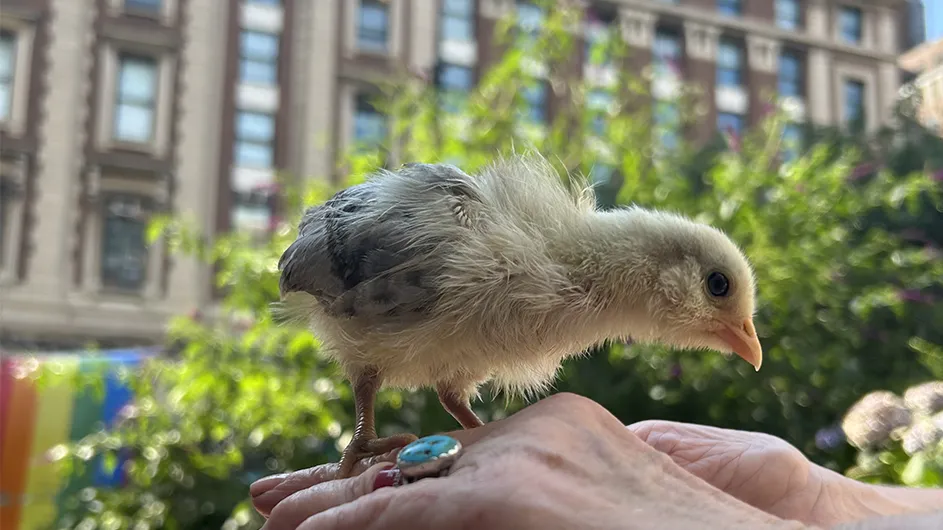
Then, he saw the chickens.
As Wang tells it: "I never connected New York City with chickens, right? You think about skyscrapers, all the stores, but somehow, amidst all the fancy stuff, there's a little green oasis surrounded by residential buildings full of vegetables, flowers, and, yes, chickens. There's even a New York City landmark attached to it."
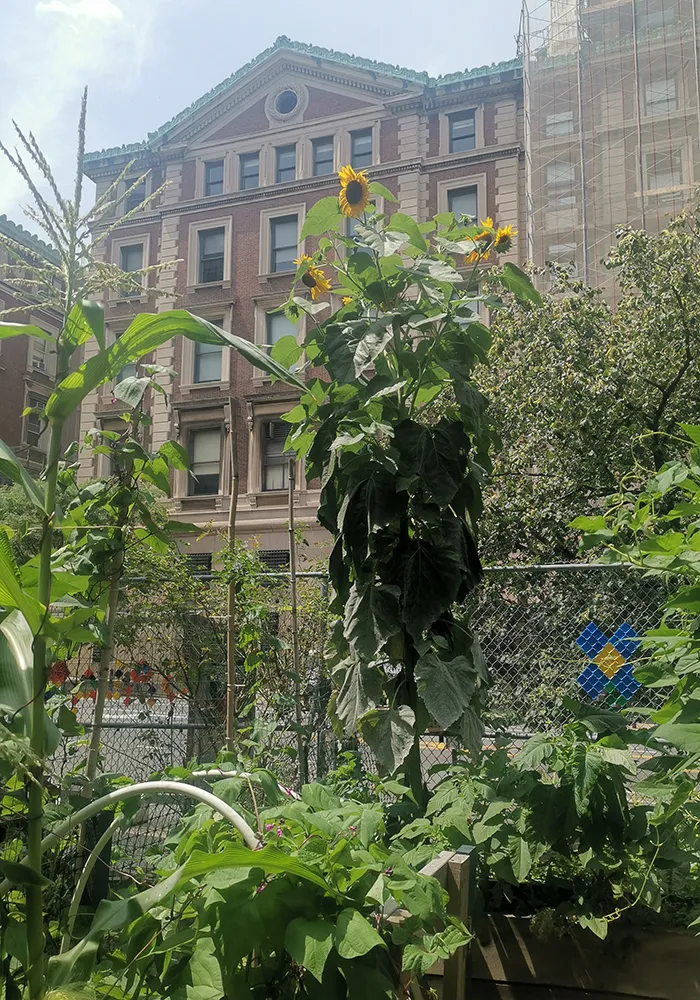
That place is the Gatehouse Garden, which is nestled across the street from Schermerhorn Extension on Columbia's Morningside Heights campus and next to the old Croton Aqueduct Gate House at 119th St. and Amsterdam.
Founded in 2009 as the Columbia Secondary School Garden, volunteers are local residents as well as Columbians who have all sorts of affiliations with the University ("you'll meet staff, professors, students, and their families," said Wang).
"I had always wanted to do a little gardening," Wang said. "I grew up in the big city, in Beijing, so I didn't really get a chance to do actual plant stuff, or anything like taking care of chickens. I also wanted to meet people, to make friends. I thought this would be a great place to start."
So one day, while walking by, Wang asked about opportunities to work in the garden. Four years later, he's never stopped.
Columbia News sat down with Wang to learn more about the garden, and the creativity and community that can be found there if you know where to look.
What is your role at Columbia?
I’m a research analyst at the Center on Poverty and Social Policy, focusing on family policy, including paid leave, subsidized childcare, and cash assistance for low-income families. My background is in economics—I studied at NYU.
Tell me about your first time volunteering in the garden.
It was in spring, planting seeds for the upcoming harvest. It was an amazing feeling to actually feel the texture and the temperature of the soil on my hands. I work with a computer, and my hands are basically just clicking a keyboard all day. But in the garden, I was able to use them in a different way.
We were trying to grow these little cucumbers, no bigger than the cap of a pen. Every day, seeing that little seed becoming bigger and bigger, that really gives you hope during a time as difficult as COVID. As long as things are growing, there is still hope. It is a good reminder for me.
And then I started forming a bond with the leader of the planting committee, who later became one of my best friends in the garden. We'd talk about gardening, but we'd also talk about coming here as an immigrant and cultural differences between the U.S. and China.
You're so poetic when you speak about your memories. Are you a writer?
I always tell people I’m living a kind of "Hannah Montana" life. In the daytime, I’m a researcher doing economic and statistical analysis, but then in the evening, I become a writer. I write stories about memories, about emotions. I’m currently writing a short collection.
Do those creative interests show up in garden events?
Yeah, in fact, I’m going to host a reading party in the garden soon, where all the book lovers can come to the garden and just read books. So it’s really a space, obviously, for gardening, but also for people to share other common interests.
We’re looking forward to doing poetry workshops, yoga workshops, and we've even done a flea market for incoming students. We never say no to new ideas.
How many people volunteer?
Most of the people who volunteer live pretty close by. We have about 300 members in our WhatsApp chat, but I would say there are no more than 10 volunteers who show up to take care of the garden regularly.
It is kind of a comfort to know there are people you are going to see so regularly. It makes the city a little bit smaller, especially after COVID and all that isolation, which was really heavy.
Being a foreigner, I don't really have a family here, so the people in my life are constantly changing. But knowing I will see certain people who are dedicated to the garden, who I can interact with and talk with as we develop a deeper bond. That's a comfort.
What are the different roles volunteers can take on?
- Chicken committee: People dedicated to feeding the animals every morning and evening, collecting eggs, and monitoring the health of the chickens. We just introduced three new baby chicks into the garden! So that takes a lot of work, but it is so cool to see the babies grow. We distribute the eggs amongst volunteers.
- Planting committee: People interested in working with the plants. Most of the activities are in the fall, spring, and summer, like planting seeds and pollinating the flowers, if necessary, and watering plants. That takes a village! That's my weekly workout because it takes two hours for a single person to water everything in the garden in the summer.
- Education and outreach committee: Every year, we host an after-school program with Columbia Secondary School students, teaching them about plants, chickens, composting, and the environment.
- Maintenance/building committee: People who plan and build structures in the garden. They built the house for the chickens, the water collection system, the greenhouse, the plant beds, and the paving.
As new people come in, new ideas and committees come in. We even have a social media person now! You can follow us on Instagram.
When is the garden open? When can people volunteer?
Whenever a volunteer is in the garden, we put a welcome sign up. Whenever there are volunteers, people are always welcome to come in.
We're also a GreenThumb garden, so we are open to the public every Saturday and Sunday from 10 a.m. to 2 p.m. until the end of November.
What happens with the food that is produced in the garden?
We usually share it amongst volunteers, but I'm hoping one day we will be able to do a community fridge.
How can someone become a volunteer?
We are really chill: no fee or waitlist. After a 20-minute garden orientation, anyone can start volunteering. The best first step is to visit when volunteers are present—or email if no one is there ([email protected]).
What is your favorite plant or chicken you work with?
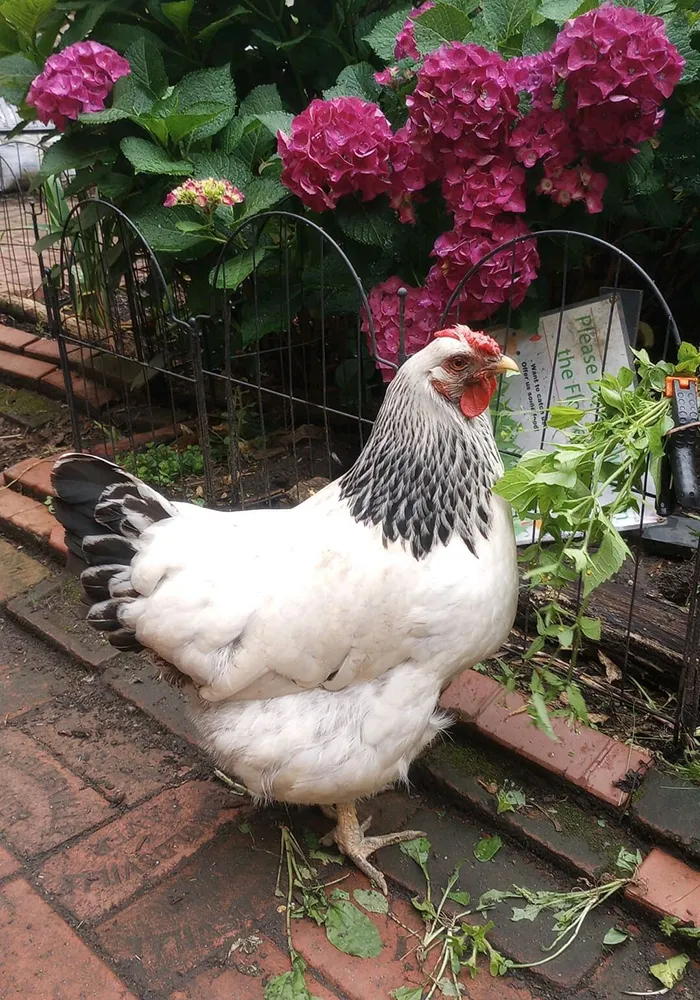
I feel the closest bond with this chicken named Pinguino, because she usually gets bullied by this other, bigger chicken called Big Fluff who is not good at sharing food with other chickens. Whenever I pick Pinguino up, she is very calm. She’s really my favorite, and she’s going through a little trouble, but I care about her.
When it comes to plants, I would say my favorite is the bitter melon. Growing up, my grandmother and parents always forced me to eat it, because it is really good for you, even though I hated it. But after I got to the U.S., suddenly I missed it. Now I’m growing it in the garden, and it’s almost like an emotional bond, because it’s part of my culture and memory.
How has the garden helped you build community and relationships?
Through this garden, I saw how you can make friends in a third space, in a community space. Sometimes it was just two of us in the garden all day, watering, chatting, eating lunch. And it isn't just long-term friends: I’ve also met strangers I never saw again who had a big impact. Like when we put up a pride flag, an older man came in, took a photo, and told me it reminded him of marching with his son. I’ll never forget that. These connections, whether brief or lasting, really make me realize the importance of community.