Think Studying the Ancient World Is Passé?
Think again, says Katharina Volk, the new chair of the Classics Department.
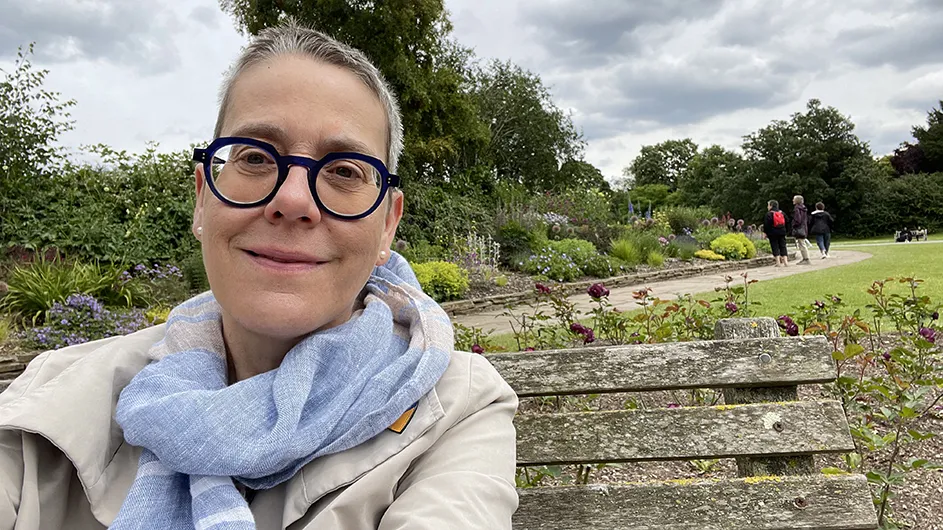
Katharina Volk, the new chair of the Classics Department, is a Latinist specializing in the literature of the late Republic and early Empire. She has a particular interest in intellectual history and Roman philosophy, and is intent on setting anyone straight who thinks that the study of ancient times has fallen out of fashion or is somehow outmoded in today’s world.
Volk discusses her passion for all things classical, along with other topics, with Columbia News.
As the new chair of Classics, what are your plans for the department?
These are challenging times for the humanities, so I hope to keep our programs healthy. We have an array of new majors and minors, a flourishing post-baccalaureate program, and renowned MA and PhD programs. From speaking to students at all levels, I know what enthusiasm there is for the study of the Greek and Roman world, and I want to do everything to keep that excitement alive.
While chair, will you continue to teach? If so, what are you teaching now, and in the spring?
Absolutely. I am teaching a graduate seminar this fall, on the Latin poet Catullus, famous for his tortured love poetry. In the spring, I will be teaching our Latin literature survey, as well as a course on the Roman comedy writer Plautus.
What sort of programming (both for students and public events) are planned for Classics this year?
We have a public lecture program, with eight talks a year, given both by well-known Classicists from around the world and by our own PhD students, who will be presenting on their dissertation research. The most exciting event for undergraduate majors will be our senior trip in January, which will take them to Tunisia.
Any new insights into how the study of Classics remains relevant?
The study of Classics started already in the ancient world: Later Greek authors pored over Homer and Sappho, Romans studied Greek literature, and as soon as the Aeneid was published, it was read by Roman schoolchildren. Classics has remained relevant for millennia exactly because new generations always find something in ancient texts that speaks to them. What this something is has changed radically over the centuries, but the attraction persists.
Today's students may turn to antiquity for insights into such persistently important issues as democracy and social justice; gender and sexuality; and personal ethics--or they may find themselves simply inspired by a beautiful line of Greek and Latin poetry or laughing at the dirty jokes of an ancient play.
What was your path to a career as an academic and a Latinist?
I did my undergraduate degree in Germany and originally wanted to major in German, with only a minor in Latin. But then I found the Classics department, which was much smaller than the German one, and was so much more welcoming and personal, with a much better professor-student ratio; so I switched majors. (I think this is true for Classics departments around the world: They tend to be small, but really inspire their students.) Somehow, I already knew I wanted to be an academic. I came to the U.S. to do my PhD at Princeton and, after two years teaching at Bucknell University, I was lucky to be hired by Columbia in 2002.
What are you working on now?
My husband, Emeritus Classics Professor Jim Zetzel, and I are embarking on a commentary on Cicero’s dialogue, On the Commonwealth (De re publica). This is a fascinating work, not only because it contains the ideas on politics of a writer who was an eminent politician himself, but also because it was rediscovered only in 1819, in fragmentary form. The manuscript is a so-called palimpsest, which means that the writing was wiped out and another text written on top. Luckily, the original text is still faintly readable, but, unfortunately, only about a third of the work survives.
Advice for anyone interested in pursuing a trajectory similar to yours?
Start learning Greek and Latin as early as you can. Anybody can read books about the ancient world, but in order to really get into the minds of the Greeks and Romans, you need to know their languages.
What's special about teaching at Columbia and in New York?
The greatest thing about Columbia is the students, who are intelligent, vociferous, and just a lot of fun to teach. The energy of the city transmits itself to the campus: It’s such a high-octane place.
Anything you want to add?
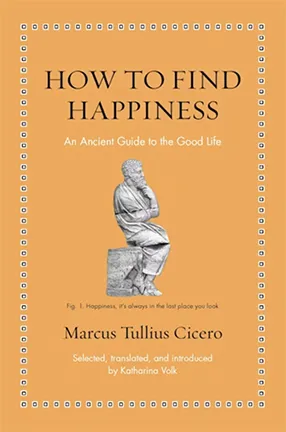
For what I hope is a fun introduction to ancient thought about a topic that remains pertinent today, check out my How to Find Happiness: An Ancient Guide to the Good Life, to be published in February.