This page features news and research related to topics about politics at Columbia University.
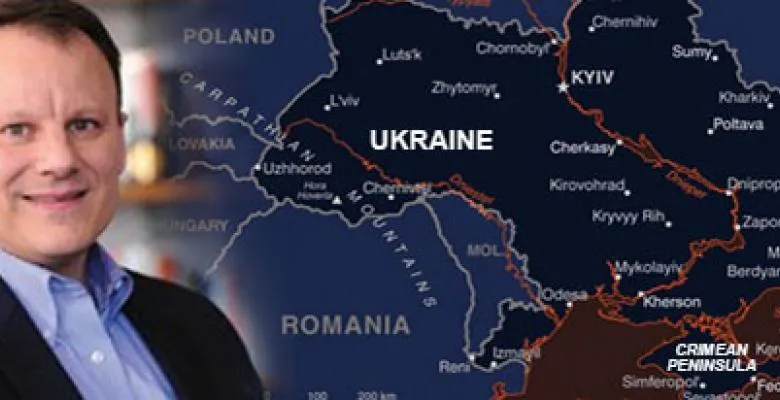
As the Islamic State continues its attacks in Iraq, Syria and now France, Columbia News asked professors from a number of disciplines to evaluate the threats posed by the group. Stuart Gottlieb (Ph.D’96), a professor at the School of International Public Affairs, discusses a terrorism attach that occurred in Paris.
As the Islamic State continues its attacks in Iraq, Syria and now France, Columbia News asked professors from a number of disciplines to evaluate the threats posed by the group. Page Fortna, the Harold Brown Professor of U.S. Foreign and Security Policy, recently published an article with the provocative title, “Do Terrorists Win?” She is also chair of the Political Science Department.
As the Islamic State continues its attacks in Iraq, Syria and now France, Columbia News asked professors from a number of disciplines to evaluate the threats posed by the group. David L. Phillips is the director of Columbia’s Program in Peace-building and Human Rights. He is a former senior adviser to the United Nations and U.S. State Department.
As the Islamic State continues its attacks in Iraq, Syria and now France, Columbia News asked professors from a number of disciplines to evaluate the threats posed by the group. Kimberly Marten is the Ann Whitney Olin Professor of Political Science at Barnard College and Director of the Program on U.S.-Russia Relations at Columbia's Harriman Institute.
As the Islamic State continues its attacks in Iraq, Syria and now France, Columbia News asked professors from a number of disciplines to evaluate the threats posed by the group.
As the Islamic State continues its attacks in Iraq, Syria and now France, Columbia News asked professors from a number of disciplines to evaluate the threats posed by the group. Richard Bulliet is a professor of history who specializes in the history of Islamic society and institutions.
“The concept of the right to know has transformed a great deal of American society,” said Michael Schudson, a sociologist who teaches at Columbia Journalism School. “It has made government information more accessible to the press, to the public, even to Congress. Much more broadly it changed how people think about their lives in America.”
Marcos Troyjo, co-director of the BRIClab at the School of International and Public Affairs and an adjunct professor, explains what is going on with Brazil’s economy. A former press secretary at the Brazilian Mission to the United Nations and chief of staff of the Science and Technology Department of Brazil’s Ministry of Foreign Affairs, he joined Columbia University in 2006 as a visiting scholar.
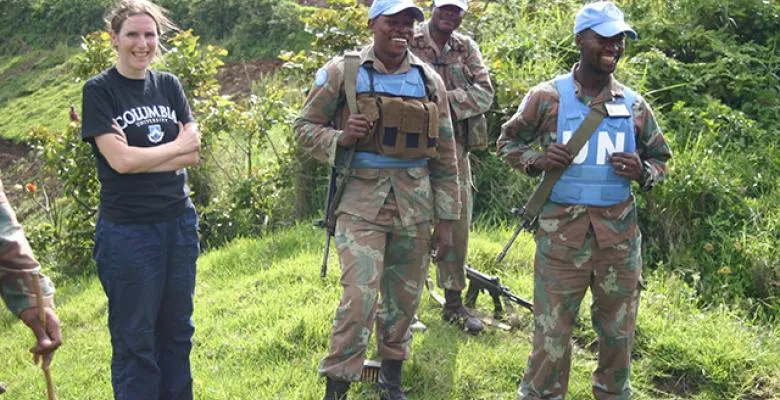
The 20-year conflict in the Democratic Republic of Congo has killed an estimated 5.4 million people since the 1990s—making it the deadliest since World War II—and armed attacks by different groups occur every week. Séverine Autesserre (SIPA‘00), a member of Columbia's Arnold A. Saltzman Institute of War and Peace Studies and a political science professor at Barnard College, is an authority on international intervention, conflict resolution, and Central Africa who has researched Congo and visited the nation often since 2001.
Brendan O’Flaherty was a teenager in Newark, N.J. in the 1960s, when the city was engulfed by racially charged political battles and violence. In 1967, racial tensions and allegations of police brutality sparked five days of riots that left 26 dead and hundreds injured, leaving the once-vibrant core of New Jersey’s largest city with enduring scars.

When the Berlin Philharmonic performed the Georg Friedrich Haas piece dark dreams at Carnegie Hall last October, critics were ecstatic and some audience members booed. Anthony Tommasini, reviewing the concert in The New York Times, noted that “new pieces are not often booed. I hope Mr. Haas feels that he was doing something right to arouse such a reaction.”