The latest earth, climate, and environmental science news from across Columbia.
Columbia University has pledged to cut greenhouse gas emissions by 35 percent in the next three years through a mix of energy conservation and efficiency measures under its first campus sustainability plan.
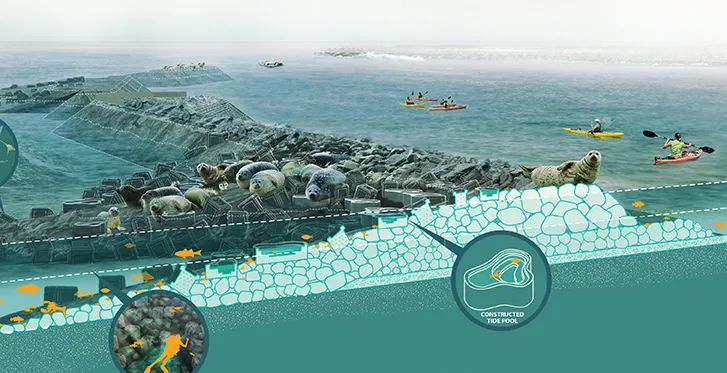
Associate Professor Kate Orff’s Oyster-tecture is a plan to bring oysters back to New York Harbor. Oysters filter water and form reefs that can buffer against storm surges. The project, expected to be completed by 2019, will create bays to host finfish, shellfish and lobsters while reducing erosion. It will also serve as an environmental education site. Courtesy of Kate Orff.

Chilean president Michelle Bachelet visited the R/V Marcus G. Langseth on Jan. 9 when it docked at the port city of Valparaiso, touring the ship—which is operated by Columbia’s Lamont-Doherty Earth Observatory--on its months-long voyage to map the occurrences of earthquakes and tsunamis in the region.
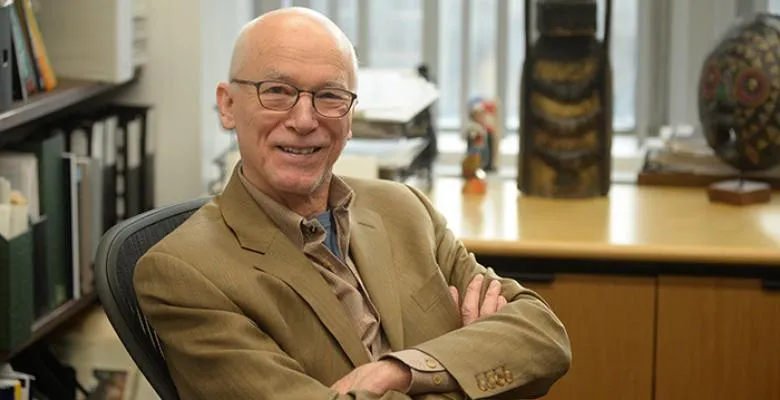
Geoffrey Heal studied physics and economics as an undergraduate, but has always cared deeply about the environment. “I’ve been interested in nature all my life,” he says. “As a kid I was buying binoculars and going bird watching and buying a little camera and taking pictures of birds and things like that.”
Lee C. Bollinger announces a new set of Columbia University Sustainability Principles that will serve as the cornerstone of an ongoing University-wide initiative that must involve our entire community.
Kartik Chandran, associate professor of earth and environmental engineering, is an authority on environmentally sustainable wastewater treatment and sanitation. He has been collaborating with research groups in Brazil focused on energy-efficient wastewater treatment. One goal is for an existing sewage treatment plant to discharge better water quality into Guanabara Bay, where sailing events for the 2016 Olympic Games will be held, while also emitting smaller amounts of greenhouse gases.