The latest earth, climate, and environmental science news from across Columbia.
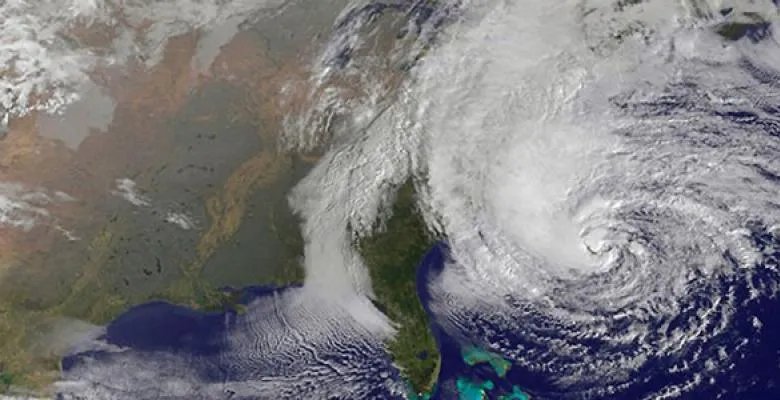
The year since Hurricane Sandy blew ashore in the New York area has been one of rebuilding and searching for how best to prevent the level of destruction and death it brought with it.
A recent slowdown in global warming has led some skeptics to renew their claims that industrial carbon emissions are not causing a century-long rise in Earth’s surface temperatures.
Sonya Dyhrman, a microbial oceanographer at Columbia’s Lamont-Doherty Earth Observatory and an associate professor in the Department of Earth and Environmental Sciences, researches tiny microbes in the ocean that play a role in Earth’s climate.
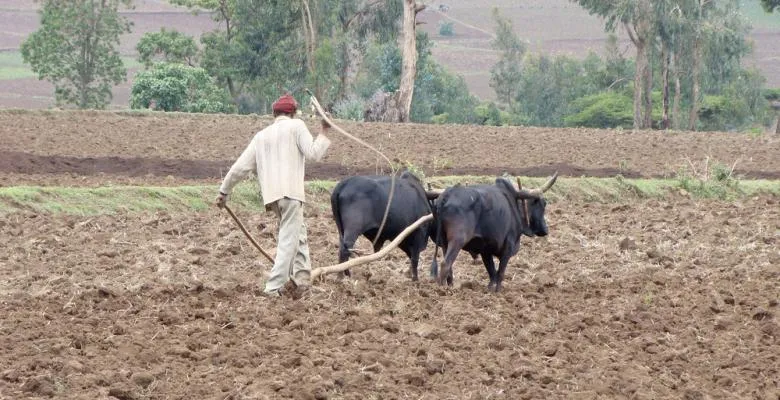
When scientists talk about climate change, they usually mean significant changes in the measures of climate over several decades or longer. Climate variability generally refers to seasonal changes over a year or so.
Mark Cane, an expert on the El Niño climate pattern, and Terry Plank, an authority on explosive volcanoes—both scientists at Columbia University’s Lamont-Doherty Earth Observatory--have been elected to the National Academy of Sciences.
Extreme weather can wreak havoc on cities and their economies. Damage from hurricanes Katrina and Sandy is estimated at more than $150 billion and over $60 billion, respectively. Weather-based power failures and disruptions to transportation systems can delay commuters, stall deliveries, and choke supply chains. And even where extreme conditions are common, economic life suffers. Regions with hot, wet climates are less productive on average.
The Lamont-Doherty Core Repository holds one of the world’s most unique and important collections of scientific samples from the deep sea—approximately 72,000 meters of sediment cores from every major ocean and sea.
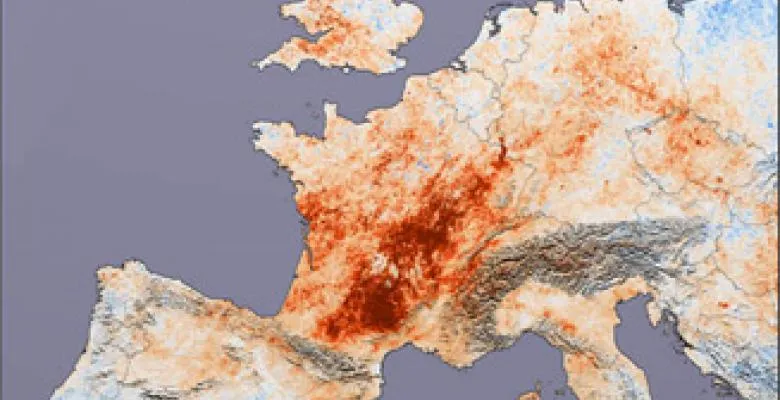
Fueled by industrial greenhouse gas emissions, Earth’s climate warmed more between 1971 and 2000 than during any other three-decade interval in the last 1,400 years, according to new regional temperature reconstructions covering all seven continents.
Researchers at Columbia Engineering and Georgia Institute of Technology have published a study in the February 4 online Early Edition of Proceedings of the National Academy of Sciences (PNAS) showing—for the first time—that certain volatile organic gases can promote cloud formation in a way never considered before by atmospheric scientists.
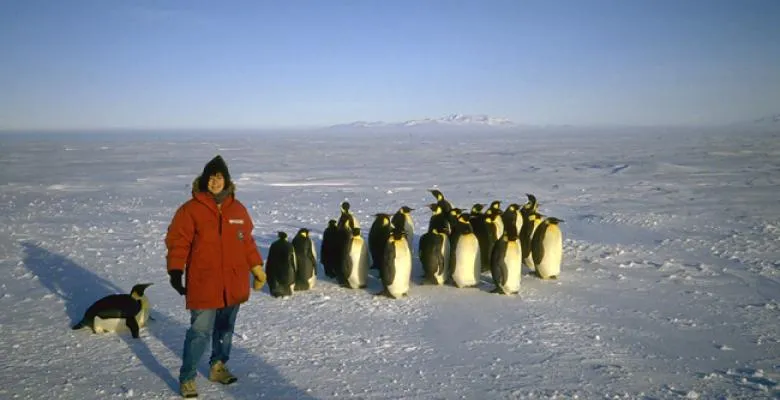
An American atmospheric chemist who led efforts to identify the cause of the Antarctic ozone hole and a French geochemist who extracted the longest-yet climate record from polar ice cores have won the prestigious 2012 Vetlesen Prize. Susan Solomon and Jean Jouzel will share the $250,000 award, considered to be the earth sciences’ equivalent of a Nobel.
When major disaster strikes, Dr. Irwin Redlener is rarely far behind. As a professor at the Mailman School of Public Health and director of the National Center for Disaster Preparedness, Redlener has brought health care to victims of calamities ranging from 1992’s Hurricane Andrew to Hurricane Sandy, which wreaked havoc in the northeast last month.
Columbia’s campuses were largely spared the ravages of Hurricane Sandy, which destroyed neighborhoods, flooded tunnels, forced hospitals evacuations and knocked out power to millions throughout the region. But many in the tri-state area face a challenging path to recovery.