Recent engineering news from across Columbia.
Digital technology is about to add big data to the bird enthusiast’s traditional tools of binoculars and a field guide.
The David and Helen Gurley Brown Institute for Media Innovation has awarded its 2014-2015 “Magic Grants” to eight teams of students, faculty, alumni and post-docs from Columbia and Stanford Universities.
Robert Mark and George Deodatis, the Santiago and Robertina Calatrava Family Professor of Civil Engineering designed a life-size model of one of the 10-foot spires atop the neo-Gothic cathedral to see if it could withstand vibrations similar to those in 2011 that damaged several pinnacles, flying buttresses and a gargoyle, causing millions of dollars in damage to the structure. No one was injured.
Two years ago when an earthquake struck the Washington, D.C. area, Robert Mark got a call from the master mason at the Washington National Cathedral. “The building is falling around me!” he said.
In 1754 the original King’s College charter declared one of its missions to be teaching “everything useful for the comfort, the convenience and elegance of life.” It’s a goal that seems especially noteworthy as the Fu Foundation School of Engineering and Applied Science celebrates its sesquicentennial by highlighting the ways it has fulfilled that mission in the past, its present day record of innovation and its plans for future growth.
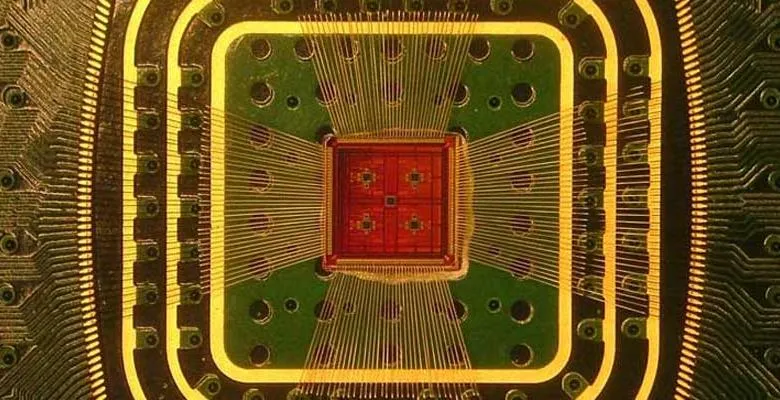
A research team led by Ken Shepard and Lars Dietrich has demonstrated that integrated circuit technology, the basis of modern computers and communications devices, can be used for a most unusual application—the study of signaling in bacterial colonies.
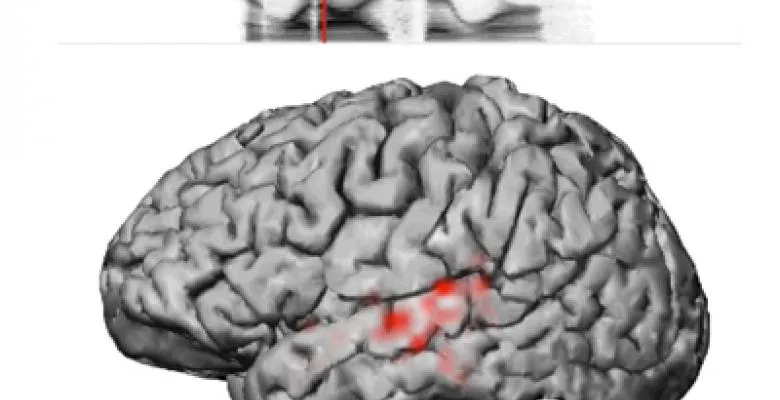
Nima Mesgarani, assistant professor of electrical engineering, is the lead author of a new study on how speech sounds are identified by the human brain, offering an unprecedented insight into the basis of human language.
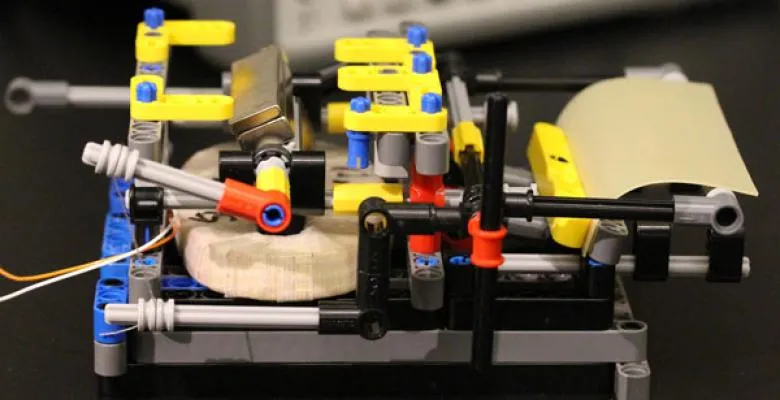
Ozgur Sahin, associate professor of biological sciences and physics, has developed a new machine using Legos – a prototype generator that can harness the energy of evaporation.
In recent years, human interactions with intelligent machines and software have become increasingly commonplace. This can be attributed to developments in machine learning, a branch of artificial intelligence involving the integration of systems that can learn from data.
Patricia Culligan, professor of civil engineering and engineering mechanics, is leading a team of 20 investigators who have just won a five-year $3 million grant from the National Science Foundation (NSF) to study how urban green infrastructure (GI) can mitigate the city's role in coastal zone pollution.
A team of Columbia Engineering researchers, led by Mechanical Engineering Professor James Hone and Electrical Engineering Professor Kenneth Shepard, has taken advantage of graphene’s special properties—its mechanical strength and electrical conduction—and created a nano-mechanical system that can create FM signals, in effect the world’s smallest FM radio transmitter. The study is published online on November 17, in "Nature Nanotechnology."
When astronauts go on a mission, they are allowed to take one or two personal items with them. On his first space flight in 2002, Michael Massimino (ENG’84) took a Columbia Engineering School flag. The second time, in 2009, he took a gray Columbia Engineering T-shirt covered with the signatures of as many Engineering School students and faculty as could fit on it.