Recent engineering news from across Columbia.
Dillon Liu, SEAS ’13, just found out that not only has he won a prestigious Marshall Scholarship—he is also the first Columbia Engineering student ever to receive one.
Cathy Popkin, the Jesse and George Siegel Professor in the Humanities in the Department of Slavic Languages, was honored this fall for her passion for teaching, along with David Yao, professor of industrial engineering and operations research at the Fu Foundation School of Engineering and Applied Science.
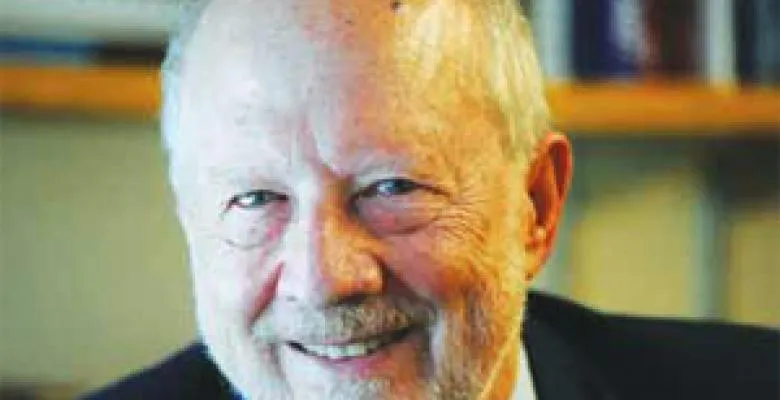
“I like building things from scratch,” says Traub, the Edwin Armstrong Professor of Computer Science, who was tasked by then dean Peter Likins with creating a department out of virtually nothing.

Tiffany Shaw, assistant professor of applied mathematics, has been awarded a Packard Fellowship in Science and Engineering, a prestigious honor given to a group of the most promising and innovative researchers who are at the beginning stages of their careers. Shaw, who has a joint appointment in Columbia’s Department of Earth and Environmental Science, is one of 16 fellows named who will each receive an unrestricted grant of $875,000, distributed over five years.
Alvin E. Roth, who graduated from Columbia Engineering in 1971 and is currently the George Gund Professor of Economics and Business Administration at Harvard, was awarded the 2012 Nobel Prize in Economics for his pioneering work in the practical design of market institutions.
Research on volcanic eruptions and on the structure of abstract graphs have resulted in two Columbia professors being named MacArthur Fellows, the “genius” awards given to individuals who have shown “extraordinary originality and dedication in their creative pursuits.”
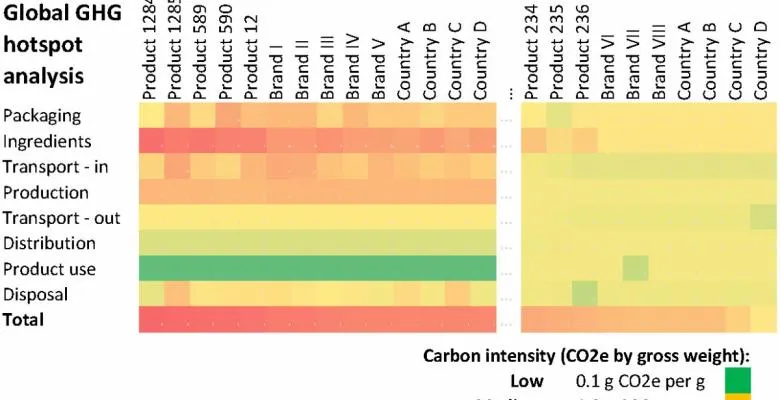
Researchers at Columbia Engineering have developed a new software that can simultaneously calculate the carbon footprints of thousands of products faster than ever before.

Mayor Michael Bloomberg, his economic development team and a host of local elected officials came to the Northwest Corner Building on July 30 to announce their support for Columbia's new Institute for Data Sciences and Engineering.
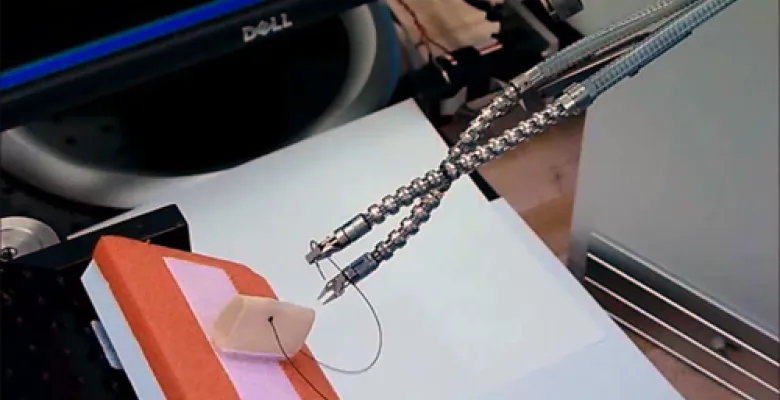
A novel robotic platform for minimally invasive single-port surgery that they say is the world’s smallest in required diameter (∅15 mm) that can enter the body while enabling dual-arm-dexterous operation, 3-D visualization, and automated instrument tracking.
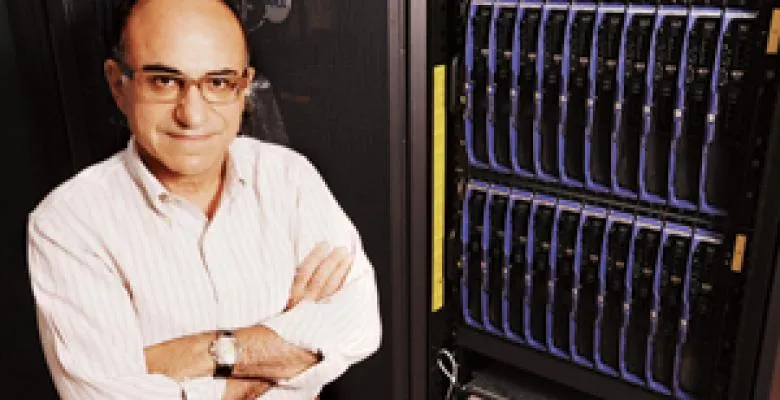
People often say that a book changed their lives—for some it might be "To Kill a Mockingbird," for others it’s Plato's "The Republic." For Dimitris Anastassiou, it was a biology textbook.
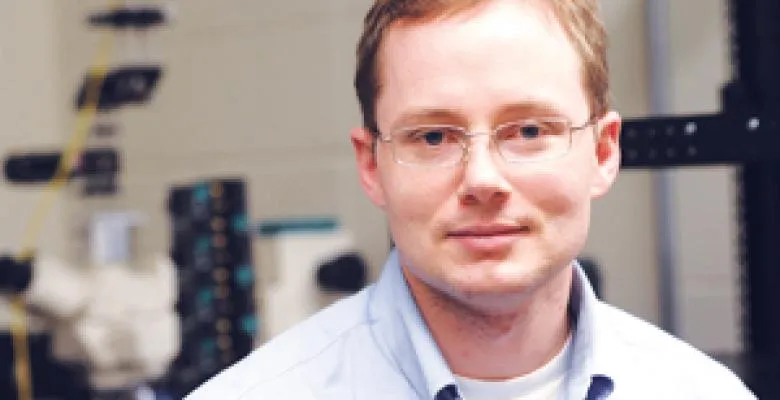
Dirk Englund is developing technology that tackles one of the most pressing problems of the Information Age— keeping information secure.
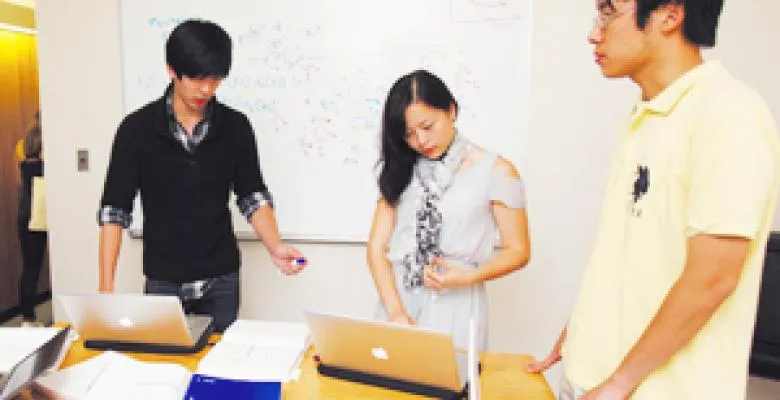
For the first time this fall, entrepreneurial-minded engineering students are living together in Res. Inc., an initiative of the Engineering School in which 72 students—45 of them first-years—share more than kitchen space in their suites on the eighth floor of Hartley and Wallach halls.