Recent news about neuroscience and the brain from across Columbia.
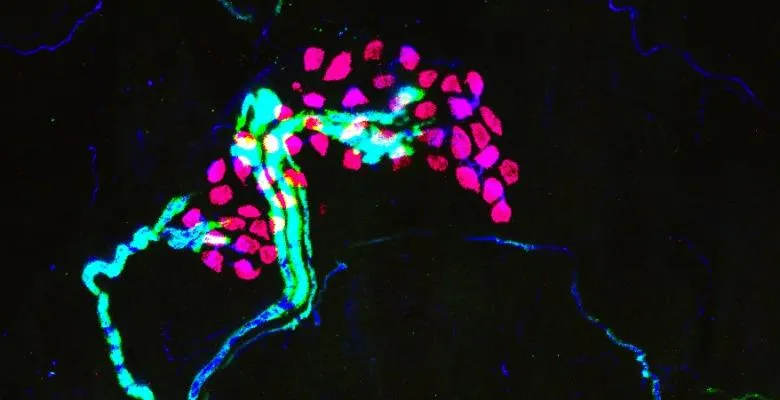
In a study published in the April 6 online edition of the journal Nature, a team of Columbia University Medical Center researchers led by Ellen Lumpkin, associate professor of somatosensory biology, solves the mystery of how cells just beneath the skin surface enable us to feel fine details and textures.
A team of researchers from Columbia University Medical Center (CUMC), Weill Cornell Medical College, and Brandeis University has devised a wholly new approach to the treatment of Alzheimer’s disease involving the so-called retromer protein complex.
School students arrived at the New York State Psychiatric Institute’s Kolb Annex on the Columbia University Medical Center campus March 12 to participate in the annual Community Brain Expo, cosponsored by the Mortimer B. Zuckerman Mind Brain Behavior Institute at Columbia University.
W. Ian Lipkin, MD, John Snow Professor of Epidemiology at Columbia University’s Mailman School of Public Health and director of the school’s Center for Infection and Immunity, was named recipient of Villanova University’s 2014 Mendel Medal.
School students arrived at the New York State Psychiatric Institute’s Kolb Annex on the Columbia University Medical Center campus March 12 to participate in the annual Community Brain Expo, cosponsored by the Mortimer B. Zuckerman Mind Brain Behavior Institute at Columbia University.
Ask Thomas Jessell why he has dedicated his career to understanding the neurobiology of movement, and he puts it in simple terms: “Movement is the overt expression of all behaviors—without movement, intent and desire can be planned and felt but never realized.”
The Mortimer B. Zuckerman Mind Brain Behavior Institute has named David M. Greenberg as its first executive director. The Zuckerman Institute was established in 2012 with a $200 million gift from New York philanthropist and business leader Mortimer B. Zuckerman. The Institute will bring together 1,000 scientists at the Jerome L. Greene Science Center, the first building of the Manhattanville campus.
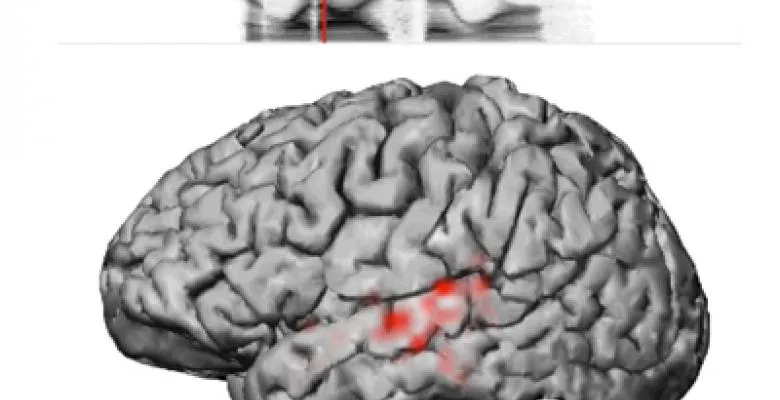
Nima Mesgarani, assistant professor of electrical engineering, is the lead author of a new study on how speech sounds are identified by the human brain, offering an unprecedented insight into the basis of human language.
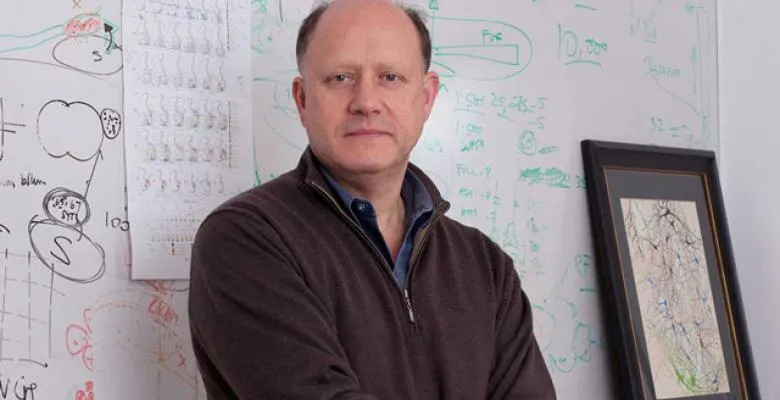
The Vilcek Foundation named Thomas M. Jessell as the winner of the 2014 Vilcek Prize in Biomedical Science.
Using high-resolution functional MRI (fMRI) imaging in patients with Alzheimer’s disease and in mouse models of the disease, Columbia University Medical Center (CUMC) researchers have clarified three fundamental issues about Alzheimer’s: where it starts, why it starts there, and how it spreads.
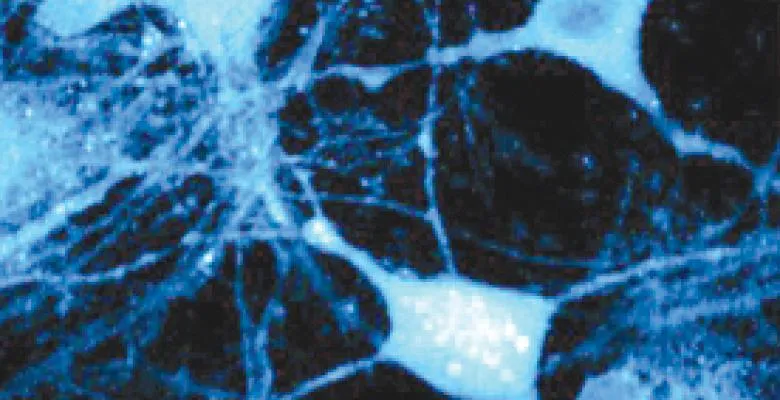
Min and his team recently developed a new imaging technique to pinpoint exactly where and when cells produce new proteins.