Recent news about neuroscience and the brain from across Columbia.
An innovative digital art installation on the ground floor of the new Jerome L. Greene Science Center on Columbia’s Manhattanville campus invites visitors to peer inside the brain and meet the neuroscientists who are working upstairs to unravel its complexities. The multiscreen floor-to-ceiling work, Brain Index, loops through large-scale models of the brain while telling the stories of individual researchers and their quests to push the boundaries of neuroscience.

A 20-month-old girl suffering from a rare neurodegenerative disease was diagnosed and successfully treated in a case that exemplifies the potential of precision medicine.
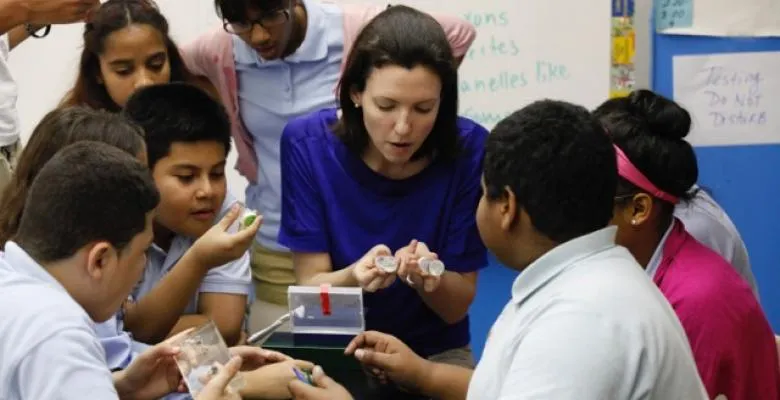
Kelley Remole has been interested in science since she was a child. In high school, she was drawn to astronomy and neuroscience, which she says involve “the biggest questions in science, what is our place in the universe and what makes us who we are.”
Larry Abbott, the William Bloor Professor in Neuroscience, Physiology and Cellular Biophysics, was a theoretical physicist until the late 1980s, when it struck him that it might take decades to see the fruits of his research. He hungered for a field of study where results and insights could come more quickly.
Valerie Purdie-Vaughns is an associate professor of psychology at the University, specializing in stereotypes and the experiences of marginalized groups in society, including minorities, the disabled, women in science, gays and lesbians, and ex-convicts.
Scott Small, director of Columbia’s Alzheimer’s Disease Research Center, the Boris and Rose Katz Professor of Neurology, discusses what is known and what’s yet to be discovered, about the disease.